Collaboration of Science and community for the conservation of savannah grasslands and endangered Lesser florican


Ones upon a time, the western part of Vidarbha region of Maharashtra was known for its rich savannah grassland ecosystems. During colonial times Britain’s increasing demand for cotton was not met due to war situation in cotton growing areas of Egypt. Thus, huge belts of Vidarbha grasslands were converted into cotton farms (Laxman satya 2004)1. In 2001 Samvedana initiated a socio-environmental study involving Phasepardhi tribe of traditional hunters. It is the only tribe with traditional knowledge of savannah grasslands. During this study we came across an endangered species of bird Lesser florican (Sypheotides indicus). The presence of florican and its breeding was also part of traditional knowledge of the Phasepardhi tribe. In-situ conservation of traditional grass species was initiated by the tribe as this was the source of fodder for their livestock.

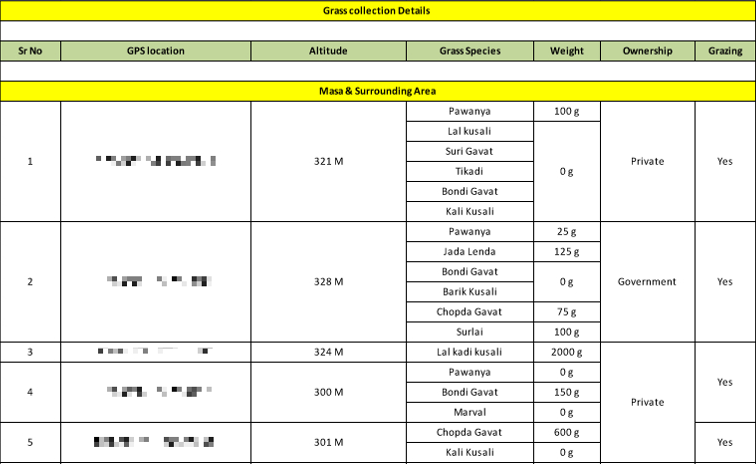
Samvedana continued its work through Maharashtra Gene Bank Program with Rajiv Gandhi Science and Technology Commission and Indian Institute of Science Education and Research (IISER Pune) in 2015. Community conservation areas have been developed and managed through Biodiversity Management Committees (BMC) established under biodiversity act 2002. Scientific studies of grassland biodiversity, quantification of fodder availability and territory of florican has been carried out during the project. Training programs on scientific methods of biological resource mapping were conducted with the community youths.  Youths implemented this knowledge by classifying grass species, doing herbarium, using GPS devises and plotting quadrats in community conserved areas. Projection of specie-wise yield of fodder production was calculated. Selection of areas for grass species conservation and fodder development has been planned through these studies. This is the only effort to conserve and manage grassland biodiversity resources using scientific methods in the project area.

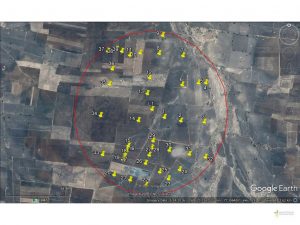
In another important study, which is being conducted with the participation of knowledgeable individuals belonging to the Phasepardhi tribe is mapping of territory of Lesser florican. Though it is proved that the small population of florican is present in the project area, its habitat preferences and adaptation is not known to scientific community. The study is planned to know these grassroot parameters with the active help of knowledgeable individuals from the tribe. The GPS locations of recent sightings of florican were documented. Each site is marked with round of 2 square kilometres (as it’s a projected territory of floricans) and further divided into each land piece. Details of each land piece is documented i.e. land use pattern, biodiversity mapping and tenure.

Image1.


Outcome of this study will help not only to understand the present habitat preferences of the bird but also identify the possible areas where it could be sighted. The proportion of agricultural land and grassland is also measured. Associations of bird with certain species or landscapes could also be projected. In addition to this the study gives an opportunity to the tribe to use their traditional knowledge for new constructive areas other than hunting. Such initiatives help in the changing the social identity and stigmatisation of the Phasepardhi tribe as wildlife poachers.


These participatory efforts open up new avenues in the study of grassland biodiversity in the region and options for collective knowledge building.

References

1(Laxman satya, Ecology, Colonialism and Cattle: Central India in the Nineteenth Century (Studies in Social Ecology and Environmental History oxford university press 2004)   

 Kaustubh Pandharipande, sighting of endangered lesser florican in Akola District Maharashtra, Mistnet January-March 2016, Vol 17 no 1


An Opportunity Lost?

CC0. Source


Starting on Gudi Padwa (March 18) 2018 (viz. the traditional New Year), the Maharashtra government issued a notification effectively banning the use of plastic and thermocole products.   The notification justifies this ban based on the problems caused by non-biodegradable plastic, especially that with a short use life: clogging of drains, danger to marine life and diversity, accumulation in the environment and implications for health.   Plastic packaging for medicines will be allowed.  Milk pouches have not been banned – however, each such bag will need to have a buy back price printed on it and (by June 2018) the government plans to have a mechanism in place for collection.  Here, I do not intend to explore the merits of this ban, or its implementation.  Rather, this is inspired by something I saw on my routine Sunday morning visit to the supermarket to pick up my weekly supplies.


Given the prevalence of plastic packaging material, I had been wondering about how society and local businesses would cope with the impact of this ban. A recent newspaper article quotes the All India Plastics Manufacturer’s Association and states an estimate of about 4,00,000 jobs lost due to this ban.  The State government has entrusted local government, municipalities, etc with enforcing compliance to the ban.  This is likely to be challenging given that most local government bodies are already stretched for resources and might not be able to keep track of and identify repeat offenders (as is required by the new law).  What might happen, at least in the short term, is that small businesses such as the neighbourhood kirana store will resist giving up their “polybags” and might seek ways of “managing” the system (passing on the associated costs to the consumer).  They will probably adopt a wait and watch attitude, as the State government deals with the legal challenges that the ban will inevitably attract.   This article does not intend to explore this aspect either.


What I was wondering about when I went shopping this morning is how large organized supermarket chains who are equally reliant on plastic packaging (and who cannot use the same strategies as smaller kirana stores to manage the ban) would deal with this disruption.  My interest in this issue is possibly keener than for others since I work on plastics, and have advised our city municipal corporation on issues relating to waste disposal.  Therefore, I am aware of the volume and problems caused by plastic packaging.  And, I am equally aware of the (low) cost and difficult-to-match properties of polyethylene (LLDPE) that make it the dominant material for film packaging applications (see: here and here).  So, it is clear to me that regulation must and will have a role to play in forcing a change.  But I digress.  What I saw when I went to the supermarket is that they had adopted a non-polyethylene, biodegradable bag (see image below).


These bags are manufactured and supplied by a Gujarat based company, using a material called Biolice®.  Biolice is bio-derived and is a biodegradable film-forming material developed in France by Limagrain.  This marketing video claims that these are prepared from non-food sources (though some of its own literature claims that it is derived from maize flour).  Limagrain’s website describes it a cooperative group founded and directed by (presumably French) farmers.  They appear to have done extensive focused research to value add to farm products, as is evident from the nearly 90 patents assigned to them.  There are few alternatives that match the tear strength of polyethylene packaging films, but I was fairly impressed with the bags that I saw this morning.  So, all-in-all, a wonderful technological innovation that appears to have made the transition from the laboratory to production in China and to actual use in a supermarket.


So, why was I disconcerted by my experience this morning? Mainly because I saw in this, a lost opportunity to simultaneously impact the environment, while strengthening local innovation networks and mitigating the disruption to industry.  Imagine an alternative scenario where a major state government decides on implementing a ban on plastic packaging, and realizing that there aren’t many viable alternatives to the polyethylene, approaches (say) the Department of Science and Technology and works with them to provide focused funding to the development of alternatives within a defined time frame.   The DST, in collaboration with the State Innovation Council, the Science and Engineering Academies and industry bodies like Confederation of Indian Industry (CII), puts out a call for proposals and actively solicits proposals from institutions with the necessary expertise. Research and radical innovation to develop an alternative with polyethylene-like properties might not happen in a year (note that Limagrain’s patents have priority dates going back to 2000 and earlier).  However, given a pressing need (for example, an imminent ban), and given funding to develop a product and industry ready to take it up (a Manhattan project kind of scenario?), could a meaningful alternative emerge?   Perhaps, based on a local raw material such as bagasse (that is currently burned in co-generation plants)?  What are the elements missing for something like this to happen?   Milind Sohoni has argued for Indian academia to better appreciate local challenges, and for better coordination/cooperation(?) with local policy makers.  Atul Bhatia has made the case that the time is ripe to establish collaborations between academia and industry.  To me, it seems like here was an opportunity to make all this happen in the context of an important societal problem.   Careful planning and orchestration of this change would have lessened the pain of the disruption due to this ban, while building partnerships that would strengthen innovation chains (between government, academia and industry).  How do we make this happen the next time around?  Will the science/engineering academies and industry bodies collaborate and put in place a joint panel with the explicit mandate for building these links?


Guruswamy Kumaraswamy is a scientist at the CSIR-National Chemical laboratory, Pune.

Reverse flow: What science can learn from common people


Science is not a recent “invention”. The fundamental logic and method of science consisting of observations, questioning, making and testing hypotheses evolved with us and is very much a part of the evolved human mind. Articulation of these principles is relatively recent. Many illustrative examples of scientific thinking from today’s hunter gatherer societies have been documented. Moreover people use certain innate and intuitive principles of logic, science and mathematics which we are yet to understand. I will illustrate this with one example of intuitive mathematics of the illiterate that we are trying to understand. The profit from a deal is measured in terms of its costs or investment versus its benefits or returns. However, in economics as well as in evolutionary biology optimization theory sometimes uses the ratio of investment to returns and at other times the difference between the two. In optimality theory both ratio model and difference model is used, but there is no clear understanding about when one should do difference optimization and when ratio optimization. We worked out the rules for when to use of ratio and when to use difference optimization. When investible amount is limiting and not the investment opportunities, a ratio model is appropriate whereas when the investment opportunities are limiting and not investible amount, a difference model is appropriate. While studying the economic decisions of farmers we realized that farmers were are already using these rules in the correct contexts although they did not have a conscious knowledge of these rules. Intuitive economics of illiterate people works on certain principles that science is yet to understand completely. Studying the subconscious thinking and decision making processes of people is likely to reveal at least some new scientific principles that people commonly use but science hasn’t realized so far.

Nurturing science through communication: journalists and scientists

Source. CC BY 2.0

This piece was born out of comments to the article ‘Scientists and journalists square off over covering science and “getting it right”’, by Dana Smith. The comments were by scientists Sutirth Dey and Amitabh Joshi and journalists R Prasad, Priyanka Pulla and myself from The Hindu. The discussions centered around how to build accuracy into reports on research work and how to deal with inaccuracies; should journalists show a draft to the scientists concerned as a quick way to check facts; do media outlets display comments and clarifications in case of errors that may creep in etc.


I wish to look at the above from two vantage points: There is the close up view telling us that it is the work of a particular scientist or group and that the onus is on the journalist to communicate the work accurately and in an easy to read format. There is also the other long term vision which looks at the whole vista of scientific enterprise, communication and its being absorbed by society as if it’s embedded in a social matrix and matters deeply to the working and establishment of rationality and order among people.


I believe that the former view is something of a  microview  – leaving just the work, its creator – the scientist and the journalist as a passive conduit that takes this to the people who are at a receiving end.  In this picture, certainly the scientist has invested a lot more than the journalist in the work and so has more at stake in getting the story out accurately, so it does not matter if the journalist shows the draft to them to get their ‘go ahead’ before publishing. But while I believe that if the journalist is confused about some part of the work or the appropriateness of an analogy, it is ok to get the idea  or part of the writeup approved by the scientist, it is bad practice if it becomes a rule or an expectation on the part of the scientists.


There is also the other point of view – the panoramic one where scientific enterprise is a lattice embedded in the matrix of the society and is as crucial as a scaffolding holding it in place. In this point of view, given that science in our country is practiced only in labs within institutes and universities, there is a wave of communication passing between the scientists, journalists and the society. This wave informs, reinforces and replenishes the population using the knowledge base created by the scientists. Individual stories and scientific works are single events in this cluster. The thrill of writing the story and the pride of having  carried out the research still belong to the individual journalist and scientist respectively, but the activity, as a whole is more important than that. I believe this picture and feel it is more important for scientists and journalists to work  as if they complement and complete each other in a larger social context. There is the need to give up the ‘I’ in working out a better way to address some of the problems in science communication that exist today.


Towards this, I have a few requests to make of the scientists.

  1. Scientists could maintain a dossier of stories from various media – both good stories and badly reported ones. They could form a committee and ensure analysis and action on these reports.  If MIT’s Knight Science Journalism Tracker could do this, so can Indian scientists.
  2. Organize short workshops for media people including science writers/reporters, heads of editorial departments, desk editors etc, by invitation and consultation with editors of the media houses. Let it be an exchange of ideas and a two-way learning.
  3. Also have talks by journalists for the scientists on the challenges they face in terms of even time and fact checking. Resolve methods to address these in consultation with journalists.
  4.  Highlight once a month a story that stands out for some aspect – either accuracy or innovative storytelling or for having discovered the story.
  5. Hold workshops in places other than Bangalore or Delhi.  In fact also hold workshops in regional languages. These could be held once in a year and if enough people volunteer this could be possible.
  6. Scientists should understand the background of the journalist they are talking to. Perhaps look at a sample of their stories. This may not be possible on the brink of bringing out the article but sometime when there is a bit of leisure. For instance is the person a regular science reporter or is usually assigned to some other beat etc. This can help them pitch their description of their own work accordingly.


As far as what scientists can expect from reporters, the following points come to my mind:

  1. That they acknowledge honestly when they do not understand a concept.
  2. They can compile lists of science reporters that they can share with the scientific institutions.
  3. Acknowledge mistakes and issue corrections if there is a mistake.


I would like to acknowledge a useful discussion with K Deepa Lakshmi, Internet section, The Hindu Newsdesk.


Shubashree Desikan is a science journalist with The Hindu and writes primarily on mathematical sciences.

Pressing For Progress: A Discussion Meeting On The Gender Gap In Physics

Science is supposed to be an activity open to all people, regardless of their gender (or, for that matter, their class, ethnicity or caste).  However, the practice of science today across the globe falls short of this ideal. The disparity between men and women in the profession is high, especially in the physics discipline, both in India and world-wide.

This discussion meeting will address the following questions:

  • What is the nature and extent of gender inequity in the physics profession?
  • Why should practicing physicists care?
  • What has been done so far?
  • What is the way forward?
  • The outcomes from the  International Conference On Women in Physics  2017, organised by the International Union of Pure and Applied Physics, will be presented. The planned global gender gap survey by the International Science Council, and addressing sexual harassment in the workplace will also be discussed.

This program is the kick-off event of the newly constituted Gender in Physics Working Group of the Indian Physics Association.

The discussion meeting is aimed primarily at physics researchers, teachers and other physics  professionals, as well as students of physics at the college level and above, but is open to all interested audiences.

ORGANIZER: Prajval Shastri
DATE & TIME: 22 March 2018, 14:30 to 17:30
VENUE: Ramanujan Lecture Hall, ICTS Bangalore
More information, including a link for the Youtube live streaming can be found here.

Technology from the grassroots: What formal engineering can take away

Editor’s Note:

This talk was delivered by Geetanjali Date as part of a Dialogue event called विज्ञान: तळागाळांपासून प्रयोगशाळांपर्यंत (Science: From the grassroots to the laboratory). The event took place on 25-Feb-2018 at Garware College Pune and was organized by IAS, Bengaluru and IISER-Pune. The talk is in Marathi. A brief abstract of the talk is given below.


Humans have built up an artificial new world with the help of science and technology. But we have also damaged the planet’s ecosystem significantly in the process. So much so, that this era is now being called the Anthropocene. Global climate change and poverty are some of the results of this rampant building. Design of future technologies thus needs to embed sustainability as a key value. Despite the consensus across the industry and educators that engineering design practice and education needs to change all across, bringing a sustainability focus to engineering practice and education is a challenge, as good general models of sustainability engineering do not exist.


The shift towards sustainability engineering requires illustrating successful design practices that embed social and ecological sustainability values, particularly designs that move away from the current focus on input-output efficiency, towards eco-social and socio-technical approaches to design. Non-formally trained Grassroots Innovators (GRIs) identified by Honey Bee Network and recognized through the National Innovation Foundation exemplify some such practices. Such designs have succeeded in socially uplifting and empowering rural people, as well as providing ecologically sustainable development. Our broader work examines whether a good model for sustainability engineering could be developed by studying the practice of grassroots technology design, by both untrained as well as trained designers.


In trying to extract what formal engineering can take away from the non-formally trained GRIs, some select cases help bring out the nature of grassroots problems and the technology solutions that fit them. The designs illustrate a widening of the design space, to include parameters beyond input-output efficiency and optimization for profit, and leading to innovative socio-technical solutions. The case of micro hydro power system design is discussed in more detail, to demonstrate that the society-technology connection is highly plastic as the design process starts with need or problem formulation. This plasticity allows for a range of ways in which the ecological, social and technical could come together to form innovative and sustainable solutions. The now famous case of low-cost sanitary napkin-making machine helps highlight how design for product as well as production, especially when decentralized, enables empowerment through local livelihoods that are equitable and sustainable. These cases illustrate a novel design principle – ‘Solving for Pattern’ – where the designs seek to address many aspects of the problems in an interconnected way, and maintain the larger patterns of equity and sustainability within which the technologies operate (Date & Chandrasekharan, 2017).


The situated design practice of informally trained grassroots innovators thus provides a contrast that highlights the limited approach of mainstream industrial practice towards engineering. These cases indicate that designing for sustainability particularly requires a broadening of the roles and identities of engineering designers, to include themes wider than engineering sciences and mathematics. Including these and similar case studies in engineering curricula could support the shift towards such a broader engineering design identity, where sustainability is a key component of design practice.


References

Date, G., & Chandrasekharan, S. (2017). Beyond Efficiency: Engineering for Sustainability Requires Solving for Pattern. Engineering Studies, 1-26. DOI:10.1080/19378629.2017.1410160


Geetanjai Date is a associated with the Learning Sciences Research Group, Homi Bhabha Centre for Science Education, Tata Institute of Fundamental Research, Mumbai, India. She can be reached at geet@hbcse.tifr.res.in

वैज्ञानिक स्वभाव और वैज्ञानिकों की भूमिका

वैज्ञानिक स्वभाव वास्तव में एक आदत है कि अंधविश्वास और अलौकिक शक्तियों को न मानें और निष्कर्ष तक पहुंचने और निर्णय लेने के लिए सबूतों, कारणों और तर्कों का सहारा लें। हमारे समाज में वैज्ञानिक स्वभाव की कमी क्यों है, क्यों अंधविश्वास और आस्थाएं इतने प्रचलित हैं, और हम इसके बारे में क्या कर सकते हैं? मेरी दलील है कि इसके लिए वैज्ञानिक और ‘गैर-वैज्ञानिक’ दोनों ही ज़िम्मेदार हैं। मैं जल्द ही दलील देने वाला हूं कि लोगों को ‘वैज्ञानिक’ और ‘गैर-वैज्ञानिक’ के समूहों में बांटना बेतुका है और इसे समाप्त कर दिया जाना चाहिए। फिर भी मैं इस वर्गीकरण का उपयोग कर रहा हूं, तो एक और बात और कहना चाहता हूं। एक कामकाजी वैज्ञानिक के रूप में, मैं गैर-वैज्ञानिकों पर दोषारोपण कीे बजाय आरोपों के उस हिस्से पर बात करना चाहूंगा जो वैज्ञानिकों के पाले में है और वैज्ञानिक किस तरह स्थिति में बदलाव लाने में मदद कर सकते हैं। इस सम्बंध में मैं तीन बातें कहना चाहता हूं।

1. मेरा पहला मुद्दा यह है कि दुर्भाग्य से हम विज्ञान को केवल ज्ञान के एक भंडार के रूप में प्रस्तुत करते हैं। विज्ञान ज्ञान का एक भंडार है, लेकिन मेरी राय में यह एक संयोग ही है। विज्ञान मुख्य रूप से पद्धतियों का एक समुच्चय है, औज़ारों एक किट है जिसका उपयोग हम ज्ञान उत्पन्न करने के लिए करते हैं। विज्ञान की पद्धति में हम अवलोकन और प्रयोग करते हैं और निर्णय लेने के लिए सबूत, तर्क और आंतरिक सुसंगति का उपयोग करते हैं। इससे भी महत्वपूर्ण बात यह है कि हमें सभी चीज़ों पर सवाल करने और बार-बार सवाल करने की अनुमति होती है; कोई अंतिम अधिकारी नहीं है और न ही कोई अंतिम जवाब। इस प्रकार विज्ञान के क्षेत्र में कार्य हमेशा प्रगति पर होता है; सभी जवाब अस्थायी होते हैं और उन पर कोई भी किसी भी समय प्रश्न उठा सकता है। यही विज्ञान की विधि है, लेकिन हम विज्ञान को इस रूप में प्रस्तुत नहीं कर रहे हैं।

हम अपने विद्यालयों में वैज्ञानिक पद्धति नहीं सिखाते हैं। इसकी बजाय हम अपने बच्चों पर तथ्यों का बोझ डालते चले जाते हैं। हम तथ्यों से भरी पुस्तकों से भरा बैग उनकी पीठ पर डाल तो देते हैं, लेकिन उन्हें यह नहीं बताते कि इन सारे तथ्यों को (या वास्तव में किसी भी तथ्य को) हमने कैसे जाना। अगर आप एक हाई स्कूल के छात्र, जिसने 10 वीं कक्षा उत्तीर्ण की है, या उसके शिक्षक से वैज्ञानिक पद्धति के बारे में पूछें, तो मुझे लगता है कि वे मुश्किल में पड़ जाएंगे। समस्या की शुरुआत यहीं से होती है। और समस्या तब भी जारी रहती है जब वैज्ञानिक आपस में बातचीत करते हैं; हम ज़्यादातर अपने अनुसंधान के उत्पादों यानी निष्कर्षों का वर्णन करने में व्यस्त रहते हैं और उन तरीकों पर पर्याप्त ज़ोर नहीं देते जिनके द्वारा हमने उन उत्पादों को प्राप्त किया है। मेरा मत है कि विज्ञान की प्रक्रिया, उत्पाद की तुलना में कहीं अधिक महत्वपूर्ण है क्योंकि उत्पाद में केवल कुछ विशेषज्ञों की रुचि हो सकती है लेकिन प्रक्रिया में लोगों के बड़े समूह की रुचि होना चाहिए।

यदि आप वैज्ञानिकों से किसी अन्य वैज्ञानिक की खोज के बारे में पूछेंगे, तो वे आपको बहुत कुछ बता देंगे, लेकिन अगर आप यह पूछेंगे कि यह खोज कैसे की गई तो वे आपको बहुत ही कम बता पाएंगे। एक उदाहरण के रूप में, मैं अपने स्वयं के अनुसंधान क्षेत्र (जंतु व्यवहार का अध्ययन) को लेता हूं। तो मुझे भले ही आनुवंशिकीविदों, महामारी विज्ञानियों, मनोवैज्ञानिकों, मानव विज्ञानियों, समाजशास्त्रियों, अर्थशास्त्रियों, इतिहासकारों और यहां तक कि राजनीति वैज्ञानिकों के वास्तविक निष्कर्षों से कोई सरोकार न हो लेकिन मुझे उनके द्वारा प्रयुक्त ज्ञान उत्पादन के तरीकों से बहुत कुछ सीखना है।

दावा कुछ भी हो सकता है: जैसे, कल बारिश की संभावना 70 प्रतिशत है, या मंगल ग्रह पर पानी है, या धरती 4.5 अरब वर्ष पुरानी है, या फिर किसी ने हिग्स बोसॉन की खोज की है या थोड़ी-सी रेड वाइन हृदय रोग के जोखिम को कम करती है। इनके संदर्भ में हममें से कई लोग विज्ञान की भविष्यवाणियों पर आंख मूंदकर भरोसा करते हैं। वैज्ञानिकों का कहना है, इसलिए यह सच ही होगा – वैज्ञानिक बलपूर्वक आग्रह करते हैं और हम चुपचाप स्वीकार कर लेते हैं कि हम इन दावों के पीछे के तर्क को नहीं समझ सकते हैं। यह विज्ञान को पौराणिक कथाओं एवं अंधविश्वास के बराबर बना देता है। जो लोग पौराणिक कथाओं और अंधविश्वास को धार्मिक निष्ठा के रूप में मानते हैं, मुझे नहीं लगता कि वे उन लोगों से तनिक भी भिन्न हैं जो वैज्ञानिक दावों को आंख मूंदकर मान लेते हैं।

इतनी ही गंभीर एक दूसरी समस्या है। जब वैज्ञानिकों द्वारा किए गए दावों को विश्वास के आधार पर स्वीकार किया जाता है तो उन दावों के साथ जुड़ी त्रुटि की संभावना और विफलता के जोखिमों के अनुमान दिखाई नहीं देते हैं। हम सच और झूठ के स्पष्ट विभाजन की एक काल्पनिक दुनिया में रहते हैं। जब भविष्यवाणी के अनुसार बारिश हो जाती है तो हम वैज्ञानिकों की प्रशंसा करते हैं और जब इसके विपरीत बारिश न होने की भविष्यवाणी के बावजूद बारिश हो जाती है, तो हम वैज्ञानिकों की आलोचना करते हैं और उनको लेकर शंकालु हो जाते हैं। यदि वैज्ञानिक पद्धति पर, वैज्ञानिक दावों के पीछे के तर्क पर चर्चा होगी, चाहे कितनी भी प्रारंभिक हो, तो ऐसे दावों में निहित जोखिम और दावों की संभाविता-आधारित प्रकृति को सराहने में मदद मिलेगी।

वास्तव में, मेरा मानना है कि इससे वैज्ञानिकों और वैज्ञानिक पद्धति के प्रति प्रशंसा पैदा होगी, यहां तक कि विफलता के संदर्भ में भी। ज़रा साढ़े पांच करोड़ कि.मी. दूर एक गतिशील लक्ष्य (मंगल) पर एक अंतरिक्ष यान को उतारने के काम की जटिलता और साहसिकता पर विचार करें। या फिर यह देखें कि कल के मौसम की भविष्यवाणी करने के लिए अरबों संख्याओं को लेकर उनकी खरबों संक्रियाओं का काम भी उतना ही पेचीदा और साहसिक होता होगा!

2. मेरा दूसरा मुद्दा, जिसका मैं पहले ही संकेत दे चुका हूं, यह है कि हमें वैज्ञानिकों और गैर-वैज्ञानिकों के बीच के अंतर को दूर करना चाहिए। मैं इंडियन इंस्टिट्यूट ऑफ़ साइंस में प्रोफेसर हूं। मैंने विज्ञान में पीएच.डी. हासिल की है। मैं विज्ञान के कोर्स पढ़ाता हूं। मैं इंडियन नेशनल साइंस एकेडमी का अध्यक्ष रह चुका हूं। तो, इन सभी विवरणों से मैं एक वैज्ञानिक हूं। लेकिन क्या यह हमेशा सच होता है? क्या मैं 24/7 एक वैज्ञानिक हूं? क्या मैं सभी कार्यों के लिए वैज्ञानिक तरीकों का उपयोग करता हूं? इसका दो टूक जवाब है, ‘नहीं’। जब यह निर्णय करना होता है कि कौन-सा संगीत सुनूं या किस रेस्तरां में खाना खाऊं या किस रंग की शर्ट पहनूं, तब मैं वैज्ञानिक पद्धति का उपयोग नहीं करता। ‘वैज्ञानिक’ कभी-कभी वैज्ञानिक विधि का प्रयोग करते हैं, हमेशा नहीं। इसी तरह, ‘गैर-वैज्ञानिकों’ को भी हमेशा न सही, कभी-कभी वैज्ञानिक विधि का उपयोग करना चाहिए।

इससे सवाल उठता है कि हमें वैज्ञानिक पद्धति का इस्तेमाल कब करना चाहिए और कब इसकी आवश्यकता नहीं है। अगर हम यह जानना चाहते हैं कि क्या धूम्रपान से कैंसर का खतरा बढ़ता है, तो हमें वैज्ञानिक पद्धति का उपयोग करना चाहिए; अगर हम यह तय करना चाहते हैं कि क्या रेड वाइन के थोड़े-से सेवन से हृदय रोग का खतरा कम होता है, तो हमें वैज्ञानिक पद्धति का उपयोग करना चाहिए; अगर हमें यह सीखना है कि चन्द्रमा पर यान कैसे उतारें, तो हमें वैज्ञानिक पद्धति की आवश्यकता है और अगर हमें यह तय करना है कि क्या भारतीय लोग हज़ारों साल पहले ग्रहों के बीच यात्रा किया करते थे, तो भी हमें वैज्ञानिक पद्धति का उपयोग करना चाहिए। मेरा यह कहना बिल्कुल सही होगा कि मुझे कर्नाटक संगीत की तुलना में हिंदुस्तानी संगीत ज़्यादा पसंद है, और इसका वैज्ञानिक औचित्य देने की कोई ज़रूरत नहीं है। लेकिन मेरे लिए यह कहना सही नहीं होगा कि आनुवांशिक रूप से परिवर्तित (जीएम) फसलें हमारे लिए खराब हैं या वास्तव में यह कहना भी सही नहीं होगा कि जीएम फसलें हमारे लिए अच्छी हैं। इस मामले में हमें वैज्ञानिक पद्धति का उपयोग करने की आवश्यकता है। जहां कहीं भी आवश्यकता हो, हम सभी को वैज्ञानिक विधि का उपयोग करना चाहिए, चाहे हम तथाकथित वैज्ञानिक या तथाकथित गैर-वैज्ञानिक ही क्यों न हों। वैज्ञानिकों और गैर-वैज्ञानिकों के बीच का अंतर बेतुका है। इसके अलावा इस भेदभाव से समाज में अनावश्यक और बेकार की ऊंच-नीच पैदा होती है। यह कहने का कोई अर्थ नहीं है कि वैज्ञानिक लोग जीएम फसलों को अच्छा मानते हैं और गैर-वैज्ञानिक लोग खराब। जीएम फसलों के अच्छे या बुरे के बारे में हमारा फैसला साक्ष्य पर आधारित होना चाहिए न कि आस्था पर। अगर इस बात का खुलकर प्रचार किया जाए कि पेशेवर वैज्ञानिक भी 24/7 वैज्ञानिक पद्धति का उपयोग नहीं करते हैं तो वैज्ञानिकों और गैर-वैज्ञानिकों के बीच कथित भेदभाव को तोड़ने में मददगार होगा।

3. अभी तक की चर्चा मुझे स्वाभाविक रूप से तीसरे बिंदु की ओर ले जाती है। वह तीसरा बिंदु यह है कि हमें ऐसी स्थितियां पैदा करनी चाहिए, जहां वैज्ञानिक पद्धति के उपयोग की आवश्यकता होने पर हर कोई वैज्ञानिक हो सके, और जब यह आवश्यक न हो तब हर कोई गैर-वैज्ञानिक बन सके। अगर हम यह चाहते हैं कि सभी लोग प्रमाण-आधारित निर्णय लें, तो हमें यह संभव बनाना होगा कि सभी की सबूतों तक पहुंच हो और सब उन्हें समझने में सक्षम बनें। यही कारण है कि हमें विज्ञान को पद्धतियों के एक समुच्चय के रूप में सिखाना चाहिए, न कि तथ्यों के ऐसे भंडार के रूप में, जिसकी खोज वैज्ञानिकों ने जादुई ढंग से की है और उसमें विश्वास करने लगे हैं। तभी हम समाज में वैज्ञानिक स्वभाव विकसित कर सकते हैं और अंध विश्वास को दूर कर सकते हैं। विज्ञान शिक्षा ने स्कूली बच्चों को सशक्त बनाना चाहिए ताकि जब यह बताया जाए कि गणेश की मूर्ति ने दूध पीना शु डिग्री कर दिया है, तो वे वैज्ञानिक तरीके – अवलोकन, प्रयोग, तर्क, आंतरिक सुसंगति और सवाल पूछने तथा शंका के मनोभाव का उपयोग करके – यह तय कर सकें कि यह संभव है या नहीं। समाज में वैज्ञानिक स्वभाव को बढ़ावा देने के लिए वैज्ञानिक काफी कुछ कर सकते हैं।


राघवेंद्र गडग्कर वैकासिक जीव विज्ञान के प्रोफेसर हैं और भारतीय राष्ट्रीय विज्ञान अकादमी, नई दिल्ली के भूतपूर्व अध्यक्ष हैं।

यह लेख एक पैनल चर्चा “वैज्ञानिक स्वभाव: ज्ञान आधारित समाज की पूर्व-शर्त” के दौरान किए गए प्रस्तुतीकरण पर आधारित है। इस पैनल चर्चा का आयोजन राज्य सभा टेलीविजन (आरएसटीवी), सीएसआईआर-निसकेयर और विज्ञान प्रसार द्वारा 10 जनवरी 2016 के दिन किया गया था। इसे जर्नल ऑफ साइन्टिफिक टेम्पर के जनवरी-मार्च तथा अप्रैल-जून के अंक में और फिर कॉन्फ्लुएन्स में प्रकाशित किया गया था।


यह अनुवाद स्रोत: विज्ञान एवं टेक्नॉलॉजी फीचर्स द्वारा किया गया है तथा उनकी सम्मति से यहाँ प्रकाशित किया जा रहा है।

Need for teacher education in professional colleges

Nowadays, be it in the print-media or the electronic media, we observe everybody, right from the policy-makers in the government to the head-hunters of the manufacturing industries or service organizations, complaining about one of the major issues confronting them all – namely, shortage of adequately trained and appropriately skilled man-power to meet the requirements of one of the fast developing economies of the world.


In a country where thousands of educational institutions including a few internationally recognised ones, churn out lakhs of certified youngsters into the job market, with hope in their minds and pride in their hearts, a good number of these aspirants are hit hard when they face the harsh reality of rejection because they are “not competent/ skilled enough for absorption” by our industries and other organizations.


At this point it may be relevant to appreciate that in the first half of the last century, the educational institutions conducting professional courses were less in number and the youngsters coming out of these institutions had the option to join the industries both in public as well as the private sector, or to take up teaching assignments more on their own volition than due to any compulsions. However, in the last 3 or 4 decades, the growth of the software industry has changed this demographic structure considerably, with those students considered academically good-performers preferring the desk jobs which lure them at the entry-level itself, with pay and perks that their elders could have dreamt to earn and enjoy only at retirement stages. As a result, many professionals with just a certificate validating their qualification are forced to opt for the teaching career mainly out of compulsion than out of conviction or passion.


As a result, “one medicine for all ailments” approach has led us to the present situation where every industry or organization or institution is complaining about not being able to find professionally qualified and technically skilled personnel to offer gainful employment. This big dichotomy calls for immediate interventions and corrective actions from the powers that be.  While on the subject of remedial measures, we have to address the problems being faced by the professional colleges and management institutions.


In every profession, an expert eventually ends up teaching the juniors, in some capacity or the other. Such experts may teach by choice or by force. They may be gifted with teaching abilities or entirely lack them. And we come across every description of teachers in between these extremes. But the one thing common to most of the experts is that they would have never really been taught how to teach. Or considered it necessary to know how to teach. And this attitude has sadly ruined the classes for umpteen number of students all over the world.


Teaching in primary and high schools requires completing professional teaching courses or degrees, while most of higher education does not. In regular academia consisting of liberal arts or basic sciences, some colleges and institutes demand that the teachers/lecturers obtain training in pedagogy, at least as part of professional development programmes. In the technical, management and other lines of studies that are usually called ‘professional’ courses, even this level of requirement for teacher education is largely missing. The Institutes of Technical Teachers Training and Research may be the exception, catering mainly to the faculty of polytechnic colleges.


In view of this, it would benefit both teachers and students to have basic pedagogy courses included as part of the curriculum, mainly as optional subjects in later semester. By the time students complete 6 semesters or 3 years of a 4-year professional course, they would have realised their own potentials and shortcomings in the chosen field. Some of them might prefer to teach rather than take up any other job related to the subjects they have studied. Some others, for various personal or professional reasons may not be able to continue in the same line of work and may need to find alternative vocations. A short but effective pedagogy course will arm such students to confidently seek out teaching jobs within their own profession. This will allow them to stay in touch with the subjects of their interest as well as benefit the colleges that hire trained teachers.


As anyone who has genuinely tried to teach would realise, teaching is one of the best forms of learning. The kind of analysis required to think in terms of teaching a topic even while learning it, would really enhance the depth of understanding of the students of professional courses too.


As each profession demands a specific kind of teaching-learning experience, it may be well worth designing specialised curricula for pedagogy courses in each field. Even at the school level, we regularly encounter special focus on how best to engage students in languages or science, with approaches most effective for each kind of learning. As the basic ideas of student engagement and assessment of learning can be applied across the board, some initial modules of pedagogy courses can be planned in most fields. But specialised requirements vary, which must be taken into consideration in planning the rest of the pedagogy courses. For example, the same methods and experiences most effective for teaching in a medical college may not be the best suited to teaching well in an engineering or management college.


The accreditation bodies that monitor the centres of higher education in each professional field may collaborate with educationists to come up with pedagogy courses suitable for each field of study. The existing departments of education in universities, teacher-training colleges and staff training institutes could also be asked to be involved in this process. MHRD units of state as well as central governments can play a role in coordinating these activities in the respective geographical areas, if necessary.


India is endowed with the largest population of youth, who will soon reach college age and choose professional fields of study. In order to equip this millions-strong workforce with suitable guidance, it would be ideal if plans to introduce and improve pedagogy courses are put in place at the earliest. This step may help to steer the future population of citizens onto their chosen careers with the requisite levels of preparation and confidence.


In these days of specialization in every field, it has come as a bane of the teaching profession that those, who are otherwise erudite, do not have the flair to impart knowledge to others, thereby defeating the very purpose of education. Hence, the Central Government, having realised the need to have skill development to improve the employability of the youth and established a separate ministry, has to take the initiative in designing the blue print of pedagogy as suitable to the various branches of higher education so as to maintain a uniform and standard proficiency all over the country.


N. Ganapathy is a retired Senior Executive of the premier public sector life insurance organization with nearly four decades of experience in the life insurance industry. Now actively engaged as a trainer for new life insurance companies, associated with a leading private sector life insurer as an Expert Invitee. Also visiting faculty of a highly rated business school.


Sushama Yermal has been a researcher in biology and an educator, taught at the undergraduate programme of IISc from its beginning; now freelancing as a writer and independent advisor in teacher education, educational policy, curriculum development, implementation and related areas. She can be reached at ysushama@gmail.com.

Let’s Empower People with The Method of Science and Not Merely Its Conclusions

My friend and colleague Dr Uday Balakrishnan frequently sends me interesting things to read, some authored by himself, and some by others. He recently sent me the link to an article from the famous Pakistani newspaper Dawn, a place that I might not have gone to on my own. The author of the article is the well-known Pakistani physicist Pervez Hoodbhoy, a professor of physics and mathematics in universities in Lahore and Islamabad. He is even better known for his activism against obscurantism and in favour of what we in India call scientific temper. Hoodbhoy shot into fame with the publication of his book Islam and Science: Religious Orthodoxy and the Battle for Rationality (1991). His book won him many friends who described him as fearless and unapologetic and also many detractors who claimed that the book suffers from some very serious flaws in its view of Islam. I had the pleasure of inviting Pervez Hoodbhoy to the Centre for Contemporary Studies, Indian Institute of Science in 2005, when he gave a very fine lecture entitled Science and Reason in the Age of Unreason.


The present article in Dawn is entitled Ramanujan and Salam – what inspired them? After stating briefly the reasons for the inordinate fames of Ramanujan and Salam, Hoodbhoy deliberately dwells on the claims made by both Ramanujan and Salam about the role of divine intervention in their success. Ramanujan was more explicit as he claimed that a goddess visited him and whispered equations in his ears, while Salam acknowledged his religion and God as the source of his inspiration. Hoodbhoy’s agenda in writing his article is clearly to debunk the validity of these claims by the men themselves, as being unscientific and irrational, and replacing in the minds of his readers, his own claim that genes and a scholarly environment (read Cambridge University) as being responsible for their success. He states quite explicitly that:

Some of their devotees see this in validating their own respective belief system. With the rise of Hindutva in India, and the violent persecution of Ahmadis in Pakistan, these claims assume considerable importance. Hence a careful, impartial examination is called for.”


I think that Hoodbhoy has a laudable agenda and his alternate theory may be correct after all. Nevertheless, I find his technique of inculcating the spirit of science and rationality problematic. Hoodbhoy either offers no arguments or when he does, they are so weak that any intelligent person can pick holes in them. For example, he argues against the possibility of a religious source of Ramanujan’s and Salam’s ideas because other people who belonged to other religions and believed in other Gods or in no God at all, made similar great discoveries, even identical ones. This is not a very strong argument because believers can always argue the nature’s secrets need not be the preserve of any one religion or God and indeed may also sometimes be sourced by atheists. What is much worse is that Hoodbhoy offers no evidence whatsoever for his alternate theory of genes and Cambridge. It is not easy to prove that genes are directly responsible for scientific genius. But at the very least biologists would look for similar traits in the siblings, offspring, parents, uncles, aunts and other close relatives. Hoodbhoy provides no evidence, not even anecdotal, of such genius in Ramanujan’s or Salam’s relatives. Nor does he offer any evidence for the role of Cambridge. I do not know what the role of Cambridge might have been for Salam, but in the case of Ramanujan, it is well known that his genius was manifest even before he went to Cambridge. Indeed, Hardy sat up in amazement at the few pages Ramanujan had sent him from Madras.


For me, it is less important whether Hoodbhoy’s theory is  right or wrong. What is more worrisome is that Hoodbhoy wants his readers to accept his theory without any evidence. This is like saying ‘don’t believe that prophet, believe this one’. In this case it is worse because Hoodbhoy is saying ‘don’t believe Ramanujan’s and Salam’s theories about themselves but believe mine instead (without asking for any evidence). The average reader, let alone the religious minded ones, will see no merit in Hoodbhoy’s claims and even non-religious readers may feel free to choose one or the other, depending on their fancy. And science will stand to lose. Hoodbhoy correctly concludes that Ramanujan’s and Salam’s claims bout divine intervention can neither be proved nor disproved  but in my opinion, he does not admit that his alternate theory has not yet been proven.


If we wish to make people rational and scientific, we must teach them the scientific method and let them work out the results for themselves. If this is difficult and slow, so be it; it is more likely to work in the long run.  It will  not be easy to teach the general public the scientific method and get them to work out that genes and Cambridge were responsible for the genius of Ramanujan and Salam; after all scientists themselves have not done any such thing. But it is at least possible to teach people to apply the scientific method and work out for themselves why the sun rises in the east and sets in the west and why does it do so every day, why we have seasons, even why we have striking seasons in the higher latitudes and less so near the tropics, why we have eclipses … With some luck we might even succeed, if we are so inclined, to make people to work out that it may be difficult for one God to diligently mind the daily affairs of all people and apportion appropriate blessings and punishments. And if we succeed this far, we might have willy-nilly nurtured people who might indeed help us one day to use the scientific method to discover the source of Ramanujan’s and Salam’s amazing genius.


Raghavendra Gadagkar is a Professor of Evolutionary Biology and ex-President of Indian National Science Academy, New Delhi.

Academies need to act to stop legitimization of ‘predatory’ journals

The term ‘predatory journal’, coined by J. Beall nearly a decade ago, is well known to most researchers, especially in different fields of Science & Technology. It is also widely recognized that India is high on the list of countries that not only publish such journals but also in terms of the proportion of authors of research papers that populate the pages of these journals (Lakhotia, 2015). Unfortunately, many such sub-standard and fraudulent journals have found a way to get legitimacy, thanks to the ‘list of approved journals’ issued by the University Grants Commission (New Delhi). A recent analysis (Patwardhan et al, 2018) has indicated that over 88% of the non-indexed journals in the ‘university source’ component of the UGC-approved list, included on the basis of suggestions from different universities, could be predatory and/or very low quality journals. A recent blog-post and a subsequent news item has reported that the Omics group of publishers would set up a centre in Uttar Pradesh (India), following an invitation of the government, to translate articles published in their journals in Hindi and other languages in India. No one would question the importance of translation of research papers published in English in different regional languages since that is expected to reach a much larger base of researchers and others. However, the worry is that such acts, especially when promoted officially, would provide legitimacy to many journals that are predatory and of very low quality but would gain unwarranted stamp of official approval. Such negative developments need to be curbed before it is too late.


It is widely realized that the overall quality of education being imparted to country’s increasing youth population is continuing to decline. The quality of faculty is one of the significant contributory factors for the decline. The very poor infrastructure that exists in most of the colleges and universities in the country compounds this (Lakhotia, 2011, 2016). Poor quality research publications further erode the credibility of these institutions. It is widely recognized that the UGC guidelines about faculty recruitment in different universities and colleges, involving its API scoring system, is beset with many negative aspects and do not really favour meritorious aspirants. Among these, the policy about research publications and the formal recognition of a very large number of predatory/sub-standard journals by the UGC are indeed of serious concern (Lakhotia, 2017a, 2017b; Patwardhan et al 2018). In this context, it is heartening to note that the S. S. Phule Pune University has taken an initiative to identify sub-standard/predatory journals in the UGC’s approved list of journals (Patwardhan et al 2018).


The National Academies in diverse disciplines in the country need to proactively come forward to not only sensitize the community about the lurching dangers of legitimization of predatory/sub-standard research journals but also to help in development and proper implementation of sound recruitment policies. The science and other national academies in diverse disciplines with their vast pool of accomplished researchers and intellectuals should not remain indifferent but should ensure that recruitment policies in our teaching institutions are framed to promote and nurture excellence rather than mediocrity. If the country’s ambition of making use of the great potential of its youth to develop India into a formidable knowledge power is to be achieved, the decline in quality of faculty and infrastructure needs to be checked effectively and urgently.


References

Lakhotia S. C. (2011) How to improve the quality of teaching and research in Indian universities https://indiabioscience.org/columns/indian-scenario/how-to-improve-the-quality-of-teaching-and-research-in-indian-universities/

Lakhotia S. C. (2015) Predatory journals and academic pollution (Guest Editorial). Current Science 108: 1407-1408

Lakhotia S. C. (2016). New education policy and science & technology vision 2032 – catchy slogans to action. (Editorial) Proc Indian Natn Sci Acad 82 1163-1166. DOI: 10.16943/ptinsa/2016/48579

Lakhotia S. C. (2017a). The fraud of open access publishing. (Opinion) Proc Indian Natn Sci Acad 83: 33-36. DOI: 10.16943/ptinsa/2017/48942

Lakhotia S. C. (2017b). Mis-conceived and mis-implemented academic assessment rules underlie the scourge of predatory journals and conferences. (Editorial) Proc Indian Natn Sci Acad 83: 513-515. DOI: 10.16943/ptinsa/2017/49141

Patwardhan, S. Nagarkar, S.R. Gadre, S.C. Lakhotia, V.M. Katoch, D. Moher (2018) A critical analysis of the ‘UGC-approved list of journals’. Current Science 114: (in press)


Subhash C. Lakhotia is a Professor at Cytogenetics Laboratory, Department of Zoology, Banaras Hindu University. 

Update (09-March-2018): The link to R Prasad’s blog-post on the translation of OMICS journal articles has been inserted.