The need for Dialogue

Science forms an integral part of society, implicitly creating an ongoing dialogue between the two. However, ideas vary widely on how the scientific enterprise is pursued, and what its role and relevance to society are. A sustained introspection and dialogue about the practice of science in the broadest terms is essential to have an informed and shared vision of the place of science in society and culture. In recent times, rapid changes in the socio-political, cultural and economic spheres worldwide have lent urgency to efforts aimed at re-examining and, perhaps, re-defining the relationship between the scientific community and society at large, as well the nature of the engagement of science with the state, the corporate world and with global networks of the knowledge economy. Yet there have been relatively few attempts to systematically re-conceive the basic nature of the science-society contract.

The Indian Academy of Sciences, Bengaluru, has felt that it is essential to have an open-ended and sustained dialogue amongst science practitioners, science policy makers, science administrators and educators, and the general public. This is the broad intention behind the initiation of DIALOGUE: Science, Scientists, and Society. It is hoped that the journal will provide a formal forum to promote and facilitate ongoing discussion on issues pertaining to the practice, teaching, management and communication of in addition to other outreach initiatives (see CONFLUENCE), science as well as all aspects of the science-society interface. DIALOGUE extends the conversation through CONFLUENCE, a moderated public forum, and other outreach initiatives. The hope is that this will give rise to a more inclusive and acceptable vision of the inter-relationship between science, society, polity, and culture.

Aim and Scope

DIALOGUE: Science, Scientists, and Society, published by the Indian Academy of Sciences, Bengaluru, provides a scholarly forum for scientists and other interested parties to discuss and debate issues pertaining to science and society, in the broadest sense. The journal covers three related but distinct themes: (a) the practice of science, including choice of problem, publication, evaluation, funding and other matters; (b) communication of science by its practitioners to students, politicians, administrators, other interested parties, and the general public; and (c) the impact of science on society, and vice versa. These themes are envisaged to cover, for example, introspection on practices in science and academia, education and the communication of science, gender and allied issues in science, science as a social system, culture of science, future directions and implications, goals of science, science-social science interfaces (conversations across disciplines and knowledge systems), indigenous and local knowledge systems and science, imaginations driven by science, connections with other countries, global contributions, funding, organisation of science, administration and management of science, evaluation, critical studies of science and society, science policy studies and more. The journal is also a place for discussion on planning scientific policy, as well as issues pertaining to science education and policy towards education. The journal aims to foster discussion and dialogue by publishing papers addressing any aspect of science practice, science teaching, science administration, science policy and the science-society interface. It will also serve as a place to put on record archival documents from the past, as well as those that may be produced in the future, in which the Academy or other such bodies put down in writing the results of their deliberations on issues of relevance to scientists and society. The journal is accompanied by a more informal but moderated web platform, CONFLUENCE that aims to provide a forum for all interested parties to share and debate views and interact on these crucial issues.
Digital Colonizations

I was dipping into Ryszard Kapuściński’s The Soccer War, struck again by the brilliance of the writing, the reporting of revolution and coups in the 1960’s onwards, as colony after colony tumbled, and independences were gained and regained. His insights retain their acuity well after the passage of so much time and little seems to have been lost in translation. In writing about Algeria, he says Colonialism fosters social chasms […] Colonial policy elevates a class of ‘cultured’ and ‘reliable’ natives while pushing the rest of society down on a stratum of poverty and ignorance. Different continents, different circumstances, but there is a familiar ring to it… And elsewhere, “… We knew exactly as much as they wanted us to know. Now it’s hard to change”.

Epistemic colonialism, the policy and practice of a power in extending control over others specifically in the sphere of knowledge, might well be the most insidious consequences of the different periods of colonialism that we have experienced. Our educational system is a consequence of this and is still Macaulayan in essence, retaining the imprint of our colonial history in its every aspect- the structures and bodies of all our universities, the subjects that are still taught, the degrees that we earn- all carry a mark of what and how much we were required to know. And it is proving very hard to change…

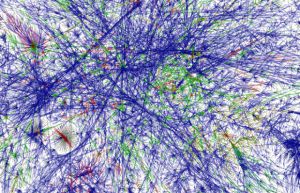
A visualization of routing paths through a portion of the Internet. (Photo: The Opte Project/ Wikimedia Commons)

My concern in this post is in the evolution of epistemic colonization through the internet or more generally how the new media is used for its establishment, propagation, and growth. A catalyst for the growth of these concerns is the recent discussions, including the very public debate in our Parliament, that have made the issue of net neutrality, namely the principle that all Internet traffic should be treated equally, very relevant. The rhetoric, however, elides an important fact: the internet is intrinsically not a neutral space. In terms of value, or in terms of perceived value, the net is most certainly not neutral. And, in addition, not isotropic, at least not equal in all directions. This asymmetry plays an important role in the manner in which information is transmitted, and through that, the way in which knowledge moves around and is valued in the academic sphere.

Commentators have often pointed out that (as a body) we tend to respect knowledge and information that originates from or is validated by agencies that are located typically in the west. A consequence is that we also respect our own scholarship only when it is published and/or otherwise validated in the west and not in India. In fact, we even learn more willingly from sources that are western or that are trained in the west (an exception might be made for the notorious three-author kunjis that are required reading for passing university exams, but even they are usually poor copies of standard western texts).

The above issues have changed in the time of the internet through a process of digital colonization: spatial location is unimportant, historical connection is almost irrelevant, the immediate beneficiaries could well be unknown, and it happens faster than ever before. The colonization, such as it is, is complete- in all essential aspects- accelerating and exacerbating the already well-known issues of self-esteem that confronts academics in our country. What this does to our internal compasses- cultural, intellectual, or even moral- is a matter that should concern us, especially since the internet and social media is all pervasive and (for these times, at least) permanent.

Given that the preponderant language of internet discourse is English, and that the overwhelming majority of innovations in hardware or software occur typically in the west or (at the very least) in the global north, there are similarities to our historical past, but I should make it clear that this is not a rant against the evil west. For one thing, that is a bit dated anyhow, and we are, for better or worse, part of a global consciousness that counts both Plato and Einstein as one of “ours”, as much as we do Ramanujan or Kalidasa.

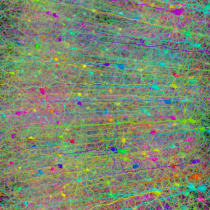
Image (courtesy Wikimedia Commons) of model neural connections.

However, the internet has become central to many of the fundamental ways in which we value or evaluate scholarship. If information is not available digitally, it is invisible. If meta-information is not available on a document, it is not just invisible, it is unimportant. Indeed, epistemic value is almost synonymous with how easily an object (or idea) is located by a popular search engine such as Google or whether it has its page on Wikipedia, or some similar measure of relevance.

Much of our scholarship in India therefore suffers from invisibility, most obviously when in languages other than English, but also work that appears in journals that may not have internet presence. The argument that the responsibility for this is ours cannot be countered, but the barriers that need to be crossed can sometimes seem very high, and are often growing higher. Wikipedia, for example, does come in many Indian languages, but many of the pages tend to be translations, and in any case, would be missed by most search engines.

The search engine is undeniably a major tool in contemporary research. Google, in particular, has changed so much of the way in which we retrieve information. Whether Google or any other, all search engines employ algorithms to search for information and display them in an order than depends on various criteria that include, among other things, the importance of each page as determined endogenously.  A piece of work, regardless of its intrinsic quality, is effectively invisible to the vast majority when it does not appear on the first two pages in response to a search query.

Over the past few years, many of the leading journals in the world have also gone digital- there are no print versions, so that accessing them is only possible via the internet. Many high quality journals (such as the Public Library of Science family) are born digital, and many of the older and highly prestigious journals have expanded, adding additional specialty offshoots that are purely digital (such as the various new members of the Nature family). This not only changes the way in which scholarly papers are read, namely online, but it also decides, indirectly, who reads them. Even though several of the new online journals are “open access” and there is a significant movement to support open access publications of scholarly articles, the fact that access to scholarship is only possible via the internet induces an inherent asymmetry. At the same time, the impetus to publish in online journals has increased. In part this is because getting into some of the more prestigious ones can ensure visibility, and in part, the proliferation of purely online journals has meant that more than ever before, there is a journal for each article.

Visibility matters, not just for the obvious reason that every scholar likes her or his work to be read, understood, and appreciated, but it matters for career progression and for reputation. Publications have always mattered for academic promotions, especially in higher education, and today, there are several metrics that help academic administrators decide a candidate’s worth: the number of citations, the h-index, the impact factors of journals, and so on. These indices eventually can substitute for the value of the scholarly contribution; getting published in a specific journal becomes the goal, regardless of whether the original research objectives might have been subverted in the process.

shacklesThe internet has gradually thus assumed an epistemic role, one that does not just dominate the process of scholarship and knowledge creation today, but in many cases, determines its course.  That this still manages to leave us intellectually colonised in world that is otherwise relentlessly globalizing is one consequence, of course, but it is a consequence that we accept, and more often than not, regrettably, one that we seem to expect.


This article originally appeared here. Republished with kind permission of the author.

Should India spend more of its GDP on research and development?

Source: https://pixabay.com/p-1182713/. License: CC0

According to the World Bank (2015 data) India spends 0.63% of its GDP on research and development. This is much lower than the World average (2.23%). Other countries that have similar fractions of GDP allocated to R&D include Latvia, Thailand and Tunisia. Consequently, there have been several claims, primarily from the scientists (e.g. this and this), that the R&D budget for India must go up. What do you think?


[totalpoll id=”697″]

Confluence: What is it all about?

Confluence Logo

Confluence is an online platform that aims to bring together all stakeholders of science in the society. We invite you to participate by contributing to jargon-free discussions on all topics of relevance to how science and society impact each other.


Scientific and technological research is a social activity, performed and administered by human beings.  The aims of this endeavor are to address our curiosity about the world around us and to improve the quality of our life.  In its modern-day avatar, scientific and technological research is performed in academic laboratories and by industry.  Academic laboratories are primarily tax payer funded while industrial research groups create wealth by commercializing the output of their research for the society.  In either case, society is impacted by their labor and in turn affects how that research is done.  Therefore, it is critical that the society, as a whole, is aware of the current state of scientific progress and can influence how it affects them.


Unfortunately, over the last several decades, a lack of communication has developed between the various stakeholders of science.  Scientific research remains largely incomprehensible to the non-specialist.  The implications of scientific work is rarely communicated to the society and is rarely debated widely.  Ironically, this break-down of communication works both ways.  Scientists blame policy-makers for adopting “scientifically unfounded” policies and for lack of funding.  Social scientists blame scientists for being arrogant, elitist and condescending.  The list of mis-communications is endless.  As citizens, we wonder what is going on and whom to believe. Several of our concerns and queries remain unarticulated, and therefore unanswered.


Confluence aims to address this lacunae by providing an open, web-based, inclusive communication platform. It welcomes every member of the society to engage with each other as an equal partner and to articulate their observations, concerns and possible solutions related to the practice of science in the society.


Discussions, therefore, are the soul of Confluence and everyone is welcome to participate.  These discussions cannot happen in a vacuum and we seek inputs from our readers on issues that merit critical examination.  These can be in the form of descriptions or prescriptions. These can be longish articles (up to 3000 words) or short notes (up to 500 words). However, they need to be written in simple, jargon-free language allowing participation from everyone.  We urge you to go through our author guidelines for more details before and during submissions. Brief pitches prior to submission are also welcome


From time-to-time, the Confluence staff shall also cross-post interesting articles from other sites (with proper attribution), to highlight important issues.


If you are a science administrator who wishes to know the pros and cons of a proposed science policy, we urge you to post it on Confluence and provoke a debate. If you are a science journalist who has spotted some major trends in terms of recent discoveries, but are not sure how they will impact the society, please initiate a discussion on this platform. If you are a scientist who has reservations about certain scientific practices and feel that they merit scrutiny, Confluence will help you broadcast your expressions on it and reach its audience. Most importantly, feel free to tell us what is it that you would like to see on Confluence by commenting on this article or dropping an email to confluence.reachus@ias.ac.in. Ultimately, Confluence is intended as a user’s forum and should become what the users want it to be.

Should fire-crackers be banned in India?

Source: Wikimedia commons

The Supreme Court of India recently banned sale of fire-crackers in the Delhi-NCR region during Diwali. The reaction was divided: experts welcomed the ban, some argued that fire-crackers can hardly be blamed for the poor air-quality of the NCR, while the firecracker industry claimed that it suffered heavy losses. The air quality in much of rest of India is perhaps not as bad as Delhi, but not very good either.

So what should we do as a society? Take a cue from the Chinese (who have banned firecrackers in 444 cities) and ban fire-crackers in all regions with poor air quality? Or just continue with business as usual at least till the connection between air quality and fire-crackers is more strongly established? Should we invest in developing non-polluting fire-crackers and slowly start phasing out the existing industries once such a product is developed? Who should bear the cost of such research, the government or the fire-cracker industry?

Let us know your views in the comments section.

Towards an Index of Scientific Temper

Source: Wikimedia Commons

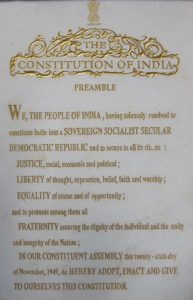
As per the Indian constitution, Indian citizens have eleven duties. And one of them is to develop “scientific temper, humanism and the spirit of inquiry and reform“¹

What indeed are scientific temper, spirit of inquiry and reform?

From Nehru onwards, many politicians, bureaucrats, science activists, science communicators, academicians including scientists, have written about scientific temper. And there have been conferences and declarations on scientific temper2-5. But I could not see any clear and commonly accepted definitions of the terms. So I raised these questions in several workshops on science writing for scientists, and researchers over the last three years.

What is Scientific Temper? What does it mean to have scientific temper? How do you know whether a citizen of India has it or not? How do you observe/measure scientific temper?

As scientists, we need well defined, measurable, quantifiable concepts to create a common understanding of phenomena.  However, there has been no attempt to define, measure, or quantify the concept of scientific temper, a term mostly used only by Indians. Hence most of the literature available has no practical consequence.

Obviously, when the makers of the Constitution wrote those lines, they had not thought about these issues. But then, later in history, we do find that people have created indices of abstract notions such as Human Development and Happiness. So is it not feasible and desirable to have definitions and measures for “scientific temper, humanism and the spirit of inquiry and reform” in place? Shouldn’t Indian scientists take a lead in this matter?

To initiate this dialogue let me summarise the answers that I have managed to harvest so far by raising these questions on various platforms.

First, we must reformulate the question: are there observable, behavioural, if possible, measurable, characteristics that can be used as indices of I. scientific temper, II. spirit of scientific inquiry III.  Humanism and IV. reform?

These are the answers I have got so far to this question:


I. Scientific Temper

  1. A person with scientific temper has curiosity.  He or she feels that natural phenomena can be understood or is understandable. That the person has curiosity is detected by the questions that are asked by the person. This is a measurable parameter.
  2. The person is an active seeker for the answers to the questions that arise in his or her mind. This is detectable by the behaviour of going to others who might know the answer – others who may be dead and gone but have left books or may be far away, but have written on websites. Again, an observable / measurable parameter.
  3. Skepticism and critical thinking form the core of scientific spirit. The person does not accept the answers received as true. So he or she questions the answers. Again, observable behaviour.

Questioning a phenomenon as in 1 above and questioning an answer as in 3, are entirely different capabilities. The ability to detect logical contradictions within different parts of the answer (or with other accepted answers) is the underlying factor, not curiosity. This can indeed be detected in people, but I am not very sure of how it can be measured. If you can help, we can crack the problem of making an index for scientific temper.

Now the other terms in the Constitution:


II. Spirit of Scientific Inquiry

The factors that can help measure “spirit of inquiry” are perhaps connected to the factors mentioned under the notion of scientific temper. The notion of spirit of inquiry is an extension of curiosity and can be detected in some people as an experimental attitude.

We want to know what will happen, if…

The tendency to check whether one is on the right track empirically is detectable in behaviour. It is an extension of the second factor of scientific temper – active seeking – except that it is not oriented to people, dead or living or to existing knowledge. The person is actively engaged in prodding phenomena, constructing knowledge, using different modes of inquiry.

It is also the foundation of the third factor of scientific temper: the recognition that human knowledge is fallible. But the spirit of inquiry is a conviction that if one moves systematically, the problem of human fallibility can be rectified.

Now, the problem is – though the spirit of inquiry is, at times, detectable in people – we don’t have a measurable parameter… Is it possible to convert the notion of spirit of inquiry into some quantifiable parameter(s)?


III. Humanism

The word “humanism” in the Constitution appears to be a contradiction in terms. Because the concept asks us to go beyond ethnicities, language, religions, and even nationhood to accept other human beings and their welfare as goal for our actions. So India, as a nation, is asking its citizens to keep aside nationalism.

The concept of humanism is too abstract. It is perhaps difficult to see the positive side of humanism being expressed. Concepts such as compassion, altruism and philanthropy need not be oriented to humanism directly, and thus do not seem to be good candidates to serve as proxy measurements for humanism. We may, however, consider the opposite, inhumanity. Discrimination against a set of people – expressed through speech or deed – is easily detected in behaviour. Perhaps, with some tweaking, the concept of inhumanity may become a candidate for a quantifiable factor to measure humanism.

Somehow, I feel an aversion to doing this. It would be better to create a measure of the positive aspects of humanism rather than measuring its lack, absence or the negative aspect.


IV Spirit of Reform

Spirit of reform makes us accept the responsibility of taking efforts to change the world as we think best – if possible, after considering all the above: only after applying scientific temper and spirit of inquiry to a problem and after considering the impact of the reform on humans in general, should we attempt reform. The history of mankind is full of stories of reforms that have had disastrous consequences on populations. Thus, it is, perhaps, the wisdom of the writers of the Constitution that prompted clubbing all these four terms into one single phrase.

The question now is – how can we detect it in people? Is there any observable parameter that can be used, even as a proxy?

Changing the world so as to make it comfortable for oneself is a quality that humans share with other animals. So, of course, such efforts taken by individuals do not count as part of spirit of reform. Reform pertains to human society, not to other natural phenomena.

Masquerading in Einstein masks, walking for science or throwing buckets of ice on oneself can also not be taken as an indicator, since these are tokenisms, not actions taken with adequate backing of scientific temper, spirit of inquiry and humanism.

I am not yet happy with the answers that I have so far.

And there are unanswered questions. Can you help?

What are the indices for scientific temper, humanism, spirit of inquiry and reform?


References

  1. Part IV A Fundamental Duties 51A (h) http://lawmin.nic.in/olwing/coi/coi-english/Const.Pock%202Pg.Rom8Fsss(8).pdf retrieved on 18th October 2017
  2. Bhargava P M and Chakrabarti C, Angels, Devil and Science: A Collection of Articles on Scientific Temper, National Book Trust, New Delhi, (2010)
  3. Scientific Temper Statement Revisited-2011 The Palampur Declaration, http://www.caluniv.ac.in/global-mdia-journal/DCMNT-JUNE%202013/2.%20DOCUMENTS-JUNE%202013.pdf, accessed November 2017
  4. Mahanti, Subodh; A Perspective on Scientific Temper in India, J. Scientific Temper, 1 (1): 46-62 (2013)
  5. Panchapakesan, Natarajan; Scientific temper and education: a framework for discussion, Current Science 113(9): 1655-1656 (2017)

The future of plastics: reusing the bad and encouraging the good

File 20171114 30034 1bbrxm6.jpg?ixlib=rb 1.1

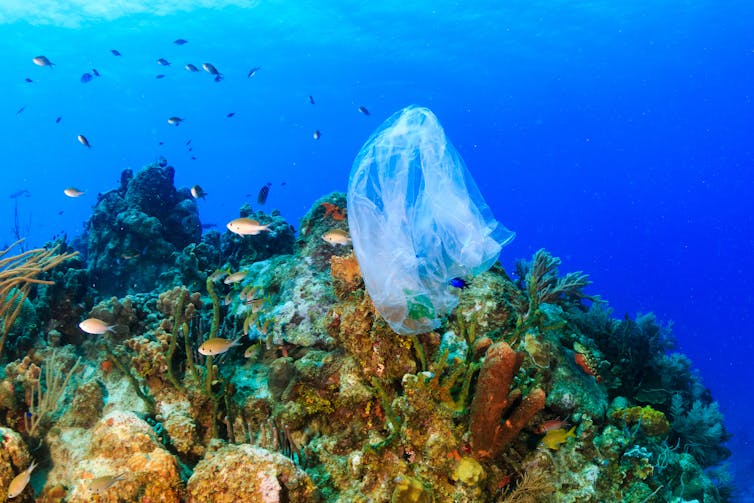
Plastic pollution: discarded plastic bags are a hazard to marine life. Richard Whitcombe/Shutterstock, CC BY-ND


Plastics have got themselves a bad name, mainly for two reasons: most are made from petroleum and they end up as litter in the environment.

However, both of these are quite avoidable. An increased focus on bio-derived and degradable composites as well as recycling could lessen pollution and, in fact, plastics could make a positive contribution to the environment.

Plastics for bad

The durability of plastics makes them so useful, but at the same time, it turns them into a persistent (and increasingly big) blot on the landscape, or more importantly the seascape, once discarded.


Read more: This South Pacific island of rubbish shows why we need to quit our plastic habit


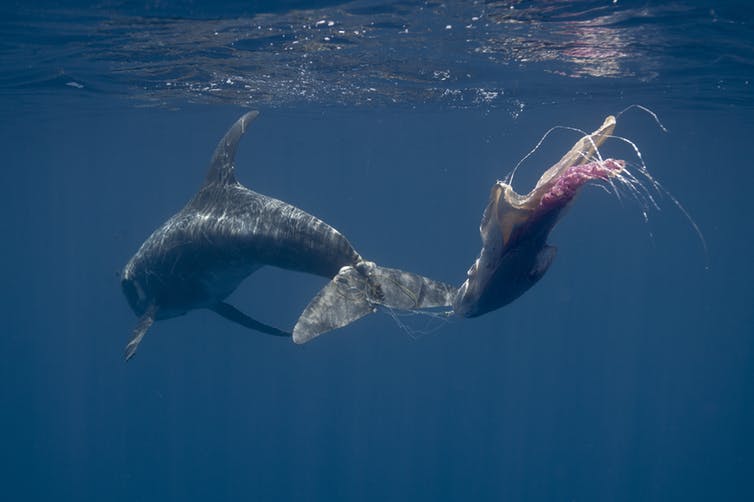
We’ve known for a while that bulk plastics are polluting the oceans. Converging sea currents are accumulating plastic waste in a floating island known as the Great Pacific Garbage Patch, which now covers an area larger than Greenland. The bigger bits of plastic are life-threatening to marine life and sea birds. They can strangle marine mammals or birds and build up in their stomachs and guts.

A dolphin entangled in fishing line and plastic bags (Indian Ocean).
from Shutterstock, CC BY-ND


More recently, awareness of microplastics has raised concern about their ubiquitous presence in the food chain. Commentators suggest that by 2050 there will be as much plastic in the sea as there is fish. Who wants to go catch some plastic then?


Read more: How microplastics make their way up the ocean food chain into fish


Beyond that, plastic production currently relies on petroleum and that has raised issues about health hazards, generally associated with petroleum-based products during production, use and disposal.

Plastics for good

Plastics can contribute positively to the environment in the following ways:

  • Reduced food wastage

Between one-quarter and one-third of all food produced is wasted through spoilage. But without plastic packaging, it would be considerably worse and have a larger carbon footprint.

Many of the recycling enthusiasts I know do not think about throwing out spoiled food that required energy in terms of planting, cultivating, harvesting and transporting and therefore will have added to greenhouse gas emissions.

  • Lightweight transport

The use of plastics in transportation (cars, trains and planes) will reduce fuel consumption. Their application (along with reinforcing fibres) in aerospace as alternatives to traditional metallic alloys has brought huge gains of fuel efficiency over the last few decades.

Incorporation of fibre-reinforced plastics in the Boeing 787 Dreamliner, for example, has resulted in fuel efficiencies that are similar to a family car (when measured by kilometres travelled per person). By the way, carbon fibre, the aerospace fibre of choice, is produced from plastic.

There are good things about plastics including benefits for the environment, but is it possible to make use of the good aspects and avoid the bad?

Future proofing plastics

Plastics are, chemically speaking, long chains or large cross-linked structures most commonly made up of a framework of carbon atoms.

For a long time, we have been using bio-derived plastics – naturally occurring materials such as animal skins including leather, gut and wood. These forms of plastic are complicated chemical structures that can only be made in nature at this stage.

Some of the early synthesised plastics were made from naturally occurring materials such as casein (from dairy) that was used for simple items such as buttons. The development of petroleum-based plastics has been a major distraction from such materials.

However, in the last couple of decades, bio-derived plastics have become available that provide good replacements. These include starch-based plastics such as polylactide (PLA), which is produced from corn starch, cassava roots or sugarcane and processed in the same way as petroleum-based plastics. Such plastics can be foamed or used to make drink bottles.

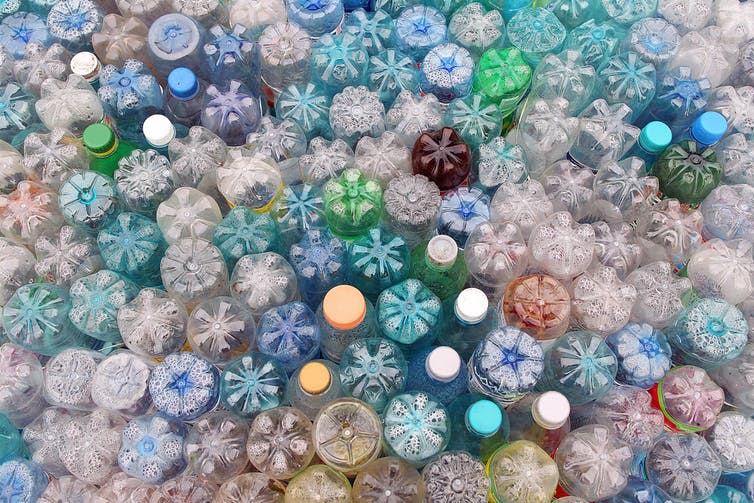
Plastic bottles ready to be recycled.
From Shutterstock, CC BY-ND


Recycling plastics is another essential step towards reducing the environmental load. Let’s face it: it is people who are doing the littering, not the plastics themselves. More effort could go into waste collection and a carrot/stick approach should include disincentives for littering and a plastic tax which would exclude recycled plastics.

Incentives are also needed to encourage product development that takes account of the full life cycle. In Europe, for instance, legislation has made it compulsory in the automotive industry for at least 85% of a car to be recycled. This has had a dramatic influence on the materials and design used in the industry.

Even with best efforts, it is unrealistic that we would capture all plastics for recycling. Biodegradable plastics could be a useful tool for preventing environmental damage. PLA (polylactide) is biodegradable, though slow to break down, and there are other forms available.

This highlights the need for more research into controlling biodegradability, taking into account different applications and the need for infrastructure to deal with biodegradable plastics at the end of their life. Obviously, we don’t want our planes biodegrading during their 20 years of service, but one-use water bottles should break down within a short time after use.

The planet doesn’t have to become a toxic rubbish dump. In the short term, this will need some government action to encourage bio-derived, recyclable and biodegradable plastics to allow them to compete with petroleum-based products.

The ConversationThere are signs of improvement: increasing awareness of the harm plastics cause and a willingness of consumers to pay for plastic bags or to ban them. We need to stop dumping in our own backyard and remember that the environment is where we live. We ignore it at our peril.


Kim Pickering, Professor of materials science and engineering, University of Waikato

This article was originally published on The Conversation. Read the original article.

Announcement event for Dialogue: Bangalore, 13 October 2017

“DIALOGUE: Science, Scientists, and Society” was announced at an event held at the Indian Institute of Science, Bangalore, by Prof Ram Ramaswamy, president of the Indian Academy of Sciences. There were talks by Prof. Roddam Narasimha, Prof. P Balaram, and Prof Mukund Thattai, and a panel discussion involving Ms Seema Singh, Prof Sundar Sarukkai and Prof Shiv Vishwanathan as well as the previous speakers.

Watch video recordings of the event here.