Article Series: Ethical Responsibilities of Academicians

What is the purpose of doing academics? What ought to be the ethical values which guide teaching, research, supervision and mentoring? How is academics relevant (or, how can it be relevant) in contemporary socio-economic, socio-political and cultural contexts? What is the ‘vocation’ of a teacher/researcher in contemporary times? Can we think about reorganizing and restructuring academics so as to make it more inclusive, democratic and ethically committed?

Here are a series of articles on the topic that were received from our readers in response to the above questions.

  1. Ethical duties and responsibilities of academicians in a patriarchal and casteist Society by Tejal Barkhade
  2. Do the dark undemocratic paths pave the real future of science academia by Preeti Umarao
  3. The cost-benefits of raising ethical issues by Milind Watve
  4. Academician: a hope for a brighter future by Shambhavi Naik
  5. Undergraduate research, an approach to create sustained academic curiosity by Uthpala Ramprasad
  6. The Socratic oath of an academic by KP Mohanan
  7. Another Socratic oath by Tara Mohanan

The Impact of the coronavirus SARS-CoV-2 on the Education Sector in India

Introduction

The coronavirus SARS-CoV-2 causes a deadly disease, COVID-19  with a fatality rate between 2-3%. It has created havoc as it has engulfed the whole world, being declared a pandemic by the WHO. Lockdowns that have been imposed in almost all countries to save the citizens from the lethal infection have taken a toll, shattering economies. The disease has not spared even the advanced European countries, let alone the backward African countries and the developing Asian countries. The first and foremost job in the hands of the governments is not to save their people from the infection by imposing lockdown and social distancing only, but also to cope with the lockdown  to save the economies. The Indian Government is no exception. The Indian economy was already passing through a recession and experts were saying that the economy was heading towards depression even before the advent of the corona virus. COVID-19 has dealt a severe blow on the economy. It will be difficult to come out of this situation and depression once the lockdown is over.

Against the backdrop of such a pandemic, it is obvious that the education sector will suffer in all the countries like many other sectors. The Indian education system has been badly affected by the entry of the disease and also because of social distancing measures that were taken to prevent the spread of the disease. The ultimate act on the part of the Central government has been to impose a lockdown on the entire country.


Impact of Corona Virus on Education

Coping up

Even before the lockdown was enforced in the 3rd week of March, 2020, the state governments in their individual capacities declared the schools and colleges and the other educational institutions closed for a certain period of time from the middle of March. The closure was extended for some more time and finally the lockdown was declared. Thus the education system has been hampered for the last one and a half months. This is about regular classes in the educational institutions. Just before the full lockdown, international flights were banned from leaving and entering the country, thereby restricting people from going abroad to attend scheduled international seminars, workshops and also from visiting foreign universities for taking and giving classes and lectures etc. This was followed by cancellation of the national and domestic flights also thus resulting into people not being able to visit the places for educational purpose even inside the country. Finally with the lockdown, the trains also stopped running and thus the scheduled seminars etc had to be cancelled in all the stages, like, national, state and regional, and even local. Not only have seminars been cancelled, even visiting educational institutes for other purposes had to be postponed, for example, taking viva for thesis, projects etc and for other administrative purposes.

With the full lockdown being imposed in the country, the education sector initially came to a standstill. This is an unprecedented and unfamiliar situation, and nobody still knows when the situation will be normal. It is imperative that the lifting of lockdown should obviously not take place in one go, but gradually, as otherwise the very purpose of the imposition of lockdown will be defeated with the spreading of the disease again. It is also true that unless the social distancing measures are removed, bringing back normalcy will be difficult. It is a known fact that the educational institutions are most vulnerable for the spread of the disease due to the mass gathering in the classrooms. Therefore unless, the infection is totally eradicated from the states, it is difficult to bring back the students to the schools, colleges, universities and other educational institutions. Resuming normal classes in classrooms therefore seems a distant dream at this time.

Gradually the system is getting accustomed to the situation. Distance classes, using various online platforms, have been started in many institutions. It is, however, difficult to say at this moment, how far it has been successful, especially when one is situated in an urban areas and has the advantage of teaching an elite class. As a teacher of one of the elite (and oldest) Universities of the country, I have the advantage of teaching an elite subject predominantly to urban students, where all students have smartphones although all of them may not have desktops and/or laptops. Even the few semi-urban and/or rural students in my class are used to having online chats on their smartphones. Since the hostels are closed now many students have gone back to their homes, some in rural areas where they cannot connect, mainly due to poor internet connectivity in their hometowns. The courses I teach are non-laboratory based, and are largely non-mathematical, so I am able to continue with online classes.

The situation is very different when one looks at rural colleges and universities. Many students in rural areas may not have access to smartphones or computers. Even if they do, the net connectivity may not be as high as in urban areas. In any case, many students of the most elite institutions, the IITs, are not able to have access to online classes from their homes due to these reasons. Therefore some if not all of the universities, and some of the colleges have started online classes. The same can be said about other higher educational institutions, be they governmental, government-aided or autonomous.  Private institutions normally draw students from affluent urban classes, and hence do not face problems in dealing with this unprecedented situation.

The school education system portrays a dismal picture. There are many kinds of schools in the country: government, government-aided, private schools run by missionaries as well as those run by public and private trusts. There are also elite “public schools” and innumerable village level elementary schools under the Sarva Shiksha Abhiyan scheme, the latter catering to the below-poverty-level sections of society.  A majority of children (by number) attend village elementary and primary schools. Even in the urban areas, many such primary schools give classes to the poorer sections; most slum children attend these schools. In addition to the economic divide and the rural-urban divide there is a language divide as well.  Vernacular medium schools largely (though with exceptions) cater to the poor while English medium schools cater to other sections of the society. Here again comes the aspect of the digital divide: most poor students do not have access to smartphones, and even if they do, the net connectivity is poor and content is often not available in vernacular languages. This gives rise to discrimination in access to education.

Today many schools in urban areas are having online classes, while the majority of rural schools do not. Very young children are not able to learn through online processes as they can neither handle computers nor mobile phones. In many households, there is no computer, and in many, children are not allowed smartphones as well. Both these problems exist regardless of class. Therefore, the digital divide at the school level leads to a gap between the haves and have-nots.

Examinations have either been postponed or cancelled. Cancelling intermediate semesters or class annual exams or Class XI board exams will only weaken the foundations of the students. While it is true that online examinations are not possible at this time given the existing infrastructure in the country, already cancelling the exams kills the impetus of learning. The authorities could have waited for the lockdown to end before announcing such a drastic decision.

India is a vast country with many complexities. The economic divide, the rural-urban divide and the resulting digital divide all have played an important role. The overall response of the country to the pandemic has thus been very mixed in the education sector.


The future

Though the coronavirus entered India in the month of January, it was not until March that the seriousness of the situation was felt. For one and a half months now the education system has been   in the doldrums. In the meantime the severe economic effects of the lockdown have begun to be felt and there have been consequent social changes. No one knows at present, what the ultimate effect of this economic harshness t will be once the lockdown is over. The threat looms large particularly over low-income families. Many students belonging to low income families may not be in a position to  continue with their education due to a loss of income, especially those in the informal and unorganized sectors.  This may especially be true for science and other technical education. At the same time, guest teachers and ad hoc or para teachers in private educational institutes may lose their jobs as well.

So far not much political change has been seen as a result of the pandemic. Social changes may emerge due to people staying at homes day after day, forced to spend time within small families and in limited space. The strain induced by the lockdown could have long-term effects, but how this will affect the higher education system is hard to predict right now. There is some evidence that domestic violence has increased, and there may be some effects on students’ education, especially if families break-up as a result of the lockdown. In any case, the resulting economic changes are sure to affect the higher education system indirectly.


Role of Technology

Technology ought not to play a bigger role in teaching of economics in the post-corona period. It has already been mentioned how the digital divide plays an important role; therefore in order to reach all students, classroom teaching is the best option. This is especially true for laboratory-based subjects. While humanities related subjects may be taught online, the teaching will not reach all students. (Lab-based practical classes cannot be held online as it is not possible to set up labs at homes, but that is another story.) My subject, economics, has aspects of both humanities and science, requiring both lectures as well as (computer-based) practical work. The practical part of the course is difficult to conduct online since all students may not own computers and in addition, we need proprietary software etc. For courses with mathematics it is difficult to give instruction online as well.

Online classes are not capable of substituting classroom lectures. The former is very seldom able to generate the interaction that is needed in a class. Moreover, the teachers’ body language, which is a part and parcel of the classroom lectures and is imperative for their success, is also missing in online classes. The use of technology will not only lead to more discrimination, but also will create some practical problems. It will also lack the desired interaction in the class.


Impact of Online Education

Calcutta University is large, catering to more than 20,000 students each year. It also has around 150 undergraduate colleges under its purview. While it is difficult to gauge the impact of the online classes in the institution so early, students of all subjects do not have the access to online connectivity, especially those staying in the rural areas. The practical classes in the lab-based subjects are also not being held online and mathematical papers are difficult to be instructed online. Hence, it can be said that the impact has not been very positive.


Effects on Research

Research has been affected in a negative way. While it is true that non-lab based research can be carried on through the students’ perseverance and the contact with the mentor through telephone calls or emails, but one-to-one correspondence, with face to face discussion has no substitute. In many cases, where secondary data are needed, the students cannot visit the sources like the institution itself, offices and libraries, as all data are not available online. Similarly, primary data collection has also stopped since visiting sources is forbidden, and hence research is severely hampered.  Mentorship improves only when there is face-to-face correspondence. In the lab-based subjects, research is totally stalled. Doctoral research has been hindered, both in primary and advanced stages.

Similarly, M.Phil research has also slowed down. This is a cause for concern since M.Phil is a time bound project. There is a negative effect on project work as well. Thus on the whole there has been an adverse effect on research at all the levels due to the coronavirus and COVID-19 pandemic, and the resulting lockdown effect on the economy.


Conclusion

It is safe to say that the present pandemic will not only affect the economy adversely, but it will also affect the education sector adversely in India. Already, one and a half months is lost. No one is sure how long it will take for the education sector to come out of the abnormal situation prevailing in the country at present. Moreover, education system is especially vulnerable since mass gathering cannot be avoided in our classrooms. Online classes are no substitutes for classroom lectures for a variety of reasons. The digital divide will only leads to discrimination and practical classes based on laboratories cannot be held online. Giving instructions for mathematical courses is also difficult online. The interaction between the teachers and the students is a crucial component of teaching and cannot be replicated in online classes. Research has been severely hampered due to the lockdown, and hence the sooner normalcy returns, the better.


Sudakshina Gupta is a Professor at the Department of Economics, University of Calcutta. Views expressed are personal.


This article is part of a series called New Directions in Higher Education in India after COVID-19. The remaining articles of the series can be found here.

Article Series: New Directions in Higher Education in India after COVID-19

It has been just about two months since 11 March 2020 when the World Health Organisation declared COVID-19 to be a pandemic, about ten weeks since it was declared a public health emergency, and a little over four months since the disease was reported. This pandemic has, as we increasingly realize, the potential to change the entire world order. In some quarters this is already seen as a historical divide, BC (before Corona) and AC (after Corona).Across the globe educational systems at all levels have been seriously impacted even in this short span of time. The virus SARS-CoV-2 (and the diseases it causes, COVID-19) has affected all schools, colleges and universities. By mid-March mostly, these have all been shut: classes have been suspended, examinations, research work and virtually all laboratory experiments have been forced to hit the “pause button”. Students everywhere are in limbo, facing an uncertain present, and a more uncertain future.

Although the University Grants Commission and many universities have quickly decided to conduct classes and examinations online, its implementation in the country is not an easy task. Access to smartphones and the internet is still very limited. At the same time, it is undeniable that technology can play a big role in offering alternatives to regular academic activities, so one effect of this pandemic may well be to bring significant changes in the traditional education sector in regards with the use of technology as a tool for learning. How administrators and teachers respond to this difficult time will decide the future.

Every discipline faces distinct challenges when it comes to online learning. Courses which have always had a laboratory component will need a redesign. Compared to urban students, rural students might face more challenges when the traditional methods of learning give way to new pedagogic techniques. Education will have to adapt. The present discussion aims to explore these issues.

Now is as good a time as any to start thinking about these matters. Online classes have been thrust upon all sorts of institutions largely because there seem to be few options, but the experience so far has been very mixed. This discussion is therefore intended to gather the experiences and thoughts about the present and future of the education with regard to the pandemic, from academicians and non-academics cutting across disciplines and geographical boundaries.


Articles already published in this series:

  1. Post-COVID Higher Education – a perspective by Sandeep Sen
  2. The impact of the coronavirus SARS-CoV-2 on the education sector in India by Sudakshina Gupta
  3. COVID-19 and learning history by Marilyn Gracey Augustine
  4. COVID-19 risks deepening existing disparities in Indian Educational institutions by V Madhurima
  5. The COVID-19 pandemic and mathematics at JNU by Riddhi Shah
  6. The impact of COVID-19 on education at AMU by Qudsia Tahseen
  7. Experiential learning in India during the COVID-19 pandemic by K. Prahalad
  8. How COVID-19 has redefined education in India by Ambili Thomas
  9. Can simulated lab experiences replace real physics labs in a post-Covid India? by Vikrant Yadav and Asya Darbinyan
  10. The survival cost of higher education and the moral weight of our choices by Nithin Jacob Thomas
  11. Post COVID-19: a technology-driven era for higher education by Alok Srivastava
  12. After the pandemic: the precarious classroom by Usha Raman
  13. The choices before us: online or bust? by Sanat K Kumar
  14. ‘New’ directions in higher education in India after COVID-19? by Jyotsna Jha
  15. Education in the time of Corona: will the system withstand the chaos? by Ann Mary Jose
  16. Post-Corona Turmoil in Theological Education by Nitin S. Cherian
  17. Education made remote: concerns on digitally mediated education in pandemic times by Aarushie Sharma
  18. Can the pandemic catalyse efficient distant and distributed education in India? by Ram Ramaswamy
  19. Teaching through tragedy: How teachers can cope with the virtual classroom by Nawaz Sharif


Post-COVID Higher Education – a perspective

After deliberating for a couple of weeks, the government decided to bite the bullet in mid-March and directed the closure of all educational institutions till further notice. This also implied that the ongoing Board exams were suspended indefinitely, as were other competitive examinations, plunging an generation of students into a vortex of uncertainty. Most universities were caught unprepared although the faculty in the universities could see it coming sooner than later. The public universities packed off the students and closed their shutters pending the next directive from the government. Some of the new generation Private Universities sensed an opportunity to prove their mettle and instructed its faculty to switch to an online mode that were adopted by many US universities only a few weeks before.


Online instruction is dependent of two crucial components – availability of a versatile collaborative software platform and connectivity from both sides – the instructor and the learner. This is often not understood and too much importance is attached to the sophistication of the platform which often resembles the cockpit of a modern aircraft. Initial experience with this medium can be compared to the Bundesliga matches that resumed recently in empty stadiums. Public universities have a large number of students who do not have access to fast communication networks – this could vary between 20 to 30 percent whereas the demographic profile of a private university is believed to be between 5 to 7 percent. Therefore, even if the university is perfectly capable of delivering online instruction, they would still have to be sensitive to the fact that it may not be fair to a significant fraction of the students who may not have the necessary resources from their end.


Distance education started in India in mid 80s pioneered by the setting up of IGNOU. One only needs to visit their website that boasts of such core values like flexibility, openness, affordability, inclusiveness, and the promise of life-long learning. This model has been emulated by many other universities in India to reach out to larger and more diverse student population. However, it is debatable whether they have been able to match the standards of standard in-class education. Moreover, the distance education mode also relied heavily on availability of in-class infrastructure and connected many part-time teachers with part-time learners. Online education was an evolutionary leap in the same direction that has come up in a big way with the emergence of big players like Coursera and EdX and now BYJU’s which is targeting school-children. Even Khan Academy, that resembles a very conventional chalk and board classroom, is thriving because of the online mode.


Mainstream university education has flourished under the premise that there is no substitute for the ambience of the university campus and live learning with peers in the classroom and has been able to maintain an exclusivity till now. The mainspring of the intellectual inspiration is said to flow from the bustling quads and the umpteen brain-storming sessions in the cafeterias. At best, they would let some of the more popular subjects be taught using these outreach platforms which mainly contributed to building their brand value for the in-campus experience.


As universities closed down almost overnight, the faculty and the administration were scrambling to put together some methodology to keep the semester going, online became the only recourse and all the hesitations were cast aside in a hurry. The initial weeks were arduous and onerous from both sides – the teachers and the students. Many instructors who prefer teaching using power-point slides, found this transition easier to handle. Others preferred collaborative platforms like MS-Teams (formerly Skype Professional) or Zoom and many others that were mostly used as video chatrooms for both social and professional purposes. Others found tablets a good substitute for the blackboard, so much so that the sellers ran out of stock in no time. In all this, the internet has been put under tremendous pressure to provide the necessary bandwidth and much to the credit of its architects, it has withstood this test.


The inhibition surrounding these platforms may now disappear – although necessity is the mother of invention, commercial motivation is also a powerful driver. Indeed, there is now a strong lobby emerging that is advocating online instruction as a solution to many issues that traditional education is unable to address. The rationale is very similar to the benefits of distance education with the added advantage of technology providing easier solutions that didn’t exist a decade ago. So, what seemed like a force majeure in the aftermath of COVID-19, may actually become a post-Covid alternative and challenge the sacred cows of the (increasingly expensive) university education. There is also a realistic possibility that the post-Covid education may continue to gain momentum in an online mode, even after Corona has been vanquished! The remaining article would try to examine this scenario which the author feels is a very plausible one and could become a watershed in not only a pedagogical transformation but the very definition of education.


The following questions will be repeatedly asked in the coming months and years:


  • What is the efficacy of the online versus traditional modes of delivering education?

This will be difficult to answer as the requirements may adapt to the new paradigm. However, what will certainly require thinking out of the box is a new model of testing and grading. Learning and testing are intertwined intricately in the contemporary delivery of education. Often the challenges of testing and evaluation are more complex as they are harder to scale in the traditional models. While an online model will shift the onus of learning onto the learner, testing will have to be conducted in a secure and trusted mode that requires strict invigilation. Even in the distance education mode, elaborate arrangements have to be made for conducting a traditional physical examination. If this cannot be avoided, then the online mode cannot truly take it to a new level. Despite the availability of some tools like Mettl, Examity, Respondus, there is still a lot of apprehension about the reliability of these technologies.

One radical step could be to delink learning and testing, wherein online instruction will only focus on the former. The testing can be conducted by the organization according to their requirements for selection. For quite a while, the entry barriers to the next destination are considered much harder than the grades that one earns in the university which is only used as a preliminary filter. So this filter can become less rigorous, without seriously affecting the process of selection at the next destination. The self-certification tests conducted without the traditional support of physical proctoring can become a basis for a Satisfactory/Unsatisfactory grade which is what most universities have decided to adopt for the current semester. This could become the new norm which would actually bring relief to teachers and students alike.


  • Has traditional liberal arts education championed by the Humboldtian model kept up with the needs of the 21st century?

There is already a significant discourse available on this topic emerging out of debates on globalization and a utilitarian view of education. With the objectives of education more closely aligned with job- seekers, does one really need to go through a broad-based college education for 3-4 years? In this regard, the role of the IT industry cannot be overlooked. The IT boom starting from the late 80s, redefined the preparedness for jobs and many Indian IT giants like TCS, Infosys and NIIT took the lead in short-cutting the rigorous university education and used in-house ad hoc training programs to churn out trained manpower like no other country. In retrospect, this was achieved through a clever combination of techno-management skills that did not require a full-fledged college education and certainly within a fraction of the cost. It may be emphasized that the cost of education is not just what a student pays but also the subsidy provided by the public universities.

To cut a long story short, online instruction can be made more flexible to meet such needs which raises the next concern and is already touted as a game-changer.


  • Would 21st education break away from the traditional constraints of time and space?

A university education demands that its seekers spend a certain time in a certain location and it is considered an aberration if there are gaps in the contiguity. It makes intense demands in terms of continuity and focus which is not easy for many and often beyond one’s control. The curriculum is also designed in a way that it discourages long breaks although many universities allow students to return. In contrast, the online instruction paradigm, going by the recent developments pioneered by the Coursera model, makes it a lot easier on the learner by chopping down a semester into modules and morsels which are typically of 10 hours duration coupled with online testing. In essence, it is chopping the eight semesters of education having typically 120-140 credits into smaller fragments, where a learner can choose his/her own pace. Moreover, theoretically one can be on the move, and connect seamlessly from anywhere in the world ! Although it sounds incredibly alluring, there are some important points that we must ponder on before we jump in.

  1. How different are the outcomes of the fragmented learning from the compact education?
  2. Are the differences significant enough, not to take this leap or it is primarily for those who cannot afford it – both in terms of cost and other constraints?
  3. Which disciplines are more amenable to the new paradigm? A short answer is STEM subjects require closer interaction with the instructors and laboratory facilities.


  • Will traditional universities survive?

One possibility is that every university will be forced have a hybrid model? In that case, education could become the monopoly of a few hundred chosen organizations? Seemingly the online mode will allow a university (service provider) to reach out to orders of magnitude more pupils than is currently possible thereby justifying fewer institutions. This phenomena can lead to the Corporatization of Higher education. Although the Corporate-Managerial style of administration has been increasingly adopted in Universities, there is still an appreciable difference in the cultures. However, online instruction will require delivery models that are beyond the scope of academicians and consequently, it will only accelerate the metamorphosis.

How would the life of a university Professor change? In the current dispensation, teaching often takes a back-seat (especially for under-graduates) and many leading universities protect their elite faculty by hiring temporary instructors. Since online instruction is more intense and requires more effort in their delivery, universities may be forced to completely separate tracks for research and teaching. This could change the nature of university education beyond recognition and eventually branch out into two distinct streams – one that prepares students for industry and the other for a career in academics and research. While the former can be more easily delivered online, the latter will continue in the traditional mode but for a much smaller group of students. Clearly, the graduate programs will survive in the traditional style and there will be less demand for Professional Master’s students as they will get upgraded through the online certification programs at a much lower cost.


  • If Higher Education undergoes this change, will School education be left behind?

The bottom-line is the acute crisis of good teachers and youngsters opting for such a career. That is where online instruction enjoys a huge edge – the teacher-student ratio is not of consequence and it is the self-learning that will become the key. Content is no longer a challenge in the Internet era and even traditional teachers take help from knowledge platforms like Wikipedia.

In the coming months we are likely to see an increasing clamour from the business world to promote online instruction beyond the COVID crisis. It appears to be natural fit for the needs of the Business and Management Schools, Executive education and short-term re-training programs that the Industry has been advocating for in the last decade. It can be opined that the Industry will play a leading role in the post-COVID education framework.


I would like to conclude with a simple observation about the likely impact of these developments in our country – India never managed develop any credible education system barring a a dozen exceptional institutions. There are many reasons for this but it will be futile to delve into those as there are no easy fixes and most pundits are not optimistic that there can be any. However, there is a clear redemption in the new paradigm and India is likely to adopt it faster than many countries given its recent fascination for techno-determinism.


Sandeep Sen is a Professor of Computer Science and Director, School of Engineering at Shiv Nadar University, Greater Noida. He is currently on lien from IIT, Delhi. Views expressed are personal.


This article is part of a series called New Directions in Higher Education in India after COVID-19. The remaining articles of the series can be found here.

Dark Spots of Modern Technologies : A Futuristic Perspective

These days often we hear the phrase “With great power comes great responsibility”. It sounds cheesy and superheroistic, but I think the time has come for us to actually take these words seriously and act accordingly. Standing in this era of modern science and technology, I feel fortunate to see the world as it steps into a new realm of modernization, reaching towards superheroistic capabilities. Nevertheless, we should also give a thought to the “what if”s that might pop up in a pessimistic mind. What if something goes wrong? What if the good guy becomes the bad guy? To put these questions into perspective, in this article I will touch upon a few promising upcoming technologies outlining their darker sides for our future and the role of the scientific community to ensure safety.


  1. Artificial Intelligence :

Do you love robots? Or do you fear them? Popular sci-fi movies like The Terminator, showed us that robots can be powerful and also lethal at the same time. But when we talk about robots in real life, we might think that they will never be as smart as us. Isn’t there a ‘power off’ button at the back of every robot so that we can just turn them off when they go out of control? Naively speaking, the answer is yes. We can control the robots that we make to some extent, but what if they learn to disable the ‘power off’ button? Believe me, the concern is real, if not imminent. Companies like Google, Facebook and IBM have poured in enormous resources over the years to develop robust machine learning algorithms that can solve real life problems beyond the abilities of traditional algorithms. An example of such a problem is a basic classification problem where a computer needs to detect whether someone appears in a picture or not. In 1997 IBM’s chess engine Deep Blue defeated Gary Kasparov, the best human chess player at that time. In 2016, another engine AlphaGo defeated the best human player in the board game called Go, which requires much more intuition, strategy and creative thinking than chess. These events laid the foundation of showcasing the power of artificial intelligence in the context of human developments.


The most fascinating part of machine learning algorithms is that no one knows how it works exactly. It is like a bunch of connected neurons in the human brain. Just like every day you learn something new, more and more new connections form in your brain and other connections get deleted, the algorithm also creates and deletes nodes in its network based on its performance with respect to a certain task. In this way, it can be trained. But all these efforts were targeted at solving only a particular kind of problem like for example a chess engine only learns to play chess and cannot detect a human face. So the question arises, whether algorithms can be built that can perform any random task provided to them? Not yet, but efforts are being made to develop algorithms that learns to learn [1]! So what if it learns to not obey our orders? Or what if it learns to prank the user? We will have to see. Tech entrepreneur Elon Musk said in an interview, “I do think we need to be very careful about the advancement of artificial intelligence.”


Another interesting question that we can ask is, can machines develop consciousness? But understanding consciousness itself is a bit tricky. Scientists believe the nature of correlations between different parts of a brain gives rise to consciousness. Recent efforts in studies of correlations in a hallucinating brain are providing key insights in this area [2]. But the answer to the hard problem of consciousness, or the origin of the first-person perspective of our life experience is still unknown. However, with the evolution of the structures in an algorithm just like a natural evolution in the biological world, it might be possible to realize a machine with consciousness [3].


To summarize, we are not very far from that day when machines will be able to learn any new given task faster than human beings. Also, with growing research in neuroscience and the understanding of consciousness, we might be able to develop conscious machines in the near future. Thus it is very important to organize and implement research ethics to ensure that the acquired technologies could be used effectively and controllably.


  1. Quantum Technology :

Quantum computers are the future of classical computers and it is true that quantum computers will revolutionize our society and our understanding of nature. The basic difference between a classical (a mobile phone or a laptop) and a quantum computer stems from the fact that classical computers work with information encoded in bits which can take values 0 or 1, while on the other hand quantum computers can access all the intermediate values from 0 to 1. This is because quantum particles, like electrons remain in a so-called superposition state where they have certain probabilities of carrying the information 0 and certain probabilities of carrying the information 1. Without further delving into the details, let us see what kind of benefits we can reap out of quantum technologies.


Quantum computers can be used to solve certain kinds of problems like factorization of a large number, exponentially faster than classical computers [4]. This is important because most online security protocols, like encryption of password of your Facebook account, uses factorization of large numbers, and it would take thousands of years for classical computers to factorize such large numbers and break the encryption. With the advent of quantum computers, that might not be the scenario anymore. Quantum computers are way faster than classical computers with respect to solving these kinds of problems. Hence it can pose online security challenges. But there is a silver lining to this problem. In fact if communication channels can be protected using quantum security protocols like quantum key distribution systems [5], it would be almost impossible for an eavesdropper to breach the privacy of the channel. This technology arises from a phenomenon known as quantum entanglement. It says when two quantum particles are entangled quantum mechanically, then measuring the state of one of the particles fixes the state of the other particle. This is true even if the two particles are far apart in space. Quantum entanglement can also be used to develop high precision quantum radars that can track enemy aircrafts in an airspace using entangled photons, leading to ultimate precision in detection [6]. This is a bad news for countries that poured in huge sums to develop aircrafts that are almost invisible to traditional radar systems. It would be a new challenge to defeat quantum radars.


Whatever we discussed so far about quantum technologies do not pose a big threat to human civilization. But, there is another avenue of application of quantum computers. That is biology. Big pharma companies like Silicon Therapeutics and Pharmacelera are looking into these approaches to use quantum computers and artificial intelligence, to simulate large and complex molecules, that cannot be simulated on a classical computer. This might lead to the development of better and more potent drug molecules and enable us to tackle a wide range of health care problems [7]. If successful, it might lead to a steep inrease in the global average life expectancy. Thus in the future, population inundation might become an issue unless measures are taken to check it. Also, if these technologies fall in the wrong hands, the effects can be devastating. Using quantum simulations and artificial intelligence, it might be possible to design viruses which can have mutation abilities that can be hard to defeat. It can develop into a serious threat with apocalyptic potential.


With several countries pouring in funds for the development of quantum technologies, the key take-away of the above discussion is that these technologies are powerful and can change our world, but we should also be aware of the consequences of misuse and thus lay proper procedures and guidelines to prevent future mishaps.


  1. Nuclear Technology :

With the rise of populist forces around the globe, the need for developing a powerful defense infrastructure is soaring. As we move into the future, probably more and more nations will try to harness nuclear capabilities for combat. Although a nuclear powered state can enjoy an additional sense of security and pride, with more and more members joining the nuclear club, this extra bit will soon erode out. Moreover emergence of nuclear powered rogue states can significantly damage global peace through threats of nuclear attacks and in the worst case can lead to nuclear warfare.


Another big challenge for any kind of nuclear technology is nuclear waste management. Irresponsible handling of radioactive waste can lead to serious radioactive contamination. It is very hard to control such contamination if it reaches natural circulatory networks like a river system. This can snowball into severe disruption of biodiversity and ecosystems. An example of how such events might be triggered was the failed covert operation of 1965 conducted by US’s Central Intelligence Agency (CIA) and India’s Intelligence Bureau (IB). In this mission, the Indian and American agencies planned to plant a nuclear-powered sensor at the summit of mount Nanda Devi (7815 m), a Himalayan mountain peak overlooking China. The objective of this mission was to monitor China’s nuclear activity using the sensor. Among other things, the setup also contained seven Plutonium capsules required to power the instrument’s battery. But carrying these heavy equipment (weighing around 50 Kg) through such mountainous terrain was not easy. During the uphill journey, the crew was met with hazardous climatic conditions and were forced to leave the cargo midway at Camp IV (7300 m). The next day when they came back to look for it, they could not find it. It was never found since then despite several search missions undertaken by the Indian government. Now, if the nuclear capsules which are somewhere buried in the snow, start leaking out radiation, then it can cause nuclear contamination in the waters of Rishi Ganga, a tributary of river Ganga, that originates from this mountain. Luckily traces of such contamination has not yet been found in the waters of the surrounding region and some experts opine of nonexistence of fatal risks [8].


Hence the bottomline here is that, in order to prevent such circumstances from arising, strict regulations should be imposed based on the ethics and responsibilities of using nuclear technology and needless to say, the scientific community should play a strong and univocal role to empower this initiative.


  1. Concluding Remarks :

When a historian of a future time (say 2100) starts writing the history of today’s world, s/he will definitely have a lot of content and excitement in describing today’s world. The amazing things that are being developed today are paving the way for a new epoch of science and technology. But if we do not take care of the existing loopholes in our systems today, there is a possibility that that historian will never exist; as our civilization might cease to be.


Enough of pessimism! Let us hope for the best and prepare for the worst.


References :

[1] Duan, Yan, et al. “Rl2: Fast reinforcement learning via slow reinforcement learning.” arXiv preprint arXiv:1611.02779 (2016).

[2] Schartner, Michael M., et al. “Increased spontaneous MEG signal diversity for psychoactive doses of ketamine, LSD and psilocybin.” Scientific reports 7 (2017): 46421.

[3] Koch, Christof, and Giulio Tononi. “Can machines be conscious?.” Ieee Spectrum 45.6 (2008): 55-59.

[4] Shor, Peter W. “Algorithms for quantum computation: discrete logarithms and factoring.” Proceedings 35th annual symposium on foundations of computer science. Ieee, 1994.

[5] Shenoy-Hejamadi, Akshata, Anirban Pathak, and Srikanth Radhakrishna. “Quantum cryptography: key distribution and beyond.” Quanta 6.1 (2017): 1-47.

[6] Barzanjeh, S., et al. “Experimental microwave quantum illumination.” arXiv preprint arXiv:1908.03058 (2019).

[7] Peters, Martin B., Kaushik Raha, and K. M. Merz. “Quantum mechanics in structure-based drug design.” Current Opinion in Drug Discovery and Development 9.3 (2006): 370.

[8] Broad, William J. “Himalayan Spy Device Said to Pose No Radiation Risk.” Science 204.4398 (1979): 1180-1180.


Debanuj Chatterjee is a PhD scholar of physics at ENS Paris-Saclay. Views expressed are personal. 


The Socratic Oath of An Academic

THE HIPPOCRATIC AND SOCRATIC OATHS


The Hippocratic Oath embodies an ethical commitment of the community of medical doctors. There are many versions of the Oath, but they all share a core commitment: to treat the ill and prevent disease as best as one can, and to do no harm.


Equivalents of this oath can be found in other pursuits, such as Nobel Laureate Joseph Rotblat’s Hippocratic Oath for Scientists (1995). Among such equivalents are versions of the Socratic Oath for Teachers, articulating an ethical commitment of the community of educators.


In what follows, I will try to formulate a Socratic Oath of the Academic, as distinct from the Socratic Oath of the Teacher. What do I mean by this distinction?


The popular concept of an academic is that of someone employed to perform the functions of teaching (or research) in educational institutions: schools, colleges, universities, and institutes, and perhaps research organisations. My own definition is different:


An Academic is someone who is dedicated to contributing to the growth of Academic Knowledge.

Academic Knowledge is a collective body of rationally justified conclusions with varying degrees of certainty.


By this definition, teachers/educators are academics only if they contribute to the collective pool of academic knowledge. This definition of ‘Academic’ would include people like Plato the philosopher and the celebrated mathematician Ramanujam, though the popular definition of Academic in terms of employment would exclude them. Since I am currently not a paid employee of any institution, I do not count as an academic by the popular definition – but my given my own definition, I am an academic.


MY SOCRATIC OATH AS AN ACADEMIC


The term ‘Socratic oath of an academic’ is a confluence of the ethical commitments of an educator and an academic. Let me present two of the ‘vows’ of that oath.


The First Vow: The Value of Doubting and Questioning


The first vow in my oath stems from the concept of knowledge as a body of rationally justified conclusions that have reasonable certainty, but never total certainty. The classical concept of knowledge is based on the verb ‘know’, which sees knowledge as a proposition that the knower knows, and is a position trapped in total certainty beyond doubting and questioning. The uncertainty and fallibility of knowledge, articulated by scientists like Einstein and Feynman and mathematicians like Morris Kline, departs from the classical concept. If we accept the intellectual hygiene of the Buddha, Socrates, Einstein, Kline, Feynman, and so on, we must also accept the two consequences given below (articulated in terms of Democratic Education in “Education as Cognitive Liberation.”)

We must expect the learner as a critical inquirer to ask: “Why should I believe what teachers, and other authorities and traditions believe, or do what they do? I should examine the justification offered in support of these beliefs and practices, and decide for myself what to believe and what to do.”

Similarly, we must expect the educator as an Academic to pledge: “I have no right to decide what my students should believe and what they should do. I do have a responsibility to help them develop the capacity to decide for themselves what to believe and what to do. I also have a responsibility to familiarize them with the beliefs and practices of past and present communities.”


From this position comes my first vow:

Vow 1:  I will strive to help learners develop the capacity to doubt and question me, and others, as well as themselves, and where appropriate, to prove that we are wrong; and will not indoctrinate them with my own beliefs and practices.


If the communities of educators take this vow, it is possible that students would develop the spirit of inquiry in their own domains. A significant part of the curriculum would then need to aim at developing in learners the capacity to engage in transdisciplinary and discipline-specific inquiry and critical thinking (e.g., the ability to construct theories, to justify claims, and to evaluate claims).


A word about the distinction between the transdisciplinary and discipline-specific aspects of knowledge. A PhD student working on the social behaviour of fruitflies, for instance, would need to learn the techniques of transferring fruit flies from one jar to another, while a PhD student in astronomy would need to learn the techniques of using powerful telescopes. These abilities are discipline-specific. But the ability to design experiments to investigate a causal conjecture is not specific to any discipline: it is needed in all domains of physical, biological, and human sciences that lend themselves to experimentation. This is a trans-disciplinary ability.


Likewise, while the concepts of atomic structure, molecular structure, crystal structure, cell structure, skeletal structure, structure of an argument, structure of a poem, and structure of a dance performance are discipline-specific, the concept of structure itself is trans-disciplinary. So are the concepts of function, theory, model, framework, data, explanation, justification, evidence, reasoning, argumentation, correlation, causation, claim, and conclusion.


Examples of pedagogical tasks to promote trans-disciplinary inquiry abilities and the concepts that support those abilities are discussed in “Learning to Think like a Scientist and a Mathematician and a Scientist“; the INK Talk “Questioning Authority”; the IISER Bhopal Institute Lecture “Education to Enhance Academic Intelligence”; and “Enhancing Academic Intelligence : Nalanda Conversations” Part 1 and Part 2.


The Second Vow: The Choice of Educational Goals


The second vow in my Socratic Oath is derived from a principle in my educational philosophy:

What we teach must of value to the learners in their personal, public and/or professional domains throughout their lives.


The vow derived from this principle is easy to articulate:

Vow 2:  I will strive to help learners learn what will be of value to them in their personal, public, and professional lives after their formal education; and will not force them to learn what is unlikely to be of value for the future.


Vow 2 also has serious consequences to decisions on what we as educators include in our curriculum.


Unlike professional and occupational courses, undergraduate programs in mathematics, the sciences, and the humanities do not prepare students for specific careers. Only a small number of individuals who graduate from these programs proceed to higher studies and research in the particular subjects. For the majority, the programs are a path to a wide range of careers that have little to do with their subject major.


What is our responsibility to that majority?


Consider an undergraduate physics syllabus whose topics include Ohm’s law, Ampere’s law, dynamo, motor, and torque. Someone with such a degree, who does not go on to specialise in physics (e.g., an evolutionary biologist, diplomat, chef) does not need the information and calculating skills related to these topics. What they need, and could gain from the domain, is the ability to rigorously engage with ideas. So, instead, if a student of physics were to learn to discuss ideas like those in Einstein and Infeld’s Evolution of Physics, and transfer that ability to discuss ideas outside physics (e.g., ‘democracy’), my second vow will have seen some success.


Given our responsibility to the non-specialist students, ignoring issues of this kind in syllabus design would be unethical.


K P Mohanan is a Co-Founder of ThinQ (http://www.thinq.education/). He can be reached at his email: mohanan.kp@gmail.com. Views expressed are personal. 

Another Socratic Oath


Intellectual Humility


To quote Richard Feynman:

“We have found it of paramount importance that in order to progress we must recognise our ignorance and leave room for doubt. Scientific knowledge is a body of statements of varying degrees of certainty — some most unsure, some nearly sure, but none absolutely certain.” (download .pdf)

The idea that scientific ‘knowledge’ lacks absolute certainty, and always leaves room for doubt, conflicts with the meaning of the English word ‘know’, forming a hurdle for the Socratic oath of an academic. When a teacher says:

“Rafa knows that the earth is round,”

what she means is:

“I believe, with complete certainty, that the earth is round, and Rafa shares my belief.”


The egocentricity of this position explains why we can say:

“I am convinced that the earth is round; Rafa is convinced that the earth is not round,”

but not:

“I know that the earth is round; Rafa knows that the earth is not round.”


The position is also arrogant, because it denies the possibility of being wrong. We can say:

“I am convinced that the earth is round, but I might be wrong,”

but not:

“I know that the earth is round, but I might be wrong.”


Countering the egocentrism and arrogance of the presupposition built into the verb ‘know’ lies at the core of my Socratic Oath. Let me formulate the vow that derives from the mindset of the intellectual humility that the Feynman quote expresses:


Vow 3: Intellectual humility

I will try my best to avoid the egocentrism and arrogance built into the English verb ‘know’. When I say, “I know that…,” it is a shorthand for “I am convinced that…, but I am aware that I might be wrong;” or “My current position, which I might abandon, is this.”


The Feynmanian commitment has two immediate consequences for my practice as an academic educator. First, it allows me the freedom to say, “I was wrong, you are right.” I am grateful for having achieved the emotional liberation, hence the courage, to say this to my students. Second, when a student asks me a question, it allows me the freedom to say, “I don’t know,” acknowledging my ignorance. (“Robert Sapolsky on Life and Free Will” is a role model for this aspect of intellectual humility.)


From Ignorance to Rationally Justified Belief


Research begins with a question. A research question is an articulation of what we do not know, but wish to find out. Hence, it needs to be clear about what we think we know, against the backdrop of our ignorance; and must choose a small area to investigate within that vast ocean of ignorance.


I take this awareness of my own personal ignorance and the ignorance of the academic community to my classroom. The vow that underlies this practice can be stated as follows:


Vow 4: Accepting fallibility and uncertainty

In every course I teach, I will try my best to articulate what we as an academic community don’t know, what we lack rational justification for, and what we are less certain of, such that it empowers my students to go beyond, challenge, and correct the knowledge transmitted by their elders.


For me, not communicating to students what Vow 4 promises to, and using words like ‘superstition’ and ‘irrational belief’ to refer to beliefs such as the following, is unethical:

“Some homeopathic medicines offer effective cures;” and

“There is a correlation between the time of one’s birth and the events in their life;”

The intellectual humility stemming from rational inquiry prompts a different expression, rooted in a different mindset:

“I reject the claim that homeopathic medicines offer effective cures, but I am willing to correct my position if I see evidence to show that they do cure human illnesses;” and

“I have not seen any evidence to support the hypothesis that there is a correlation between the time of one’s birth and the events in one’s life.”


Incorrect Answers and Misconceptions


The ethos of academic inquiry outlined above has further extensions. Statements like, “You are wrong,” “That answer is incorrect,” and “That is a misconception,” are common responses to students. Such responses come from a mismatch between what the teacher believes to be ‘true’, and what the learner says; and from a rejection of the learner’s position.


As an example, consider the following examination questions:

Can acquired characteristics be inherited?

What is fitness?

The school textbook says that acquired characteristics cannot be inherited; so if a student‘s answer to the first question is ‘yes’, it is likely to be marked ‘incorrect’, despite abundant evidence in science research against the textbook position.


Likewise, most textbooks define the concept of ‘fitness’ in terms of the number of offspring an organism leaves behind in comparison with another organism. (https://evolution.berkeley.edu/evolibrary/article/evo_27). If a student capable of inquiry and critical thinking were to reject the definition because it leads, for instance, to the conclusion that all unicellular organisms leave behind exactly two offspring and hence have the same fitness, and were to answer the question in terms of “the fit between the structure, function, and niche of an organism,” the answer is likely to be marked ‘wrong’.


Comments like: “You are wrong,” or “That answer is incorrect,” mean: “Your answer conflicts with my beliefs.” Given the ethos of academic inquiry, this too is egocentric intellectual arrogance. An alternative to these expressions would be: “I disagree with your answer, because…” or “Have you considered …?” Similar remarks apply to what is popular in the education literature as ‘misconceptions’. (For an example, see “Misconceptions our children have about Reading Comprehensions | Educational Initiatives.”)


That brings me to Vow 5:


Vow 5: Rationally justified answers      

I will try my best not to dismiss my students’ answers as ‘incorrect’ or as ‘misconceptions’. Instead, I will try to probe into their reasons for those answers, and engage with them as fellow inquirers.


A consequence of this commitment is that teachers cease to become authority figures, and transform themselves into experienced fellow inquirers. This results in an academic culture where teachers and students are co-learners in the journey. In a course or a workshop at the tertiary level, I expect to learn from my students. And I actively encourage them to challenge my positions, argue against them, and if possible, change my positions. I take the fulfilment of this expectation as my greatest success.


The Sanskrit Sloka, “Oṃ saha nāv avatu…” (from the kaTha upanishad) reminds both teacher and student to engage together in the process of learning, in harmony:


May we together be protected;

May we together be nourished;

May we work together with vigor,

May our study be illuminating.

May we be free from discord.

Oṃ Peace, Peace, Peace!


For me, this Shloka articulates the essence of academic inquiry in the teacher-student relationship, as learners strive together to make the world a better place!


Tara Mohanan is a Co-Founder of ThinQ (http://www.thinq.education/). She can be reached at tara.mohanan@gmail.com or tara@thinq.education. The views expressed are personal.

Recollections of a biology student: waiting for “achchhe din”, which never came!

Why look back into the past? Partly because it is nostalgic to recall a time when one was a student, and also to reflect upon how much have things changed, if at all, since then. As I attempt to recall my student days, I appreciate that while many of my experiences would be outdated, a few might be pertinent even today. Rather than attempt a detailed analysis on state of scientific research and teaching in India, and how it has changed since the 1980s when I was a student, I take a different approach here. Using the platform of Confluence, I prefer to write informally about select issues— particularly those which used to exercise our imagination then and were the stuff of discussions, arguments and heated debates in coffee houses and canteens.


Much can be said about the attempts that are made to boost the morale of scientists and work towards building a ‘scientific temper’ at the community level. This endeavour is even enshrined in the Constitution. I remember, one feature of our times was that we sometimes had people coming over to give ‘pep talks’ about the importance of science for ‘nation building’ and the status of science in the country. Our ‘inspirers’ were usually highly decorated scientists or technocrats who had snatched time from their busy schedule to instill in us a sense of purpose. They lamented how, as a nation we had failed in making strides in science & technology, compared to other nations and reminded us that we constituted ‘an army of young scientists’ who would lead a developing and ‘newly independent country’ forward, towards enlightenment and economic progress.


Such sentiments, though very inspiring, seemed dated. Echoing Nehru’s vision about a new nation embracing science—with industries, dams, space technology etc being referred to as ‘temples of modern India’, may well have found much traction a couple of decades earlier i.e. 1950’s or 60’s.


During the course of my studies I attended three central universities in North India, each with a vibrant campus life—Aligarh Muslim University, University of Delhi and Jawaharlal Nehru University (JNU), and in addition visited dozens of others, including some of the elite institutes as well as the not so well known institutions in provincial towns. Whether it was about the scope for doing research in biology, the manner in which research was done, the relationship between research scholars and their PhD supervisors, or the disparity in academic standards, which seemingly existed across different institutions in the country, some of these issues, taken up here, may be of relevance even today.
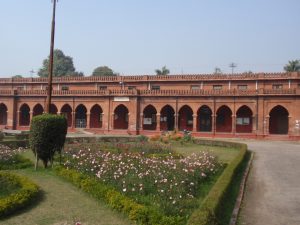
 

Fig 1. A view of the science block at Aligarh Muslim University. Photo by A.J. Urfi.

In the shadows of the Raj

During British days, the objectives of scientific activity were clear—it had to be of some use to the empire (Kumar, 1995). While at Indian institutions, even in independent India, the nature of research was applied, the trend in the west in general, in the early decades of the 20th Century, was far more eclectic. Bright Indian students of some means, if they could, traveled abroad, explored the frontiers of knowledge and made a mark for themselves. So many examples abound, including Nobel Prize winners of Indian origin, settled abroad.
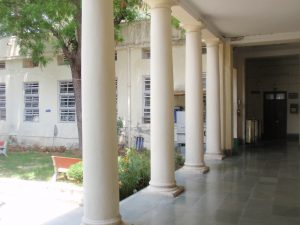
Fig. 2. A row of pantheon pillars in a building in the science faculty, University of Delhi. Photo by A.J. Urfi.

The buildings of science departments in many universities, built in pre-independence days, reflect the prevailing architectural styles of that period. Those antediluvian buildings, with their old style lecture theaters and labs seemed like molluscan shells, piled on the seashore—looking very beautiful from the outside, with their intricate carvings and patterns but the animal that once inhabited them had died long ago (Urfi 2019). Nevertheless, it was an experience in itself to attend classes in those old structures, as one felt being transported back in time. Thankfully, in most places these old buildings are now preserved as heritage structures, with their interesting artifacts and markers still intact. (Figs 1 & 2).


What good does biology education do?

Zoology, in which I majored, was not taught in a manner that would generate any interest in life forms, patterns of diversity or the underlying mechanisms. There seemed to be no connect with what was taught to us and our lived reality, especially with respect to the biodiversity around us. The pressing question then was ‘what good does biology education do?’ For some, studying these subjects was supposed to be just a passing station on the journey to becoming a doctor. You started with dissecting frogs and ended up doing surgery on humans (Urfi 2019).


In our times, entomology was a popular discipline. Many students were attracted towards it because it also offered employment opportunities in agricultural and taxonomic research with organizations such as Indian Council for Agricultural Research (ICAR), Zoological Survey of India (ZSI) etc. A whole generation of insect taxonomists received training with very simple equipment like a compound microscope and Camera Lucida. I think the careers of many biologists were spent peering at specimens of insects or agricultural nematodes and describing new species largely  based on morphological criteria (Fig 3).
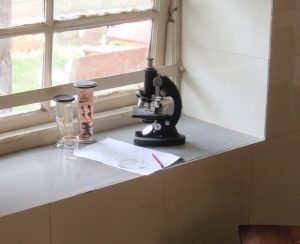
 

Fig. 3. Simplicity was the name of the game. One could spend hours on a microscope just observing the shapes and structures of plankton in a drop of water collected from a pond. Photo by A.J. Urfi.


As far as general perceptions of the students were concerned, some felt that studying zoology was a springboard to specializing in bio-medical sciences, finding a cure for dreaded diseases like Malaria, AIDS, Cancer etc. This trend has changed significantly over the last few decades with many groups having come up in the country, doing excellent work in organismal biology including areas of evolutionary biology, population  genetics, ecology, biodiversity conservation etc. Others felt content that the Biology course at least imparted a few basic skills —the tests which we did in the physiology practical classes viz. estimation of Carbohydrates, Lipids and Proteins etc. were potentially useful, as with this knowledge, one might one day get employment in a pathology lab, testing urine and blood samples.


The teacher and pupil

In academics, one of the closest relationships is that between research scholars and their PhD supervisors. One has to be lucky to get a good mentor. While there were certainly excellent teachers and research guides around, one also occasionally heard tales of harassment by guides and even PhD students committing suicide under pressure.


As happens, one sometimes came across professors, some quite famous, with monumental egos. I recall a dear friend who was the topper of his batch in MSc and had joined PhD under one such well-known professor. Sometime later, when he discovered that his supervisor was hardly mentoring him, he decided to leave, only to discover, too late, that he had been blacklisted and no other teacher, either in the same department or in any other institution across India, was willing to accept him as a student. Finally, he left for the USA from where he completed his PhD.


I recall another professor who claimed to be interested in environment, biodiversity conservation etc. But as I interacted with him more and more, I discovered that his major pre-occupation was actually to edit journals, bring out books (which no one read), and organize symposium and seminars etc, all under the aegis of a society which he had himself founded and on whose advisory board were a number of his friends and relatives. I saw very little evidence of any serious scientific research activity going on in his lab as most of the time he was talking about his visits abroad and memberships to international and national boards and policy organizations.


In general, many research students blindly followed everything what their supervisors said. Their apparent obedient nature could be on account of several factors—given that the supervisor can be of help in many ways, say landing a job, there is no point in annoying him/her. While in our student days we found it amusing, perhaps this is true even today.


But surely, in those days, the overall trend of sycophancy, more in the science departments, was probably so widely prevalent that it was almost a national phenomenon. That is why it once figured in a popular comedy serial which used to be aired on Doordarshan,  called ‘Flop Show’  by the well known comedy actor of those times (late) Jaspal Bhatti. One particular episode, a satirical take on the harassment that research students are subjected to by their supervisors, showed a professor in a Chemistry department (played by Jaspal Bhatti himself) guiding a PhD student. The professor got all his domestic chores done through his pupil, and eventually agreed to pass his student’s thesis with the intention of getting him married to his sister-in-law.


In this particular episode the theme of ‘boss is always right’ was shown by parodying a well known Hindi film song, Jo tumko ho pasand wohi baat kahenge/Tum din ko agar raat kaho, raat kahenge (I’ll only say what you like to hear/If you call the day as night, then I’ll call it night). In Bhatti’s version, the research scholar was shown singing a slightly different lyrics, Jo tumko ho pasand wohi baat kahenge /Tum  beaker ko agar jar kaho to jar kahenge (I’ll only say what you like to hear/O supervisor, if you insist upon calling a ‘beaker’ a ‘jar’ then so be it).


Islands of excellence, sea of mediocrity

In retrospect, looking at some of the research activity being done in less well-known institutions, in provincial towns, in the bygone period I am talking about, indicates that it was mostly done to catch up with whatever was in fashion, often without much thought. A cursory look at some research papers listed in proceedings of symposia on a variety of biological and environmental disciplines, which used to be conducted at various places, throws up some amusing titles.


Studies attempting to document biodiversity was an area in which people published a lot, say birds found in a particular locality. Besides providing a checklist of all species recorded, the author did not fail to calculate a diversity index, usually ‘Shannon Weaver index’— an index of biological diversity based on information theory. Most such mathematical indices have tight underlying assumptions making the interpretation of results highly case specific (Magurran, 1988). Yet in many ecological publications of that period (mostly published in what would be termed as ‘grey literature’) such indices continued to proliferate, largely I suspect for their ‘decorative value’.


However, not everyone was engaged in doing humdrum work; certainly not the people at some of the best institutions in the country. In 1980s, the prestigious British journal Nature focused on Indian science in one of its issues and by and large praised Indian scientific efforts, pointing  to the existence of some world class institutions in India where ‘cutting edge’ research in ‘frontier areas of science’ was being done. (I think frontier areas meant what was being done in some high profile labs in USA and other western countries). John Maddox, the iconic editor of the journal in a lead article wrote of Indian science as ‘Excellence in the Midst of Poverty’ (Maddox & Rich, 1981).

To use old clichés, in India there existed ‘islands of excellence’ in a ‘sea of mediocrity’.


Momentous campus events

The prevalence of lobbies (based on regional or social grouping) within the academe was a reality of the day. With their clout in funding and regulating bodies like DST, UGC, CSIR etc, they also played a vital role in selection and approval committees. Monopolization over resources is ofcourse a universal phenomenon though in India it is perhaps more pronounced. Yet surprisingly a lot of discussions in those days centred on ‘merit’.


Merit should always prevail—in principle that is fine but then the question is who should judge merit and whether there were any objective criteria for defining merit. Clearly, those who espoused the meritocracy cause were mostly those who already had it all, by virtue of their social status. Was it a coincidence that almost all the people in power in the university set up largely belonged to a particular segment of society? The system which had been created by the so called meritocracy was such that they had usually favoured their own when it came to recruitments and promotions. Though the sad part was that in doing so they had not promoted the best among their lot but gone for what could be referred to as mere ‘service providers’. The result was that we had a bunch of teachers, deans and heads, who wanted to maintain a status quo and a system where only mediocrity would prevail.


A much hated word in those days was (and is) ‘reservation’- a devise created in the Constitution to reserve a small number of positions in government jobs for historically deprived sections of the society.


A storm soon hit the academe and although it should have come from within i.e. the need for reform, sadly it came from outside the system. The funny thing is that the upheaval to follow was never intended to set a wrong right in the first place; and therefore the wrong was never set right.


It all started in the shaky V P Singh’s government, when a weak and cornered prime minister pulled a rabbit out of the hat by implementing an old ‘Mandal Commission’ report, which would bring about a substantial reservation for other backward castes (OBC) in government jobs, including educational institutions. This immediately triggered off violent protests from students all  across the country, the epicentre of which was Delhi University. A significant feature of the protests was that it involved many students committing or trying to commit acts of self-immolation.


For a while, the university became a cauldron.  We were witnessing historic times- a real turn in those tumultuous days of the early 90s when other momentous events were also happening throughout the world.


Conclusion

As students in the 1980s we experienced that in many educational institutions, especially those located in provincial places, even the basics of science (or other subjects for that matter) were not being taught properly,  added to which was the dismal reality that the status of primary education was and still is extremely pathetic. We all hoped that in the better times to come the system would be fixed. However, the good times or “achchhe din”, it seems, never came.


I thank the University of Delhi for funds under various schemes (‘DST purse’, Research & Development grant and ‘Teaching & Research Grant’). I also thank the referees for their constructive comments on previous versions of the manuscript.


References

Kumar, D. 1995. Science and the Raj. A study of British India. Oxford University Press, New Delhi.

Maddox, J. and V. Rich. 1981. Excellence in the Midst of Poverty, Nature 308.

Magurran, A. E. 1988. Ecological Diversity and Its Measurement. Springer, Netherlands.

Urfi, A.J. 2019.  Discovering Zoology Through My Passion for Birdwatching Part 1.  Journal of Stories in Science 15 Aug 2019.


Abdul Jamil Urfi is an Associate Professor at the Department of Environmental Studies,  University of Delhi,  New Delhi 110007.

Undergraduate Research, an approach to create sustained academic curiosity

Academia for students and staff can be a vast maze of curiosities and offer opportunities for in-depth analysis to provide clarity to understand the world around us. As students and researchers who are part of a global academic complex, it is important to ask ourselves questions about the accessibility of research, how does one explain our findings to the to members from other disciplines? An academic institution thrives on interdisciplinary co-operation, not a water bank separation between streams. Academic research should not be limited to students of an advance level alone, it is imperative to start acclimatising first-year undergraduate students to open up to independent academic thought (1). While it is true that undergraduate students might initially struggle to conceive an original full-fledged thesis statement, even a beginner’s level understanding of research methods and the ability to frame questions will help in understanding the applications of their discipline better, providing for a more curious and accepting environment for research at beginner’s level (2). In order to think critically, and to mould various contexts into their studies, undergraduate researchers should not feel limited by their degree-specific subjects; a student of microbiology should be allowed to explore literature or philosophy ushering in a perspective that may have previously not been considered. To make meaningful strides in the field of interdisciplinary research on an undergraduate level universities need to provide support, through workshops from academics both from within and outside the institution, peer mentorships between master’s level and undergraduate students and peer-reviewed papers spanning across a wide range of disciplines. Platforms to present work and ongoing snags in research will encourage a group effort to solve problems and come up with better ways to focalise academic discourse and increase patience and persistence required for in-depth study and make the entire process more accessible to everyone studying in an institution. This will help the budding researchers understand research ethics, the diversity in structures of academic arguments and provide a much-needed bridge between the faculty and the students, it gives them a chance to modify and accommodate more critical thought based on these student-led symposiums. These efforts should not be a reward for scoring well in a semester but must be beyond that; programs that feature the work of undergraduates need to be as diverse as possible, a poor performance should not stop a student from exploring their research interests and more importantly should not stop the university from providing additional support in terms of those who need it (3). This form of research needs a platform, a research meet or conference that sparks spirited debates and panel discussions both within an academic institution and between other institutions. Promising multidisciplinary research should be discussed and presented in national-level research conventions and when the parent university has a chance, should be showcased on an international level. Research experience on an undergraduate level will drum up a greater interest in advance research-based degree programs and also incorporate transferable skills like designing a presentation, tailoring ones’ work to suit an audience of varying educational backgrounds and interests, making an evidence-based case and answering questions that are integral to professional life outside the academic bubble. Furthermore, science institutions need to have sister departments in the humanities and the social sciences and vice versa, students need to diversify if not in their final years of study then at least in their first two years of their degree. One module that not only provides a different skill and perspective but an academic reprieve from the grind of their core subjects. Once again, peer mentorship across departments will provide clarity in understanding of the subject and give an insight anothers’ academic process. The subjects have to be engaging enough to students so it does not feel like a burden while simultaneously introducing them to academic critics and experts and encourage them to come up with their own arguments. Optional courses like analysis of popular films, novels and creative writing spring to mind as they are some of the many vessels that can carry interdisciplinary thought. Universities can also provide a department that administrates such activities and actively promotes student researchers of all genders, sexualities and social backgrounds because the personal experiences of the students can facilitate research and drive social change. The institution can facilitate funding for student-led research including grants and scholarships that once again need to span across multiple academic disciplines. Furthermore, it would helpful for students as well as academic guides to have a national online forum to look for previous research and discuss techniques when there are not workshops or presentations scheduled. This forum should contain the work of former undergraduates as well as a way to collaborate. To make students feel comfortable in this online setting particularly while asking and answering questions their names can be kept anonymous if they preferred it. This is by no means an idea that has been implemented in various countries around the world to integrate academic curiosity under one nurturing roof to encourage research output but, there need to be more platforms for undergraduates to interrogate their research interests. All academic institutions need to celebrate their undergraduates and give them a chance to participate in academic discourse, they need to feel welcomed, included and confident in the perspective they choose to represent. Any university’s academic discourse needs to resemble an ideological coalition and a boost undergraduate research will ensure that.


(1)Carleton, Undergraduate Research <https://serc.carleton.edu/introgeo/studentresearch/Why.html>

(2)John K Petrella, Alan P Jung. “Undergraduate Research: Importance, Benefits, and Challenges.” International journal of exercise science vol. 1,3 91-95. 15 Jul. 2008.

(3)Chad Orzel, Why Research by Undergraduates is Important for Science and Students, Forbes, July 12 2017<https://www.forbes.com/sites/chadorzel/2017/07/12/why-research-by-undergraduates-is-important-for-science-and-students/>

Uthpala Ramprasad is a third-year undergraduate student from the University of Leeds. The views expressed are personal.

Academician: A Hope for A Brighter Future

An academician has for long been heralded as an intellectual capable of guiding society, someone above the petty misgivings of less learned beings and a beacon of hope in conflicting and challenging situations. Yet in the current atmosphere, this academician appears to have retreated into obscurity, with allegations of scientists locked in their ivory towers and disconnected wit societal realities being made. India currently in going through a tense time – there have been revelations of massive scientific fraud in academic papers, unscientific claims made by politicians and governmental agencies, even as a viral outbreak knocks on our doors and a fight for India’s constitutional rights that will need all the scholarly might to win. In this current atmosphere of misinformation and turmoil, what is the responsibility of the academician to both science and society?


The academician is primarily meant to be furthering their chosen field – be it in the sciences, arts or something else. Furthering their field would include research, teaching or communication about that field adhering to proper ethical standards. In core experimental research, the scientist would be ethically bound to report and analyse data correctly and not misrepresent or capture data through fraudulent manner. Those academicians who rely on secondary research are ethically responsible to not skew data or cherry pick data that suit their hypothesis. Finally, those academicians that interact with civilians – either for clinical studies or for social science studies – have to be critically review their own commitment to ensuring that participants provide informed consent to their studies. The onus of obtaining informed consent is ethically placed with the academician, since they are an expert in the subject and can answer any concerns of the participant. These are obvious responsibilities and being faithful to the spirit of scientific enquiry remains the hallmark of any scientist.


Apart from the core experimentation, academicians are also tasked with training the future generation of scientists. Needless to say, apposite training can help build the next cadre of scientists that will fuel of the science engine. Yet, training itself poses ethical conundrums to the academician. She has often to choose between her own requirements – for instance, a high impact paper for improving chances to get a grant – and those of her students – a time limitation on the PhD student to get their first-author publication. Confronted by such questions, the academician’s ethical duty lies to those under her tutelage. As a custodian of academic intellect, she has to catalyse the spread of knowledge and nurture the students to their fullest potential.


Finally, in her place of work, the academician has to do her best not to spurn any other non-research activities. Our academicians have to do many administrative jobs – such as procurement, grants writing, recruitment, participate in various committees. It is equally important that the academician performs these jobs with utmost honesty.


Even outside of the laboratory setting though the academician is not free of her ethical responsibilities. In the truest sense, academia is not a 9-5 job and an academician remains duty-bound to society. Maintaining scientific rigour, pursuit of scientific enquiry and rejecting unscientific ideas are expected of any academician holding a governmental post.


The Constitution of India bestows upon all her citizens liberty to faith – to follow any belief they want. This includes any superstition or quackery, as disbelieving as it be. We often see scientists citing Article 51A from the Constitution which lists that each Indian should develop the scientific temper, humanism and the spirit of inquiry and reform as a fundamental duty. However, this Article is at crossroads with the Preamble which endows liberty to faith. The academician may follow any religion or ritual in personal life, but in their public life as a researcher, they have to maintain a neutral position. The ethical academician is tasked with educating the citizens on such faith – they cannot denigrate their faith or impose their own beliefs on them. But certainly alerting the citizens to the correct path is the academician’s ethical duty.

This is especially critical when groups and individuals peddle harmful pseudoscience. Indian politicians are habitual offenders of this crime. In 2018, then Minister for State for Human Resource Development Satyapal Singh publicly suggested that Darwin’s theory of evolution is incorrect because there were no records in ancient Indian texts of apes transforming into humans. He recommended that school curriculum be revised to remove the theory . Singh further volunteered to organise an international conference on the validity of the evolutionary theory. The Indian scientific community responded with an online petition demanding that the Minister retract his statements. Three Indian science academies commended the comments in a joint statement, adding: “It would be a retrograde step to remove the teaching of the theory of evolution from school and college curricula or to dilute this by offering non-scientific explanations or myths.”

Darwin’s theory of evolution is a time-tested example of scientific temper: Darwin deduced his theory through meticulous observations despite of the traditional belief of creationism. But out rightly dismissing these outlandish claims does not resolve the issue.

I had earlier written about this incident and below briefly outlined the below consequences of such an approach:

  1. It demotivates any one who wants to challenge existing theories.
  2. An opportunity to showcase how evidence-based arguments work is lost.
  3. Scientists disconnect themselves from the society.
  4. It downplays someone who actually showed scientific temper – Singh agreed to sponsor a conference for evidence-based questioning of the theory.
  5. It projects science to be out of the reach of non-scientists. Instead of explaining how evolution works in simple terms, using relatable examples, it becomes a science versus non-science discussion.

It is the ethical responsibility to guide society to judge between truth and quackery. The way would be to introduce citizens to the method of scientific enquiry, not force them to accept scientific statements.

Finally, today India is fighting two battles – an internal constitutional turmoil and a threatening viral outbreak. For India to win these battles our citizens need to be equipped with the most authentic information and advise on how to best move forward. It is academician’s ethical responsibility to guide this society to make good decisions. The academician is not just a scientist in the laboratory – she is a hope for a brighter future.

Shambhavi Naik is a Research Fellow at Takshashila Institution. The views expressed are personal.