Recollections of a biology student: waiting for “achchhe din”, which never came!

Why look back into the past? Partly because it is nostalgic to recall a time when one was a student, and also to reflect upon how much have things changed, if at all, since then. As I attempt to recall my student days, I appreciate that while many of my experiences would be outdated, a few might be pertinent even today. Rather than attempt a detailed analysis on state of scientific research and teaching in India, and how it has changed since the 1980s when I was a student, I take a different approach here. Using the platform of Confluence, I prefer to write informally about select issues— particularly those which used to exercise our imagination then and were the stuff of discussions, arguments and heated debates in coffee houses and canteens.


Much can be said about the attempts that are made to boost the morale of scientists and work towards building a ‘scientific temper’ at the community level. This endeavour is even enshrined in the Constitution. I remember, one feature of our times was that we sometimes had people coming over to give ‘pep talks’ about the importance of science for ‘nation building’ and the status of science in the country. Our ‘inspirers’ were usually highly decorated scientists or technocrats who had snatched time from their busy schedule to instill in us a sense of purpose. They lamented how, as a nation we had failed in making strides in science & technology, compared to other nations and reminded us that we constituted ‘an army of young scientists’ who would lead a developing and ‘newly independent country’ forward, towards enlightenment and economic progress.


Such sentiments, though very inspiring, seemed dated. Echoing Nehru’s vision about a new nation embracing science—with industries, dams, space technology etc being referred to as ‘temples of modern India’, may well have found much traction a couple of decades earlier i.e. 1950’s or 60’s.


During the course of my studies I attended three central universities in North India, each with a vibrant campus life—Aligarh Muslim University, University of Delhi and Jawaharlal Nehru University (JNU), and in addition visited dozens of others, including some of the elite institutes as well as the not so well known institutions in provincial towns. Whether it was about the scope for doing research in biology, the manner in which research was done, the relationship between research scholars and their PhD supervisors, or the disparity in academic standards, which seemingly existed across different institutions in the country, some of these issues, taken up here, may be of relevance even today.
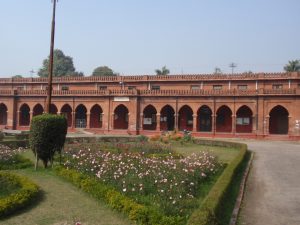
 

Fig 1. A view of the science block at Aligarh Muslim University. Photo by A.J. Urfi.

In the shadows of the Raj

During British days, the objectives of scientific activity were clear—it had to be of some use to the empire (Kumar, 1995). While at Indian institutions, even in independent India, the nature of research was applied, the trend in the west in general, in the early decades of the 20th Century, was far more eclectic. Bright Indian students of some means, if they could, traveled abroad, explored the frontiers of knowledge and made a mark for themselves. So many examples abound, including Nobel Prize winners of Indian origin, settled abroad.
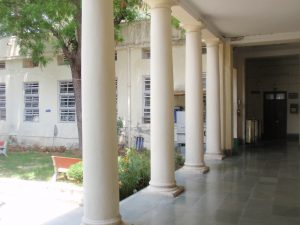
Fig. 2. A row of pantheon pillars in a building in the science faculty, University of Delhi. Photo by A.J. Urfi.

The buildings of science departments in many universities, built in pre-independence days, reflect the prevailing architectural styles of that period. Those antediluvian buildings, with their old style lecture theaters and labs seemed like molluscan shells, piled on the seashore—looking very beautiful from the outside, with their intricate carvings and patterns but the animal that once inhabited them had died long ago (Urfi 2019). Nevertheless, it was an experience in itself to attend classes in those old structures, as one felt being transported back in time. Thankfully, in most places these old buildings are now preserved as heritage structures, with their interesting artifacts and markers still intact. (Figs 1 & 2).


What good does biology education do?

Zoology, in which I majored, was not taught in a manner that would generate any interest in life forms, patterns of diversity or the underlying mechanisms. There seemed to be no connect with what was taught to us and our lived reality, especially with respect to the biodiversity around us. The pressing question then was ‘what good does biology education do?’ For some, studying these subjects was supposed to be just a passing station on the journey to becoming a doctor. You started with dissecting frogs and ended up doing surgery on humans (Urfi 2019).


In our times, entomology was a popular discipline. Many students were attracted towards it because it also offered employment opportunities in agricultural and taxonomic research with organizations such as Indian Council for Agricultural Research (ICAR), Zoological Survey of India (ZSI) etc. A whole generation of insect taxonomists received training with very simple equipment like a compound microscope and Camera Lucida. I think the careers of many biologists were spent peering at specimens of insects or agricultural nematodes and describing new species largely  based on morphological criteria (Fig 3).
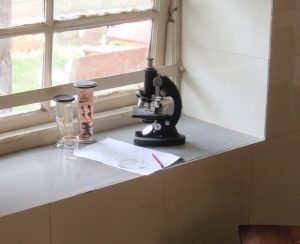
 

Fig. 3. Simplicity was the name of the game. One could spend hours on a microscope just observing the shapes and structures of plankton in a drop of water collected from a pond. Photo by A.J. Urfi.


As far as general perceptions of the students were concerned, some felt that studying zoology was a springboard to specializing in bio-medical sciences, finding a cure for dreaded diseases like Malaria, AIDS, Cancer etc. This trend has changed significantly over the last few decades with many groups having come up in the country, doing excellent work in organismal biology including areas of evolutionary biology, population  genetics, ecology, biodiversity conservation etc. Others felt content that the Biology course at least imparted a few basic skills —the tests which we did in the physiology practical classes viz. estimation of Carbohydrates, Lipids and Proteins etc. were potentially useful, as with this knowledge, one might one day get employment in a pathology lab, testing urine and blood samples.


The teacher and pupil

In academics, one of the closest relationships is that between research scholars and their PhD supervisors. One has to be lucky to get a good mentor. While there were certainly excellent teachers and research guides around, one also occasionally heard tales of harassment by guides and even PhD students committing suicide under pressure.


As happens, one sometimes came across professors, some quite famous, with monumental egos. I recall a dear friend who was the topper of his batch in MSc and had joined PhD under one such well-known professor. Sometime later, when he discovered that his supervisor was hardly mentoring him, he decided to leave, only to discover, too late, that he had been blacklisted and no other teacher, either in the same department or in any other institution across India, was willing to accept him as a student. Finally, he left for the USA from where he completed his PhD.


I recall another professor who claimed to be interested in environment, biodiversity conservation etc. But as I interacted with him more and more, I discovered that his major pre-occupation was actually to edit journals, bring out books (which no one read), and organize symposium and seminars etc, all under the aegis of a society which he had himself founded and on whose advisory board were a number of his friends and relatives. I saw very little evidence of any serious scientific research activity going on in his lab as most of the time he was talking about his visits abroad and memberships to international and national boards and policy organizations.


In general, many research students blindly followed everything what their supervisors said. Their apparent obedient nature could be on account of several factors—given that the supervisor can be of help in many ways, say landing a job, there is no point in annoying him/her. While in our student days we found it amusing, perhaps this is true even today.


But surely, in those days, the overall trend of sycophancy, more in the science departments, was probably so widely prevalent that it was almost a national phenomenon. That is why it once figured in a popular comedy serial which used to be aired on Doordarshan,  called ‘Flop Show’  by the well known comedy actor of those times (late) Jaspal Bhatti. One particular episode, a satirical take on the harassment that research students are subjected to by their supervisors, showed a professor in a Chemistry department (played by Jaspal Bhatti himself) guiding a PhD student. The professor got all his domestic chores done through his pupil, and eventually agreed to pass his student’s thesis with the intention of getting him married to his sister-in-law.


In this particular episode the theme of ‘boss is always right’ was shown by parodying a well known Hindi film song, Jo tumko ho pasand wohi baat kahenge/Tum din ko agar raat kaho, raat kahenge (I’ll only say what you like to hear/If you call the day as night, then I’ll call it night). In Bhatti’s version, the research scholar was shown singing a slightly different lyrics, Jo tumko ho pasand wohi baat kahenge /Tum  beaker ko agar jar kaho to jar kahenge (I’ll only say what you like to hear/O supervisor, if you insist upon calling a ‘beaker’ a ‘jar’ then so be it).


Islands of excellence, sea of mediocrity

In retrospect, looking at some of the research activity being done in less well-known institutions, in provincial towns, in the bygone period I am talking about, indicates that it was mostly done to catch up with whatever was in fashion, often without much thought. A cursory look at some research papers listed in proceedings of symposia on a variety of biological and environmental disciplines, which used to be conducted at various places, throws up some amusing titles.


Studies attempting to document biodiversity was an area in which people published a lot, say birds found in a particular locality. Besides providing a checklist of all species recorded, the author did not fail to calculate a diversity index, usually ‘Shannon Weaver index’— an index of biological diversity based on information theory. Most such mathematical indices have tight underlying assumptions making the interpretation of results highly case specific (Magurran, 1988). Yet in many ecological publications of that period (mostly published in what would be termed as ‘grey literature’) such indices continued to proliferate, largely I suspect for their ‘decorative value’.


However, not everyone was engaged in doing humdrum work; certainly not the people at some of the best institutions in the country. In 1980s, the prestigious British journal Nature focused on Indian science in one of its issues and by and large praised Indian scientific efforts, pointing  to the existence of some world class institutions in India where ‘cutting edge’ research in ‘frontier areas of science’ was being done. (I think frontier areas meant what was being done in some high profile labs in USA and other western countries). John Maddox, the iconic editor of the journal in a lead article wrote of Indian science as ‘Excellence in the Midst of Poverty’ (Maddox & Rich, 1981).

To use old clichés, in India there existed ‘islands of excellence’ in a ‘sea of mediocrity’.


Momentous campus events

The prevalence of lobbies (based on regional or social grouping) within the academe was a reality of the day. With their clout in funding and regulating bodies like DST, UGC, CSIR etc, they also played a vital role in selection and approval committees. Monopolization over resources is ofcourse a universal phenomenon though in India it is perhaps more pronounced. Yet surprisingly a lot of discussions in those days centred on ‘merit’.


Merit should always prevail—in principle that is fine but then the question is who should judge merit and whether there were any objective criteria for defining merit. Clearly, those who espoused the meritocracy cause were mostly those who already had it all, by virtue of their social status. Was it a coincidence that almost all the people in power in the university set up largely belonged to a particular segment of society? The system which had been created by the so called meritocracy was such that they had usually favoured their own when it came to recruitments and promotions. Though the sad part was that in doing so they had not promoted the best among their lot but gone for what could be referred to as mere ‘service providers’. The result was that we had a bunch of teachers, deans and heads, who wanted to maintain a status quo and a system where only mediocrity would prevail.


A much hated word in those days was (and is) ‘reservation’- a devise created in the Constitution to reserve a small number of positions in government jobs for historically deprived sections of the society.


A storm soon hit the academe and although it should have come from within i.e. the need for reform, sadly it came from outside the system. The funny thing is that the upheaval to follow was never intended to set a wrong right in the first place; and therefore the wrong was never set right.


It all started in the shaky V P Singh’s government, when a weak and cornered prime minister pulled a rabbit out of the hat by implementing an old ‘Mandal Commission’ report, which would bring about a substantial reservation for other backward castes (OBC) in government jobs, including educational institutions. This immediately triggered off violent protests from students all  across the country, the epicentre of which was Delhi University. A significant feature of the protests was that it involved many students committing or trying to commit acts of self-immolation.


For a while, the university became a cauldron.  We were witnessing historic times- a real turn in those tumultuous days of the early 90s when other momentous events were also happening throughout the world.


Conclusion

As students in the 1980s we experienced that in many educational institutions, especially those located in provincial places, even the basics of science (or other subjects for that matter) were not being taught properly,  added to which was the dismal reality that the status of primary education was and still is extremely pathetic. We all hoped that in the better times to come the system would be fixed. However, the good times or “achchhe din”, it seems, never came.


I thank the University of Delhi for funds under various schemes (‘DST purse’, Research & Development grant and ‘Teaching & Research Grant’). I also thank the referees for their constructive comments on previous versions of the manuscript.


References

Kumar, D. 1995. Science and the Raj. A study of British India. Oxford University Press, New Delhi.

Maddox, J. and V. Rich. 1981. Excellence in the Midst of Poverty, Nature 308.

Magurran, A. E. 1988. Ecological Diversity and Its Measurement. Springer, Netherlands.

Urfi, A.J. 2019.  Discovering Zoology Through My Passion for Birdwatching Part 1.  Journal of Stories in Science 15 Aug 2019.


Abdul Jamil Urfi is an Associate Professor at the Department of Environmental Studies,  University of Delhi,  New Delhi 110007.

Undergraduate Research, an approach to create sustained academic curiosity

Academia for students and staff can be a vast maze of curiosities and offer opportunities for in-depth analysis to provide clarity to understand the world around us. As students and researchers who are part of a global academic complex, it is important to ask ourselves questions about the accessibility of research, how does one explain our findings to the to members from other disciplines? An academic institution thrives on interdisciplinary co-operation, not a water bank separation between streams. Academic research should not be limited to students of an advance level alone, it is imperative to start acclimatising first-year undergraduate students to open up to independent academic thought (1). While it is true that undergraduate students might initially struggle to conceive an original full-fledged thesis statement, even a beginner’s level understanding of research methods and the ability to frame questions will help in understanding the applications of their discipline better, providing for a more curious and accepting environment for research at beginner’s level (2). In order to think critically, and to mould various contexts into their studies, undergraduate researchers should not feel limited by their degree-specific subjects; a student of microbiology should be allowed to explore literature or philosophy ushering in a perspective that may have previously not been considered. To make meaningful strides in the field of interdisciplinary research on an undergraduate level universities need to provide support, through workshops from academics both from within and outside the institution, peer mentorships between master’s level and undergraduate students and peer-reviewed papers spanning across a wide range of disciplines. Platforms to present work and ongoing snags in research will encourage a group effort to solve problems and come up with better ways to focalise academic discourse and increase patience and persistence required for in-depth study and make the entire process more accessible to everyone studying in an institution. This will help the budding researchers understand research ethics, the diversity in structures of academic arguments and provide a much-needed bridge between the faculty and the students, it gives them a chance to modify and accommodate more critical thought based on these student-led symposiums. These efforts should not be a reward for scoring well in a semester but must be beyond that; programs that feature the work of undergraduates need to be as diverse as possible, a poor performance should not stop a student from exploring their research interests and more importantly should not stop the university from providing additional support in terms of those who need it (3). This form of research needs a platform, a research meet or conference that sparks spirited debates and panel discussions both within an academic institution and between other institutions. Promising multidisciplinary research should be discussed and presented in national-level research conventions and when the parent university has a chance, should be showcased on an international level. Research experience on an undergraduate level will drum up a greater interest in advance research-based degree programs and also incorporate transferable skills like designing a presentation, tailoring ones’ work to suit an audience of varying educational backgrounds and interests, making an evidence-based case and answering questions that are integral to professional life outside the academic bubble. Furthermore, science institutions need to have sister departments in the humanities and the social sciences and vice versa, students need to diversify if not in their final years of study then at least in their first two years of their degree. One module that not only provides a different skill and perspective but an academic reprieve from the grind of their core subjects. Once again, peer mentorship across departments will provide clarity in understanding of the subject and give an insight anothers’ academic process. The subjects have to be engaging enough to students so it does not feel like a burden while simultaneously introducing them to academic critics and experts and encourage them to come up with their own arguments. Optional courses like analysis of popular films, novels and creative writing spring to mind as they are some of the many vessels that can carry interdisciplinary thought. Universities can also provide a department that administrates such activities and actively promotes student researchers of all genders, sexualities and social backgrounds because the personal experiences of the students can facilitate research and drive social change. The institution can facilitate funding for student-led research including grants and scholarships that once again need to span across multiple academic disciplines. Furthermore, it would helpful for students as well as academic guides to have a national online forum to look for previous research and discuss techniques when there are not workshops or presentations scheduled. This forum should contain the work of former undergraduates as well as a way to collaborate. To make students feel comfortable in this online setting particularly while asking and answering questions their names can be kept anonymous if they preferred it. This is by no means an idea that has been implemented in various countries around the world to integrate academic curiosity under one nurturing roof to encourage research output but, there need to be more platforms for undergraduates to interrogate their research interests. All academic institutions need to celebrate their undergraduates and give them a chance to participate in academic discourse, they need to feel welcomed, included and confident in the perspective they choose to represent. Any university’s academic discourse needs to resemble an ideological coalition and a boost undergraduate research will ensure that.


(1)Carleton, Undergraduate Research <https://serc.carleton.edu/introgeo/studentresearch/Why.html>

(2)John K Petrella, Alan P Jung. “Undergraduate Research: Importance, Benefits, and Challenges.” International journal of exercise science vol. 1,3 91-95. 15 Jul. 2008.

(3)Chad Orzel, Why Research by Undergraduates is Important for Science and Students, Forbes, July 12 2017<https://www.forbes.com/sites/chadorzel/2017/07/12/why-research-by-undergraduates-is-important-for-science-and-students/>

Uthpala Ramprasad is a third-year undergraduate student from the University of Leeds. The views expressed are personal.

Academician: A Hope for A Brighter Future

An academician has for long been heralded as an intellectual capable of guiding society, someone above the petty misgivings of less learned beings and a beacon of hope in conflicting and challenging situations. Yet in the current atmosphere, this academician appears to have retreated into obscurity, with allegations of scientists locked in their ivory towers and disconnected wit societal realities being made. India currently in going through a tense time – there have been revelations of massive scientific fraud in academic papers, unscientific claims made by politicians and governmental agencies, even as a viral outbreak knocks on our doors and a fight for India’s constitutional rights that will need all the scholarly might to win. In this current atmosphere of misinformation and turmoil, what is the responsibility of the academician to both science and society?


The academician is primarily meant to be furthering their chosen field – be it in the sciences, arts or something else. Furthering their field would include research, teaching or communication about that field adhering to proper ethical standards. In core experimental research, the scientist would be ethically bound to report and analyse data correctly and not misrepresent or capture data through fraudulent manner. Those academicians who rely on secondary research are ethically responsible to not skew data or cherry pick data that suit their hypothesis. Finally, those academicians that interact with civilians – either for clinical studies or for social science studies – have to be critically review their own commitment to ensuring that participants provide informed consent to their studies. The onus of obtaining informed consent is ethically placed with the academician, since they are an expert in the subject and can answer any concerns of the participant. These are obvious responsibilities and being faithful to the spirit of scientific enquiry remains the hallmark of any scientist.


Apart from the core experimentation, academicians are also tasked with training the future generation of scientists. Needless to say, apposite training can help build the next cadre of scientists that will fuel of the science engine. Yet, training itself poses ethical conundrums to the academician. She has often to choose between her own requirements – for instance, a high impact paper for improving chances to get a grant – and those of her students – a time limitation on the PhD student to get their first-author publication. Confronted by such questions, the academician’s ethical duty lies to those under her tutelage. As a custodian of academic intellect, she has to catalyse the spread of knowledge and nurture the students to their fullest potential.


Finally, in her place of work, the academician has to do her best not to spurn any other non-research activities. Our academicians have to do many administrative jobs – such as procurement, grants writing, recruitment, participate in various committees. It is equally important that the academician performs these jobs with utmost honesty.


Even outside of the laboratory setting though the academician is not free of her ethical responsibilities. In the truest sense, academia is not a 9-5 job and an academician remains duty-bound to society. Maintaining scientific rigour, pursuit of scientific enquiry and rejecting unscientific ideas are expected of any academician holding a governmental post.


The Constitution of India bestows upon all her citizens liberty to faith – to follow any belief they want. This includes any superstition or quackery, as disbelieving as it be. We often see scientists citing Article 51A from the Constitution which lists that each Indian should develop the scientific temper, humanism and the spirit of inquiry and reform as a fundamental duty. However, this Article is at crossroads with the Preamble which endows liberty to faith. The academician may follow any religion or ritual in personal life, but in their public life as a researcher, they have to maintain a neutral position. The ethical academician is tasked with educating the citizens on such faith – they cannot denigrate their faith or impose their own beliefs on them. But certainly alerting the citizens to the correct path is the academician’s ethical duty.

This is especially critical when groups and individuals peddle harmful pseudoscience. Indian politicians are habitual offenders of this crime. In 2018, then Minister for State for Human Resource Development Satyapal Singh publicly suggested that Darwin’s theory of evolution is incorrect because there were no records in ancient Indian texts of apes transforming into humans. He recommended that school curriculum be revised to remove the theory . Singh further volunteered to organise an international conference on the validity of the evolutionary theory. The Indian scientific community responded with an online petition demanding that the Minister retract his statements. Three Indian science academies commended the comments in a joint statement, adding: “It would be a retrograde step to remove the teaching of the theory of evolution from school and college curricula or to dilute this by offering non-scientific explanations or myths.”

Darwin’s theory of evolution is a time-tested example of scientific temper: Darwin deduced his theory through meticulous observations despite of the traditional belief of creationism. But out rightly dismissing these outlandish claims does not resolve the issue.

I had earlier written about this incident and below briefly outlined the below consequences of such an approach:

  1. It demotivates any one who wants to challenge existing theories.
  2. An opportunity to showcase how evidence-based arguments work is lost.
  3. Scientists disconnect themselves from the society.
  4. It downplays someone who actually showed scientific temper – Singh agreed to sponsor a conference for evidence-based questioning of the theory.
  5. It projects science to be out of the reach of non-scientists. Instead of explaining how evolution works in simple terms, using relatable examples, it becomes a science versus non-science discussion.

It is the ethical responsibility to guide society to judge between truth and quackery. The way would be to introduce citizens to the method of scientific enquiry, not force them to accept scientific statements.

Finally, today India is fighting two battles – an internal constitutional turmoil and a threatening viral outbreak. For India to win these battles our citizens need to be equipped with the most authentic information and advise on how to best move forward. It is academician’s ethical responsibility to guide this society to make good decisions. The academician is not just a scientist in the laboratory – she is a hope for a brighter future.

Shambhavi Naik is a Research Fellow at Takshashila Institution. The views expressed are personal.

Call for articles: New Directions in Higher Education in India after COVID-19

UPDATE (31-May-2020): Although we have already received and posted several articles, a number of authors have indicated to us that they would like some more time. Therefore, the last date for submitting articles has been extended till 21-June-2020.

It has been just about two months since 11 March 2020 when the World Health Organisation declared COVID-19 to be a pandemic, about ten weeks since it was declared a public health emergency, and a little over four months since the disease was reported. This pandemic has, as we increasingly realize, the potential to change the entire world order. In some quarters this is already seen as a historical divide, BC (before Corona) and AC (after Corona).


Across the globe educational systems at all levels have been seriously impacted even in this short span of time. The virus SARS-CoV-2 (and the diseases it causes, COVID-19) has affected all schools, colleges and universities. By mid-March mostly, these have all been shut: classes have been suspended, examinations, research work and virtually all laboratory experiments have been forced to hit the “pause button”. Students everywhere are in limbo, facing an uncertain present, and a more uncertain future.


Although the University Grants Commission and many universities have quickly decided to conduct classes and examinations online, its implementation in the country is not an easy task. Access to smartphones and the internet is still very limited. At the same time, it is undeniable that technology can play a big role in offering alternatives to regular academic activities, so one effect of this pandemic may well be to bring significant changes in the traditional education sector in regards with the use of technology as a tool for learning. How administrators and teachers respond to this difficult time will decide the future.


Every discipline faces distinct challenges when it comes to online learning. Courses which have always had a laboratory component will need a redesign. Compared to urban students, rural students might face more challenges when the traditional methods of learning give way to new pedagogic techniques. Education will have to adapt. The present discussion aims to explore these issues.


Now is as good a time as any to start thinking about these matters. Online classes have been thrust upon all sorts of institutions largely because there seem to be few options, but the experience so far has been very mixed. This discussion is therefore intended to gather the experiences and thoughts about the present and future of the education with regard to the pandemic, from academicians and non-academics cutting across disciplines and geographical boundaries.


We invite the readers of Confluence to take part in the discussion in the form of articles sharing their experiences and their insights, touching  upon related topics/questions in connection with the following themes:

  1. How well has the Indian education system coped with the coronavirus pandemic? What does this hold for the future?
  2. What is your take on the future of higher education in India, given the scale of the social, political and economic changes that have occurred in the past several months?
  3. Do you think technology will play a bigger role in the poco (post-corona) period in the teaching of your subjects?
  4. What is the impact of online education replacing the traditional methods at your institution? On the students, and on the teachers.


We hope that this discussion will throw light on the realities of the system, the challenges we face and the possible changes that the system needs to undergo.


The guest editors of this series are Sujin Babu ((Madras Christian College, Chennai) and Ram Ramaswamy (IIT Delhi). They have been in conversation off and on since 2012 when, as it happens, both of them were at the University of Hyderabad.

GUIDELINES:
a) The style of the article should be simple, precise and lucid, presenting your thoughts and reflections on the theme. No personal attacks or statements targeting individuals please, such articles will be summarily rejected.
b) Both generic observations, as well as specific ones related to teaching of a particular subject are welcome. Note that this series of articles is about higher education (i.e. undergraduate and above) only and does not pertain to school education.
c) The articles should be approximately 1,000 to 1,200 words.
d) The articles should be written in English. Please distinguish between data and opinion. Cite sources for the former.
e) The editorial team will read and decide the merit of your article, and decide whether to publish it or not. We are primarily looking for well-written, logically well-constructed articles that present a relevant, and preferably fresh, point-of-view. We may also suggest you to revise the draft before publishing. In any case, the decisions of the editorial team will be final and binding.
f) Please email your article IN THE BODY OF THE EMAIL to confluence.caretakers@gmail.com on or before 15.06.2020. Please note that we are NOT going to open any attachments. Therefore, if you attach your article, we will simply not read it, and not get back to you either. It can take up to 2 weeks for us to get back to you with a decision.
g) Contributions must carry the real name of the author and aliases are not allowed. Please include a statement at the end of the article stating the name, status and affiliation of the author.
A sample author statement will look like: ABCD is a PhD scholar at XYZ University.
h) In case of any queries, please email: confluence.caretakers@gmail.com.

How Digital Media Weaponised Ignorance During a Pandemic

I want to start with an appeal. We are suddenly beset by hard and uncertain times. Fear and dread of an unknown future is creating unease. To ensure that we do not add to this fear we should be thoughtful about what we share with others, especially through social media and messaging apps. When you see something, ask yourself: do I trust this information? if it is technical, do I know enough to judge it? Is there enough evidence on offer? Has this been said elsewhere? What does the WHO or the Health Ministry say about it? Have you compared the government order that you received on WhatsApp with the official website? We should simply refrain from sharing and forwarding in case of the slightest doubt. Else we will end up providing misinformation that may put people in grave danger.

§

The coronavirus pandemic has come as a godsend to many people, to showcase to the world their ignorance weaponised as wisdom and knowledge, often surrounded by an aura of cultural pride. Digital technologies have turned many people into experts, scholars, doctors and general know-it-alls. Armed with a mobile phone and very little else, they use the internet and social media for spreading misleading information galore, including nonsense that can be lethal for those who practise their prescriptions.

A lot has been written about the infodemic accompanying the physical epidemic of the coronavirus (SARS-CoV-2) disease, COVID-19. The most absurd things have been said about the disease, the remedies and the measures to be taken. This begs the question: what is wrong and why is this happening? At the simplest level, the circulation of sensational material is driven by fear and hope, and the tendency of the mind to amplify dangers as a survival mechanism. This often happens in times of pandemics, calamities and wars. What is new at this contemporary juncture, and which makes the scenario incredibly complex and dangerous, is the presence of three factors: first, the easy access to the great treasure trove of unchecked “knowledge” on the internet; second, the speed of propagation, and reach enabled by digital media, and third, social and political polarisation which generates conspiracy theories and pseudo scientific narratives infused with ferocious partisan pride.

The most popular narratives are simply extensions of home recipes for coughs and colds or those for boosting general immunity. Some are as simple as gargling with hot water and drinking hot rasam. Another category is that of self diagnosis, such as the popular message that says that if you can hold your breath for 10 seconds, then you are not infected with the coronavirus. The internet carries much more misinformation that is easy to stumble upon than genuine information which has to be searched for and then processed critically to ascertain authenticity. Disinformation is often presented through official-looking documents replete with logos and seals. Some of it also comes with the “authority” of eminent professionals, such as a famous cardiologist who was heard saying persons with symptoms should get tested only after eight days because of a shortage of testing kits. Then there is plenty of ridiculous stuff floating around on Facebook, Twitter and most notoriously, on WhatsApp. There are suggestions that garlic will cure coronavirus, or that drinking warm water every 15 minutes will prevent the infection. More exciting recommendations are to indulge in alcohol and weed, both of which will kill the virus. A popular one in the US is that a “miracle mineral solution”, essentially bleach, will knock out the virus. It’s incidental that it will knock you out for good as well.

Messages have also promoted the idea that a mask is a foolproof way of keeping the virus out – a dangerous idea as it breeds a false confidence, and consequent foolhardy behaviour. This has also caused a shortage of masks for those who need it. And finally, of course, there was the false announcement that the government had anyway organised the killing of the virus in mid air by spraying entire localities.

It is alarming when such simplicity becomes official policy: health ministry advisories recommend which Ayurvedic, Unani and homeopathic remedies will help with the “symptomatic management” of the coronavirus! There is not an iota of scientific proof to make such assertions, yet these have come from a government ministry. Under fire from experts, the ministry “clarified” that these advisories were issued in the “general context” of virus related infections. Imagine the catastrophic consequences of someone deciding to opt for the suggested “line of treatment”. US President Donald Trump advocated the use of chloroquine and hydroxychloroquine to treat the coronavirus infection. When questioned, he replied, “I am a man that comes from a very positive school when it comes to, in particular, one of these drugs. It’s just a feeling, just a feeling. [I’m a] smart guy.”

There is only anecdotal evidence about the effectiveness of these medicines and trials are underway but the espousal of this “treatment” by the US president has already caused havoc: hoarding of these drugs has led to shortages for people who need them for other illnesses. People are now self-medicating with these highly toxic drugs to save themselves from the coronavirus and deaths have already been reported in Arizona and in Nigeria. A similar situation may develop in India, too.

Larger conspiracy theories also have their share of fame. A popular one is that the coronavirus is an outcome of 5G mobile technology; it makes people ill through the agency of this virus. The Malaysian government had to assure its population that the virus will not turn people into bloodthirsty zombies. In the United States the right wing is flooding social media with posts that the coronavirus is a conspiracy to generate anti-Trump hysteria and “destabilise the country”. Fears are being stoked that the WHO is taking “control of nations and there’s going to be forced vaccines to kill off many people”. One consequence of this is that right-leaning citizens are not taking the pandemic seriously, and are indulging in reckless behaviour such as eating out or shaking hands (to prove that they are tough).

At a deeper level the right-wing is “proposing conspiracy theories about the causes and the origins of the virus, and to use these narratives to scapegoat groups like immigrants, or minorities or liberals.” Already there are distressing reports of Chinese-American citizens being abused because Trump has popularised the term “Chinese virus”. In India, citizens from the Northeast have come under similar racist attacks. The demonisation of China as being inhumanly cruel, even to its own people, is sought to be “proved” by reports that they were killing infected people.

But the age old question remains: why do people get taken in by all this nonsense? A more detailed piece deals with how nonsense becomes “knowledge” by crowdsourcing. Broadly speaking, the lack of critical skills for a variety of reasons in vast segments of the population, allows anything, however ridiculous, to become “believable”. People without exposure to a proper education and lacking basic familiarity with scientific principles have no compass to determine the validity of the information they are being bombarded with. Further, the absence of a sense of skepticism, which is an inherent part of scientific temper, prevents any deep interrogation of what they are seeing, reading and hearing.

There are clearly two kinds of scenarios here.

First is the category of people who start out rationally but at some point get taken in by the authentic looking fake documents or scientific sounding arguments. The narratives of homoeopathy providing all the wonderful drugs to fight the coronavirus is a good example. Such narratives borrow the linguistic style that allopathic medicine uses, making homeopathy sound like a perfectly equivalent and alternative system of medicine. This masks the underlying pseudoscience on which homeopathy is based. In the context of the coronavirus pandemic these narratives promising cures or vaccines can create illusions of invincibility against the disease.

In the context of the ‘janata curfew’, a pseudoscientific explanation quite popular on social media is that “as coronavirus life at one place is 12 hours and janata Curfew is for 14 hours so that places or points of public areas where corona may have survived will not be touched for 14 hours could break the chain”. This is not only bizarre logic, it is also wrong on facts about the survival times of the virus. While a curfew of this sort may lower contact rates while it is being observed, and may be a good drill for introducing the idea of emergency measures, it won’t “break the chain of transmission”.

nonsensical WhatsApp forward argues that clapping and blowing of conches at the same time by 130 crore people in India “will create so much vibrations that the virus will lose all potency”. This strategy has already been met with great success if some tweets are to be believed because “the cosmic level sound waves generated have been detected by NASA SD13 wave detector and a recently made bio-satellite has shown COVID-19 strain diminishing and weakening”, and that too within minutes of the collective chanting.

Profound mumbo jumbo could not have sounded better. Meanwhile, the whole idea of social distancing, which governments are trying to promote desperately, came to a nought when many people, excited by the exhortation of politicians, collected together outside their homes to clap and clang cooking vessels to honour workers at the frontline of fighting the disease. Yet the ground reality is quite different as we don’t really want these workers around us because they might be infected. Landlords reportedly evicted airline staff and even medical professionals – showing the pathetic extent to which we devalue other people’s lives, even when they serve us during a crisis. Our lack of empathy towards people who have been quarantined and a complete invasion of their privacy is even more shameful.

We are indeed witnessing history being made, of the ugliest kind.

Second, we have many people who are inherently prone to superstition and irrational beliefs, for reasons ranging from a peculiar religiosity to an upbringing in a cultural ethos full of such beliefs. Here, knowledge and information are received from elders, community heads and religious leaders, unquestioningly; minds are conditioned not to be skeptical or look for evidence. Therefore, such people will simply go, at face value, by whatever they receive, and even more enthusiastically, if the information has been received from an “authority” of any sort – officials, political leaders, religious figures. A video of “go corona go” may be good for creating an optimistic mood to “fight” the disease but it also engenders the illusion that the coronavirus can be driven away by chanting, and even more so by collective chanting.

A very significant class of absurd narratives of this kind, related to the coronavirus, are those that come infused with religious and nationalistic pride. The contemporary moment, which is witnessing great political polarisation and severe social anger, has given rise to militant forms of self righteousness embedded inside narratives of cultural superiority. It is accompanied by an epistemological inversion of modern scientific ways of knowing, so that knowledge and prescriptions now flow from ancient scriptures.

Thus, gaumutra is used as disinfectant and sprayed on unsuspecting people. Right wing politicians claim that cow urine and dung can treat coronavirus, and also that a havan (incense-burning ceremony) will kill the virus. Some of them organised a special party where invitees were given cow urine to drink. There are astrological explanations that supposedly tell us why we are facing this existential crisis, and when it will go away. Another claim says that the ancient Indian yoga breathing technique can prevent the coronavirus infection, and also that the herb ashwagandha (used in Ayurvedic medicine) “doesn’t allow blending of corona protein with human protein”. In Indonesia, media posts claimed that Islamic ablution rituals can kill the virus.

Those who take any of this seriously and then assume that they have the wherewithal to fight off the coronavirus menace are likely putting themselves, and others, in grave jeopardy.

There are more sinister and long-term effects of this ignorance that is enveloping us. Self-righteous wisdom is being unleashed in a frenzy of militant vegetarian chauvinism. The origin of the coronavirus in the “wet markets” of China where different species of slaughtered wild animals are kept together – which allowed a virus to jump from one species to another and ultimately to humans – has spawned a general diatribe against non-vegetarianism. Hindutva claims of civilisational superiority are expressed by blaming meat eaters and ardent adherents demand that the Chinese president ask for forgiveness from “the idol of the coronavirus” for eating animals. Videos showing infected mutton markets aid and abet these sentiments. Thus, coronavirus  becomes nature’s revenge against meat eaters. This has led to poultry prices falling to absurdly low levels in India, with the industry facing economic ruin because of the association of eating chicken and the purported transmission of the coronavirus. No amount of counter-advisories have been of help.

In a broader sense, no appeals and advice to get information only from recommended websites (e.g. WHO) have prevented people from believing and forwarding misinformation. We must also remember that a lot of false information is disinformation, i.e. deliberately designed to deceive, often by right wing culture warriors. The infodemic continues unabated and will do so till we break the “chain of transmission”.

The digital media is therefore, in many ways, a gift to simpletons who believe in whatever nonsense is thrown at them, and even more so to the creators and designers of this nonsense. The various platforms on the internet, from Facebook to YouTube, on which one can “say or write anything”, are literally like freely available weapons to be used by any know-it-all – innocent or partisan –to throw drivel at everyone on the street. It is not the case that there was no stupidity in the world in earlier times but the means to make stupidity ubiquitous were absent, thus limiting the amount of nonsense that could be created and injected into the system, and also the speed at which it would propagate.

The big tech companies are trying to stem the flow of misinformation related to the coronavirus but it is likely to be too little to control the gigantic web created by these companies themselves. This marriage of modern technology to uncritical, primitive worldviews should remind us that societies which nurture superstition wallow in pseudoscience and run down rationality, mostly as a part of their weaponry in waging cultural and political battles, will always be hoisted with their own petard.

This article was originally published in The Wire and has been republished here with permission.

Anurag Mehra teaches engineering and policy at IIT Bombay. His policy focus is the interface between technology, culture and politics.


The cost-benefits of raising ethical issues

The debate on “ethical responsibilities of academicians” needs to focus on what is unique to academicians. Otherwise, they are citizens just as much as anyone else is in the country and they have the right to express their views, protest or support on any social, political or academic issue within the democratic norms. I don’t think there could be two opinions about this. The question whether students should restrict themselves to their studies and not be politically active looks artificial and unwarranted. Whatever applies to any citizen applies to them. Nevertheless, academicians have an added responsibility, which we may not expect from rest of the people.

Social and political realities are complex, but they often take a naïve, oversimplified and rhetoric form in public opinion. While this may be inevitable for the simple minded, often uneducated or partly informed people, we expect the academicians to take a realistic and analytical viewpoint. While common people might see things in black and white, academicians need to show the ability to perceive all shades of grey. Ample precedence of balanced views exists in Indian politics. In the pre-independence and early post-independence leadership, academic scholarship was conspicuously present. Leaders were scholars in history, law, social science, literature or philosophy and they contributed to the logical and philosophical foundations of social and political movements. While fighting against the British rule leaders and thinkers like Dadabhai Naoroji and Lokmanya Tilak also admitted that the British brought certain benefits to India. While writing this, they were more analysts than promulgators of their political stand.  This scholarly tradition has almost disappeared now. There are exceptionally few political analysts that write realistic and analytical accounts, and there are hardly any readers who view it that way. We are all in a hurry to brand everything as pro-something or anti-something. We label every thought, every expression and even every individual to be either on this side or that side.

While to some extent this is inevitable on mass media and in the general public, I expect the academicians to view things differently, look beyond the ‘pro’ and ‘anti’ classification, show sufficient maturity to analyse things, reveal the pros and cons and predict the subtle effects of any incident, decision or stand on the future of the society. The analysis itself can change the sociopolitical trajectory to a substantial extent by propagating views that are more balanced and by providing more reliable source of information for the public. I would like to exemplify what I mean by being analytical, by focusing on a lesser-known aspect of social political dynamics.

Optimizing cost-benefits is an evolved innate tendency that has been shown to operate in a wide diversity of life forms, including the ones that are not believed to be highly intelligent. Humans are also known to take decisions based on cost-benefit optimization, which is calculated at a subconscious level (Rahnev & Denison 2018). The actors are more often than not unaware that they are doing an optimization operation behind any decision. After taking a decision, we often rationalize it by inventing reasons that others are more likely to agree and appreciate. This is a well-known psychological phenomenon and there is substantial literature on it (reviewed by Cushman, F. 2020). These principles certainly apply to raising concerns and voices about ethical issues.

Although precise quantitative analysis of cost-benefit may not be possible (because measuring social and psychological costs or benefits objectively is difficult), certain qualitative predictions are possible. Raising an ethical issue has individual benefits including establishment of one’s identity, moral standards, conformity, attention seeking and subtle social hierarchical gains among others. However, at the same time one can lose friends, have strained relations (personally or professionally), get the day-to-day work affected and so on. When and whether one raises voices of protests over ethical issues depends upon our subconscious cost-benefit calculations.

A simple way to maximize benefits while keeping the costs to a minimum is to take issues which have a mass appeal but in which people in your immediate circle are not under any blame. The issue concerns something at a non-personal level, which could be societal, ideological, legal, political, international etc. It would be something that will not irk your immediate boss or co-workers but, at the same time, it would appeal to emotions of the masses. This is a perfect situation for going highly vocal about ethical standards.

On the other hand, if you find an unethical act at your own institution, the costs of protests are large and the benefits are small. Costs are large because you might hurt the institute authorities, your boss or your colleagues, it may affect your funding, career or cooperation from administration etc. On the other hand, the issue is likely to be more local and therefore does not have a mass appeal. Therefore, the costs and benefits are least likely to be favourable.  The actual costs also depend upon your standing / position at your organization. Therefore, apart from the ideology that you subscribe to, whether you are vocal about an ethical issue is largely guided by your own cost-benefits.

Now specifically for academicians, in a democratic country, criticizing the government, a political party or any community is an easy affair. The potential benefits are high, the cost typically low. As opposed to this, if it is an issue within the institute and the institute authorities have committed an unethical act, the costs of raising the issue are high while the benefits are marginal. Therefore, under such a scenario, academicians are least likely to protest. They will pretend that they are not aware of the unethical act or will convince themselves that it is not their concern.

There is no need to call this as ‘hypocrisy’ or anything to that effect. This is how human behaviour has evolved and we all behave this way most of the times. There is nothing sarcastic, bitter, disruptive or negative in what I wrote.  This is my analysis of reality as a student of evolution of behaviour. However, I do not believe in behavioural determinism. This is not to deny that humans also have a genuine concern for morality. I am fully aware that sometimes, some individuals are capable of transcending their own cost-benefit calculations and perform a completely selfless act. But this needs effort. Such individuals are rare and such instances typically happen at a low frequency.

The specific responsibility of academicians, in my view is to ask oneself where he/she stands along this behavioural dimension. Am I ready to take a clear ethical stand irrespective of my costs? Am I one of the masses who instinctively take an individually beneficial decision or am I different? Do I remember having taken a stand in a case where the unethical actors were my own superiors, mentors or colleagues? This is a subject of introspection, not of declaration.

Analysis and introspection on such lines is what I would specifically expect from academicians. On all other grounds they are not different from other citizens, so what applies to everyone in a democratic country should also apply to them.

References

Rahnev, D., Denison, R.N. (2018) Suboptimality in perceptual decision making.

Behavioral and Brain Sciences, 41, e223: 1–66.

Cushman, F. (2020). Rationalization is rational. Forthcoming in Behavioral and Brain

Sciences, 1–69. doi:10.1017/s0140525x19001730


Milind Watve is an Evolutionary Biologist. Views expressed are personal

The Corona COVID-19 Crisis: Containment versus management. The costs and the benefits, the scientists and the bureaucrats.

The Corona COVID-19 crisis, given its world-wide scope, has seen a variety of national strategies. These match national capabilities and reflect their concerns for the costs and expected benefits for different segments of their society. A popular international paradigm is of containment and elimination.

Our Hon. Prime Minister too has made a forceful case for elimination of COVID-19, with behaviour change and containment as the way ahead. We are also to continue with lockdowns and an aggressive approach to “hot-spots”, that is, dense clusters of infections, which includes contact tracing and total perimeter control. The objective is to stamp out the disease in all locations. Let us all pray that Plan A works, while the numbers are still relatively small.

Elimination, Containment and Plan B.

The international argument for containment rests on two facts which hold for many countries. The first is that they are comparatively better governed and for them, elimination of a disease is an option. They have the technical heft and institutional experience. Secondly, the potential number of patients and the number of hospital beds are in the same range. Whence, lockdown spreads out the infection ensuring hospital care for all patients, thereby socializing risks. This for them, paves the way for containment and elimination. However, evidence is mounting that asymptomatic carriers far outnumber symptomatic ones.  This has confounded the very basis of containment, and countries are now formulating more heterodox post-containment strategies.

For us, containment and the lockdowns which go with it, continue to have massive economic and welfare costs without this attendant benefit. The costs, in terms of dignity, livelihoods lost, economic shock, and the trauma for migrants are all well reported. It is not clear that our strategy of aggressive containment is based on a cost benefit analysis. If containment has failed, then the reasons to continue such methods are largely administrative and not clinical. Yet, as of today, we do not seem to have an empirical system in place to answer this or other basic questions about the infection, its geography and its dynamics. Either our elite scientific institutions have not asked for such data, or our bureaucrats have not provided it. In the absence of such analysis or guidance, each state is now charting out its own contain-and-eliminate plan. Given their different trajectories, this is likely to disconnect and disrupt the national economy at all levels, and for a longer time.

However, we must consider situation B, that containment has failed. One indication is that new clusters keep emerging. Or that the disease has already become widespread with asymptomatic carriers. In either case, it is likely that a sizable fraction of us, across villages, towns and cities, will eventually be infected. Managing this transition and the long battle ahead, needs a plan. Unfortunately, there is little that we know in concrete terms of the preparations for this eventuality. As a thought-experiment, let us try and formulate a possible Plan B. The first task is to ensure that food is available and essential services are provided. This is already in Plan A. The next task is to evolve a schedule and geography of restrictions so that health risks are managed. The final task is to minimize the effects of the disruptions on the economy and the welfare of the people, especially the vulnerable. This may mean ensuring that some parts of the economy run and wages are earned. Thankfully, this appears to be on the cards, at least for the rural economy.

The Logistics of Health and Welfare

Let us just look at health and welfare. The key parameters of the infection are not very bleak. By various reports [1], between 8% and 30% of India’s total population is likely to be infected and this may happen in cycles spread over several months. The fraction depends on the broad person-to-person contact rate of the underlying society. Rural communities have a distinct advantage over dense urban clusters. Lockdowns, i.e., temporary reductions in contact rates, merely postpone the infection and do not change the overall numbers. In some situations, the peaks become flatter and broader. Most infections are mild, and the number who need hospitalization is estimated to be about 10-15% of those infected. Thus, about 2% of our population may need to visit the hospital. The overall mortality is estimated to be smaller at about 5 per 1000 population. Just for comparison, according to WHO [2], we added 20 lakh TB patients in 2018, i.e., about 1.3 per 1000 population, and 4 lakhs died due to it.

COVID-19 is perhaps the first time that the top 20% of India faces a morbidity which is routine for the bottom 80%. Moreover, the intertwining of the lives of the two classes and the conflicting interests, are not yet fully appreciated.  Firstly, it has resulted in a sudden interest in conditions of the people in the slums and their welfare, and exhortations for collective action. Next, containment and elimination is the chosen strategy for the top 20%. It follows global thinking, it is technological and it matches the kind of medical resources they can access. On the other hand, the management of the disease through public health systems and basic welfare are the primary concerns of the bottom 80%. Unfortunately, that and preparedness, have not received as much attention as the science of the disease, conjectures on R0, and the gadgetry of testing.

Assuming that we flatten the peaks, we still get a peak hospital occupancy of 1-2 beds per 1000 population due to COVID-19. Let us assume that existing morbidities make an additional 1 per 1000 to give us a total of 2-3 beds per 1000 population. That is about 1000 beds for a typical ward of Mumbai, 500 beds for the tribal taluka of Karjat, Raigad, 4000 beds for the state of Goa and about 30 lakh beds for India as a whole. It is estimated by World Bank [3], that nation-wide, we have between 0.7 to 1.0 beds per 1000, i.e., between 9 and 13 lakh beds, with different levels of care. On paper, we have about 10 lakh doctors and 17 lakh nurses. But the spread is uneven across the states, and largely urban. Thus, access and transport will be critical. The treatment itself, except the use of the ventilator, is simple enough. Making ventilators is now a topic of intense innovation, and yet, ironically, poor people in India have died of pneumonia for decades.

The Local.

In summary, it is likely that 80% of the cases will be treated at home or within the village or the locality, until they need help, but hopefully before they get very ill. Thus, to inform, guide and support the household is an important project with several steps. First, is the preparation of a region-specific COVID-19 pack of medicines and supplies (such as a thermometer and masks) and instructions on taking care. This should include critical points and actions, including moving the patient to the nearest hospital. Perhaps, some of these households may send data for the benefit of the scientific community. We must next decide on the support that village and ward level health workers can provide. Suitable kit and training, such as oxygen measurement and provisioning, may then be arranged. Included in this should be guidelines on quarantine and sharing of community resources in times of infection. An independent assessment should be done of the preparedness of district and sub-district hospitals, in terms of equipment, facilities and supplies. Finally, live updates should be provided on availability of beds and facilities. Many deaths have been reported of critical patients unable to find a suitable hospital in time. This information at the local level or a general analysis of preparedness is still not available in the public domain. There is no analysis, for example, of the high mortality in Maharashtra vis a vis the low rates seen in Kerala or Punjab, and the connected health management practices.

In all of this, oversight by elected representatives is important. That, and structured support and engagement by local scientific and social agencies and institutions will be very helpful. The crisis needs coordination, professional skills and empathy over a long period, and it is only they who have the wherewithal. Such mobilization has proved useful in many countries. In India, sadly, the role of local agencies has been eclipsed by a dysfunctional expertocracy and political theories to support it.

Coming to urban clusters, their management is a governance nightmare and blanket lockdowns may not yield the expected health outcomes. It may well be that some residents are better off in the districts than in urban chawls, provided they do not take the infection with them. Whence, easing transport restrictions to allow for controlled migration must be considered. Public transport should resume in a controlled manner and on a new schedule to cater to new demands. Instructions should be given to the city, taluka and village on testing and quarantine rotation of returning migrants so that vigilante pressure is reduced.

At the local level, there will be many without food, work, money or proper papers. PDS and other welfare schemes must deliver, perhaps under modified operating procedures. Summer is approaching and drinking water scarcity will begin. Smooth functioning of such basic amenities is essential for keeping transmission in check. In short, the boring stuff must work, and this is especially crucial for affected households. For this, state government staff at all levels, may be deployed across departments, if required, and delegation protocols must be in place. They have had the most secure lives in recent years, and they must do an exemplary job.

Situating Plan B.

Thus, for the bottom 80%, good governance, predictability and preparedness are crucial for health and welfare. These are as amenable to detailed measurement and analysis as parameters of the disease. Lockdowns serve a limited purpose, only if they translate into improved preparedness. Otherwise, they disrupt wages, livelihoods and disconnect the economy. More important is a well-informed long-term reduction in contact rates in all social and economic activities – in the factory, offices and institutions, at the bus depot, in the markets, at restaurants and hotels and at gatherings. Thankfully, such guidelines are now emerging. All this together constitutes Plan B. Without that, the impact on the precarious lives of many of our people will be dreadful.

Individuals must learn social distancing, adopt behaviour change and communities must adapt and speak a new jargon. The disease demands that. But it also demands a transition to a consistently higher level of governance. The performance of our senior bureaucrats and scientists and their teamwork will be the decisive factor in achieving and sustaining this new normal. The success of Plan B depends on this social comprehension and the ability of our leaders to convey the key ideas and uphold trust in the system. Some state leaders are in fact, very good communicators.

In summary, Plan B is a careful calibration of behaviour change at the individual and community level with state preparedness. It is also an admission that the costs, benefits and vulnerabilities differ for different strategies and that demographics of the disease and governance must be taken into account. Moreover, the dynamics of the disease actually allows several trajectories or schedules, of balancing between health objectives, social and economic disruptions and overall welfare. Each country must prepare its strategy based on its capabilities and priorities, and so must we. And this must adapt to facts on the ground, for otherwise much of the misery may be in vain. While South Korea or Singapore are oft cited examples, perhaps closer to our situation are Indonesia or Thailand or the balanced approach of Germany.

Science and the Anthropocene.

But there is more to learn here. What is now clear is the fragility of the anthropocene, i.e., the global society, its dependence on Big Science, and the sheer inequality in the access to it. And it may get worse. The global economic leadership is now proposing a “passport” system to manage the risk created by the virus. The first step is for nations to create a hierarchy of “safe” and “unsafe” parts within their economy, whereby workers who are “safe to return” will work in safe environments. This will pave the way for the construction of a new and safe global economy. The entry into the “safe” economy may be based on electronic contact tracing, advanced testing technologies and more high-tech gadgetry. This has substantial inefficiencies and it is unclear if the new global economy can bear these costs. But it will certainly limit the economic options for the working class. Politically too, for many countries including India, it is one step closer to a paternalistic surveillance state.

The Indian elite are likely to join this system and also enroll us into it, since, proverbially, “there is no alternative”. This will require India to adopt its mechanisms and reproduce this hierarchy within the national economy. Our workers, formal and informal, may have to prove likely through private means, that they are “safe” to be employed. This is the very opposite of socialization of risk. The Indian informal economy is of course, a construction of our higher education system, of what we choose to study formally and what we ignore. Now, our public health policies are likely to lead to further informalization and fragmentation at the lower end of the economy.

For us in the Indian scientific establishment, the COVID-19 crisis is yet another wake-up call.

It is a reminder that the practice of science is also served by looking at the problems of the vicinity, and the systems of delivery of basic services. These are indeed the sites of innovation, of new technologies, new ways of organizing our society and serving our interests. But this needs a radical change in the way we do science. For decades, we have been free-riding on new vaccines and new cars, without ever understanding the discipline, creativity and social comprehension that is needed to produce either. We have lived longer on borrowed science, let us now prepare to face a borrowed illness, one household at a time.

[1]  The Global Impact of COVID-19 and Strategies for Mitigation and Suppression, https://www.imperial.ac.uk/media/imperial-college/medicine/sph/ide/gida-fellowships/Imperial-College-COVID19-Global-Impact-26-03-2020.pdf (accessed on 14th April, 2020)

[2]  Global tuberculosis report 2019

https://www.who.int/tb/publications/global_report/en/ (accessed on 14th April, 2020)

[3]  Hospital beds (per 1,000 people)

https://data.worldbank.org/indicator/sh.med.beds.zs (accessed on 14th April, 2020)

Milind Sohoni is a Professor at IIT Goa and IIT Bombay. He can be reached at milind.sohoni@iitgoa.ac.in or sohoni@cse.iitb.ac.in. Views expressed are personal.

Do the Dark undemocratic paths pave the real future of science academia

The word ‘science’ always creates pre-eminence in the human brain, and we socialized in the same way of being, beholding this as an orthodox mark of excellence. However, the compassion and love for science are merely visible in just the lyrics and have vanished unhurriedly from academia. We are heading to a future of dark undemocratic path in science academia at most of the higher institutions in India. The speculative character, which is a teacher’s responsibility to give as a gift to their students, is only left on speeches and discourse where we show-off about our institution’s brand names.


Science is not only compelling degrees during education but to absorb a lot and contribute back to society, but before that, we need to acquire. I came across a statement in recent year which swings my head; “Tumhe Sirf research Karna tha, Tumhe sochne ke liye kisne bola. Tumhe chupchap rahna tha, tumhe bolne ke Liye Kaun bola …” These words were mentioned in a meeting where a grave discussion was going on. After reading the word ‘research’, a layman can also sense the people who were part of the meeting, of course, the teachers and some students from one of the premier university of India. However, we may not comprehend why, during a thoughtful conversation, where most intellect people were sitting, such a remark was made. Well, I will describe for you my reader, why such a statement was delivered in an official meeting.


This is the real air of the present academia of science in India. The context of the meeting was about a dialogue on severe sexual harassment accusations against a supervisor. The background of sessions may vary about teaching standards; research portfolios, research output, feedback from students, but the output of all these was almost like irrational statements in any academic institution. What kind of logical crises are we dispensing? This is a crucial question amongst the scientific research community. Should we accept this kind of principle and work beliefs, and be mute about it?


Conversely, if a reasonable response is given, it will result in a tag of a rebel on that person. Is being natural in behaviour and coherent in answering, a revolutionary idealist? This raises a serious concern about the atmosphere at present, where the academia accomplishes teaching, research, and supervision activities. The environment projects a mortifying image of moral and ethical values in science academia. India’s culture was never a part of science and humanities, but academicians gradually did it in the rising decades. We are merely growing scientist, but not a human being. Students in academia wonder what they are learning, and events are flashing in front of their eyes. The modern world is struggling to regain the moral value and learning of science more passionately.


If the moral value and ethics of the profession of being a science student or teacher ran in ventilator condition, we would not imagine the development. The passion for constant learning has not only lost from the discussion on the democratic platform but, from teaching and supervision too. A teacher’s role is not merely to take a forty-five-minute class but to create a sense of understanding, the connection with the topic by which how it is helping for society. If pages of the decade are turned, the academic culture in science has faced mediocrity and engulfing the undemocratic paths. Most of the recent year surveys show the depression is pinning down in students regarding their studies and works. This is because we are losing hope of getting any help from the democratic platform. We should be narrowing down the ability to build a positive atmosphere to think about a solution. Academia complaints are growing like a mountain, and we are still standing and thinking about how to suppress it from the top and not solving it at the root level.


The binary has been fabricated between teacher and students in science, in terms of respect towards each other. The inquisitiveness, fear, classroom vibrancy, and the controlling power over one exist in the binary. However, these are dangerous signs of science academia for its progression. A student spends a couple of years in a particular place during studies, but a teacher stays long for his job. A teacher’s role is essential in any academia as he spends half of his life in research and teaching, which shapes the future generation. A student stays in a place for a while and collects experience throughout his studies. Once he jumps on the other side, the responsibility comes in his court. If his learnings were not appropriate, he would not be able to continue the legacy of academia and its excellency. The chain is severely damaged in academia because of socio-political influence presently. The statement written at the top is the result of such an effect only; we are playing in a system of power hierarchy where everyone wants to overpower the democratic power of others. We failed to build science over caste, religion, race, and ideology. The social upbringing that must change after education is still holding tight on the brain that sits in the position of power. When you look around, you will find a varsity of ideological taste in science academia, and only those are designated to posts.


Nevertheless, forget the social responsibility of that position and work senselessly. This generates much dissatisfaction amongst both the teacher and the student community, and learners learn to follow this trend. Teachers are overpowering the inquisitive nature of students inside the classroom, while; the research supervisors are overpowering the uniqueness and rationality of their research students. Academia in science wants the power to suppress every quality of science built in you. At the same time, you are practising it in your bench work and life too. We embrace a legacy of excellence in many universities and institutions at some time; however, we collapse to continue because of the undemocratic trails and loss of ethics.


The signature remark, “Teaching is a novel profession”, now itself is fostering a giant question mark in his hand. It stands at the doors of every classroom/statuary body in a higher education institution. While accomplishing our responsibilities, we forget to be human, and that’s why such remarks come from a discussion platform. To bring a change towards the positive side, we have to reverse the track “Be a Human first then become a Scientist”. While walking on a darker path of science academia, the dim lights are always persistent and nurturing the democracy in their classroom, and in the other platforms to strengthen these lights. They not only educate but also ingrain the moral values of a conversation with the sense of distinction between discussion and argument. They prepare the young minds for the responsibility to carry forward because, without work ethics, the human race cannot endure. We may succumb under the negative atmosphere of science academia, still; the light definitely reaches through a small hole and will enlighten the academic world.


While I am writing this, I can imagine hundreds of kids dreaming of reaching the world of scientific academia. I wish they might land into a better academic world and a sunnier egalitarian path.


Preeti Umarao is a PhD scholar in the School of Life Sciences, Jawaharlal Nehru University, New Delhi. She would like to thank Pragyan for help with editing this essay. The views expressed are personal.

Ethical Duties and Responsibilities of Academicians in a Patriarchal and Casteist Society

Those who are in academics have immense potential to share knowledge with the society. The academicians have great responsibilities to maintain the association between academic world and society. Academicians are supposed to be intellectuals who employ thorough reasoning and deep thinking in relation to subjects that tend to stimulate deep discussion, be in natural sciences, literature or philosophy.

As a research student of Natural Sciences, I believe that science has given us the power to think rationally and logically, and the results of this process may directly be applicable to our daily life. In a country like India that consists of different religions and beliefs, it is quite difficult to generate scientific temper within the society with the help of science. It is the moral responsibility of academicians from all fields to develop scientific temper within the Indian society. Article 51A of the Indian constitution dictates that “[i]t shall be the duty of every citizen to develop the scientific temper, humanism and the spirit of inquiry and reform”. India, as a developing country, is suffering from superstitions and undemocratic cultural values. Superstitious practices arise from an ignorance of scientific facts and misunderstanding of science, which can lead the society into darkness. Sometimes, the scientific fraternity, including science teachers/scholars, fail to eradicate such social evils. Even academicians and scientists sometimes hold irrational belief in fate or magic or fear the unknown, which is not a good sign for a progressive society.

Academicians have a high ethical responsibility to humanity in general, to be open to criticism, and to encourage telling the truth irrespective of consequences. But unfortunately, many academicians are carriers of unscientific, irrational and illogical thoughts which undermine the true values of science. This is a major impediment to the creation of a better society. Teaching scientific temper to people is an unavoidable part of the democratisation of the society. During my educational journey from school to university, regrettably, my teachers have excused themselves from their moral duty to teach me scientific temper and the moral responsibilities of the profession. Social reformers like the Buddha in ancient times to the rationalist movement led by Periyar, Ambedkar, Jyotiba Phule and Savitribai Phule in modern times, have used scientific temper to effect social change. Jyotiba Phule, in his book on slavery, says, “[i]f Brahmins were created from the mouth of Brahma, it becomes the womb of the Brahmins. It must be subject to the physical law of menstruation. So did Brahma secrete himself for four days every month? If Brahmin was conceived in the mouth of Brahma where did the foetus grow?” (Phule 1991: 2). The elephant-headed God, Ganesha, worshipped before any major enterprise or launching of rockets in India is the patron-deity of intellectuals, bankers, scribes and authors! As Dr. B.R. Ambedkar noted in his work ‘The Buddha or Karl Marx’, “[n]othing is infallible. Nothing is binding forever. Everything is subject to inquiry and examination” (Ambedkar 1987: 442). Science teaches us that everything should be subjected to inquiry and examination. As a science researcher in Indian academia, it is my moral responsibility to create rational and logical thinking within my circle of influence and society at large through discussions on scientific facts. Science has a greater role in democratising the society by spreading scientific reasoning.

Gender discrimination has some link with false interpretations of natural and biological processes. In India, during menstruation, girls and women are often not allowed to enter the temple, kitchen, and the worship room. The recent incidence of girl students being checked for menstruation in a college in Gujarat, is just one example of this kind of discrimination.[1] Moreover, menstruating women are treated as untouchables within their own family and surroundings. They are not allowed to touch sour food like pickles. I have many personal experiences in this regard — I was not allowed to participate in religious festivals in my own home during menstruation, which used to cause mental disturbance and anxiety. The principal basis for such patriarchal restrictions on women is cultural and religious beliefs of impurity associated with menstruation. Scientific research on menstruation does not endorse such patriarchal perspectives on menstruating women. Such malevolent social practices are against Articles 15 and 17 of the Indian constitution too. Thus, as scientists, we have a moral responsibility to fight patriarchal values.

Scientific community also has a great responsibility to eradicate caste discriminations through spreading scientific temper. Unfortunately, the Indian scientific community is highly Brahminical and patriarchal in its cultural moorings, a factor that has tremendous impact on the undemocratic and non-inclusive practices within the Indian academia. As a Dalit woman researcher in science belonging to a rural lower-middle class family, I feel that this culture should change, so that more talented students can join and excel in Indian science. All India Survey for Higher Education (AISHE) for 2017–18 released by the Ministry of Human Resource Development (MHRD) suggests that more than half of the faculty members in the country’s higher educational institutions are from the general category, with the Other Backward Classes (OBCs), Scheduled Castes (SCs) and Scheduled Tribes (STs) being the least represented; 56.8 per cent of teaching staff are from the general category, 32.3 per cent are OBCs,  8.6 per cent are SCs, while STs are a mere 2.27 per cent (AISHE 2017-18, section 2.4, p-20).[2] The lack of diversity and representation, particularly of SCs, STs and OBCs is reflected even in the public funded institutions. Since the academic world is dominated by the upper castes, they have greater moral responsibilities towards their profession, student community and society to creatively intervene and change the Science & Technology system (also, academics in general) to be more open and inclusive. Unfortunately, this is not happening. Power is directly related to knowledge and circulated through the academic institutions. SCs and STs are not getting opportunities to reach higher positions in higher educational institutions due to their weak economic and social status, and hence they are not getting ample chance to intervene and change the savarna culture of Indian academia.

As academicians, can we collectively respond to these challenges the country faces?


References

Ambedkar, B. R. (1987). “Buddha or Karl Marx”. In B.R. Ambedkar, Dr. Babasaheb Ambedkar: Writings and Speeches(pp. 441–462). New Delhi: Dr. Ambedkar Foundation.

Phule, J. G. (1991). Slavery. Bombay: The Education Department of Maharashtra.

[1] https://www.deccanchronicle.com/nation/crime/150220/gujarat-college-girls-stripped-to-check-menstruation-ncw-steps-in.htmlaccessed on  March 2, 2020.

[2]http://aishe.nic.in/aishe/viewDocument.action;jsessionid=B9DD19AD31E7C7A4DA475077BE084437?documentId=245 accessed on January 27, 2020.


Tejal Barkhade is a PhD Research Scholar at the School of Nano Sciences, Central University of Gujarat


Science should drive lockdown

My friend, Ranjan, calls me in the morning. He says that he read an article by Sunanda K. Datta-Ray in The Telegraph on March 21. Is it true that “we will die like flies if the pandemic comes here” as Mr. Datta-Ray has written?

“Of course, Ranjan, there will be a large number of deaths. The lockdown is precisely to prevent this. No one is enjoying the lockdown. Yet, lockdown should continue to be enforced. I am really scared that some want the lockdown to be relaxed.”

“But why?” Ranjan asks.

“The SARS-CoV-2 virus, or the nCoV virus, is circulating in our community. Everyday, persons with new infection are being identified. This means that there are many in the community who are not aware of their infection. With lockdown, they are only interacting with a small number of people in their homes. And possibly also infecting them. But all infected people are huddled together in their homes.

“Relaxing social distancing now will mean that infected individuals, who may not be sick, will start to socialise with many people in the community who are truly uninfected. And, pass on the infection to them. nCoV is highly infectious. Much more infectious than its cousins, SARS and MERS viruses. Suddenly we will encounter a tsunami of infected individuals.”

“But if most infected individuals don’t fall sick, then what’s the problem? When everyone is infected, there will be no one to infect, correct? You had told me that when an infected person recovers from the infection, he gains immunity and will not get infected again. So I don’t see a problem.”

“Ranjan, don’t forget that our population density is very high. For example, in Mumbai, 21,000 people live in every square kilometre. In Kolkata, this number is about 7,500. In Bihar, averaging over all the villages and cities, about 1,200 people live in every square kilometre. So, if nCoV spreads widely even in just four wards of the Kolkata Municipal Corporation, many thousand people will have to be provided medical attention, of whom about 1,000 will die. Many of them will die a painful death gasping for breath, since they cannot be provided with ventilators. We don’t have so many ventilators in our hospitals.”

“In spite of the chief minister trying her best to prepare the state for this perilous situation, you know that our health care system cannot handle so many sick people. It’s best for us not to relax the lockdown. When we can test and find out what fraction of individuals in the community has gained immunity, then we can provide some relaxation. But now is too early. We have not got ourselves tested. The government does not have the means to test even a decent fraction of our citizens who have not yet fallen sick.”

“But this is the first time I am seeing such a lockdown. Why so? There are many outbreaks of viral infection that I know, but we have never been locked at home.”

“Well, Ranjan, nCoV is highly infectious. We don’t have a vaccine to prevent nCoV infection. Physical distancing by closing down schools, offices, businesses and staying at home is pretty much all that we can do to slow down the spread of the virus.”

“But this lockdown is spelling a disaster for the economy,” Ranjan said.

“I have heard that argument before. When thousands and lakhs of people become infected and sick, the drain on our economy will certainly be even greater. We will have to spend colossal sums of money to care for the sick and dying. Still, we will not be able to save lives. And then we will have to lock down anyway to prevent more suffering and more death.”

“So when do you think the government can relax or lift this lockdown?”

“Ideally, when no infected individual can find another individual to infect. Then, infected individuals will recover or die without infecting anyone. We must remember that we gain immunity if we are infected once, even without falling sick. The ideal is nearly impossible to attain. We are usually satisfied if about 75 per cent of the population gain immunity, provided that an infected individual can be assumed to infect about four people on average.

“When this fraction is attained, a large number of newly infected individuals is unlikely to arise in a short period of time. How long may this take? We can’t be too sure.

“Immunological testing of members of the community will reveal what fraction has gained immunity. Or, we can wait to see how new cases arise over time. If the time between detection of two successive new infected individuals is relatively long, then relaxation of lockdown can be allowed. We haven’t reached that stage in India yet.

“Everyday, many reports of new infections are pouring in from most geographical regions. We would do well to bear the hardship of lockdown. Science should drive decision-making of relaxation of lockdown. Opening up markets and allowing buses to ply at this stage will only ensure that Mr. Datta-Ray’s prediction that ‘we will die like flies’ comes true!”


Partha P. Majumder is President, the Indian Academy of Sciences, and President, the West Bengal Academy of Science & Technology.

This article originally appeared in The Telegraph and has been re-posted here with permission from both the author and the publication.