Why do we see science the way we do? Perceiving and reacting to science

People’s perception of science is shaped by many factors, such as conversations and deep impressions made on the mind by a varied input. In this series Confluence brings to you a critical perspective in the form of a set of articles that explore how science is projected in cinema,  how the very way it is taught in school can influence attitudes to science and also how movements, especially green movements have impacted how science is perceived by people. The first in this series is an article by T V Venkateswaran on the impact of movements on attitudes towards science. This is followed by an article by R Ramanujam that looks at the shaping of science in our minds in school education. Then we have an article by Rajan Kurai Krishnan that examines how Tamil sci-fi movies have portrayed scientists and their tribulations.

The articles can be found here:

  1. Green movements and public perception of science by T V Venkateswaran
  2. Perceptions of science built in the science classroom by R Ramanujam
  3. Science and Scientists: Portrayals in Tamil Cinema by Rajan Kurai Krishnan

Students and Political Protests

Over the last few years, India has experienced a series of protests by students on various social and political issues. The reaction of the society to these protests have been diverse. There are people who feel that the students should concentrate on their studies, others opine that they must also take part in political issues of great magnitude. There are people who think that students need to be handled like any other rioters, while others say that students are the future of the country and cannot be handled like that. And what (if any) should be the role of teachers and the institute/college/university when their students are protesting? Student protest is not a new phenomenon, either in India, or in the world. Has anything changed about student protests these days?

Confluence has invited several thinkers in India to express their views on this subject. This is a list of the articles that appear under this series. This post will be updated as and when more articles appear in this series.

  1. Educational Potential of Students’ Movements by Gauhar Raza
  2. Status of Academic Freedom by Jyotirmoy Paul
  3. Should students take part in public protests? by Soumitro Banerjee
  4. Students, they indeed are! by Jyotsna Jha
  5. Disturbing your peace by Ram Ramaswamy
  6. Science, Galileo and Student Protests by Srikanth Sastry
  7. Campuses must be free and fair for all by Abhishek Banerjee
  8. Bhagat Singh on Students and Politics by Syed Irfan Habib
  9. “Dude! You not going to the rally?” by Ashwin Kelkar
  10. Apolitical: To Be or Not To Be by Abhijit Majumder
  11. Where mediocres fear to tread by Ayan Banerjee


It should be noted here that all articles represent personal views of the authors and do not carry any endorsement of either Confluence or Indian Academy of Sciences.

Students, they indeed are!

In the context of whether students should be out on the roads protesting against what they see as injustice or violation, or not, let me start with a story from JNU. How can we talk of students protests in India and not mention JNU? Prof. Anjan Mukherji, former professor of Economics, and now Professor Emeritus, in JNU, told me this story in support of his statement that G. Parthasarathy, known as GP, the first vice chancellor of JNU, was the best VC the university ever had. It was 1974 – JNU was already five years old but the Centre for Economic Studies and Planning (CESP) was only one year old – and students were agitating, echoing the students movements’ voices in Gujarat and Bihar. Young professors like Anjan were worried that courses, the way they had been designed, needed continuous engagement and rigour, and the agitation would have a negative impact. They shared their concerns to GP, who decided to attend striking students’ congregation and listen to what they were saying. Having done that, he gathered these concerned teachers and congratulated them saying their students were not only well-read and had the confidence and competence to argue for what they wanted; they also had the discerning capacity to stand for justice, freedom and equality! What else do you expect from the university students? This was not a joke, it was a serious conversation, and many conversations like these shaped the university that JNU evolved as in the following years.


It is important to remind that Anjan was narrating this by calling GP one of the best VCs, rather than complaining that he did not reign in students back to classes. Mind you, Anjan is also not a ‘Marxian’ economist, as for some vague reason we think only Marxists protest. Also important is to point out that GP was not an academic; he came to JNU after a long career in journalism and diplomacy, yet not only understood the ethos of what a university should be but also introduced radical measures to develop and maintain that ethos. During the years to follow, the relationships between VCs, students, teachers and non-teaching staff have not necessarily remained as mutually respectful but the culture and ethos of engaging with issues of justice and rights, ranging from local to sub-national, and from national to international, have remained strong in JNU. In addition, it is also important to remind that by all measures of success, JNU has also remained one of our most ‘successful’ universities in the post-colonial India. I will return to the aspect of measures of success and what I mean by that a little later.


So, the best way to answer the question of whether students should be protesting against issues that do and do not concern them directly or be sitting in their classroom or libraries or laboratories, is to ask a counter question: are these two necessarily oppositional to each other? My answer is: ‘No’ – to me, these are complementary and one advances the other. And now let me explain my response by answering three more basic questions: (i) what is education and what the aims of education are, (ii) why education is important for any evolving society, and (iii) why students have been an essential and very important part of any major social and political change that countries including ours have witnessed in the modern era.


What is education? A universal definition that perhaps most agree to is that education is a process of co-creating values, skills (including thinking and critical skills) and knowledge. And this definition remains valid for all ages of students at all stages of schooling, and for all subjects, disciplines, and streams of subject-areas. Education, therefore, is not only an active process but it also involves continuous and simultaneous selection of values, skills, knowledge and pedagogy at every stage. Where do we draw these values from, how do we pick and choose relevant pedagogies for selected knowledge streams, which skills get priority and what gets left out – all these choices that are made in the process of education are essentially part of a political process. The education systems make certain choices, individual institutions, even while following those, makes its own choices that may bring in newer elements and finally individual teachers also make certain choices that could bring new or even opposing elements. This means education is also a continuous process of subversion. This definitely happens when one consciously adopts a radical or transformative approach such as one propagated by Paulo Freire but it also happens even when a system, an institution, or a teacher is not consciously trying to adopt or promote the radical pedagogy. Let me illustrate this with a few real-life examples.


A Masters level Physics class in Bangalore University in progress. While in the midst of teaching Brownian Motion in English, the professor realises that a number of students have blank faces. He switches to Kannada and the expression on those faces change: they are not only comprehending better but also feel ‘included’ as their language is being acknowledged. This decision of the teacher is indeed ‘political’ in nature.


Another M. Phil class for the course on ‘Equity in Education’ in progress in JNU where the teacher was discussing the issue of affirmative action in the form of Reservation in higher educational institutions and public sector jobs. The teacher first asked everyone for their opinion and then facilitated a debate by supplying arguments on both sides. This was followed up by a number of readings that she made it compulsory for everyone to read before the next class. Not easy, as this meant spending long hours in the library in a short period of time. The arguments by students in the next class were more refined and better informed, and by the end of that topic, all students not only understood the rationale of affirmative actions but also started engaging deeper with the issues of caste, cultural capital, discrimination, exclusion and justice. This story is from early 1990s and some of the students who had started by questioning the rationale of having  reservations in jobs with the argument that once equally educated, they should have the same chances, took diametrically opposite positions in support of Mandal Commission’s recommendations and argued for the same on public platforms. Obviously, education is about rigour, about grades, about learning, but it is also about sharpening your values, thoughts, positions and actions, and the two are intermingled.


It is not only about higher education; the basic characteristic of education remains the same at every stage of education. So, let us move to school education – early years. When the Environmental Science (EVS) textbook developed by NCERT for a primary level class refers to children coming from different parts of the country and relates it to their language and the kinds of houses they live in, there is an obvious effort by the school system to impart an awareness of the diverse nature of India. Similarly, if the language textbook has a Play for young children with names from different religions, it is a deliberate attempt on the part of the school system to make the classroom inclusive. But if a teacher decides to change it and uses all similar sounding names– as if they are from the same or similar religious groups, it is a kind of subversion. Similarly, if the primary level EVS textbook tells teachers to teach them about different plants by showing them pictures in the classroom and a particular teacher instead decides to take children to the garden to show the plants that children can see and touch, this is also a kind of subversion. Every single act in the process of education and knowledge creation is political in nature, and conveys one or the other kind of value. And students are an important actor of this process.


If this is what education is, then it is also a space for continuous contestations – deliberate and not so deliberate. And in that case, what gives us the anchor or what is our reference point to decide what is most desirable? In the context of India, the constitution definitely provides one important reference point. But the values that the constitution upholds the most -democracy, equality, secularism, social justice, freedom, dignity – are also rooted in the evolution of human society and go beyond national borders, and hence at least broadly ensure a continuity of thoughts and values at a global level. One of the major aims of education is to uphold and promote these values and it does not matter which stream or discipline one comes from. This is true for everyone who is engaged in the process of education, most of all, teachers and students. Students need to and have to actively engage in this dynamic process of contestations, tensions, enquiry, discovery and re-discovery if they have to co-create knowledge and uphold the ‘desired’ values. Participation and protests are indeed an essential part of this process, and such education is critical for an evolving society that cherishes and aspires for democracy, equality, secularism, justice and freedom. That is why students have been an essential and very important part of any major social and political change that countries including ours have witnessed in the modern era. For instance, what is known as May 68, referring to the civil unrest of 1968 in France that is also known as social revolution and led to substantial changes in labour laws including wage gains, started with massive students’ protest against class discrimination and was later joined by workers and others to take a national character.


It is important to know and understand this history to be able to appreciate the importance of students’ engagement in protests. In the Indian context, even if we consider just the post-colonial period, there exist several examples of students’ participation in protests and turning those into movements. 1970s witnessed several of those. Students’ movement in Gujarat and Bihar in 1974 on a number of issues including corruption and public education had far reaching impact on regional and national politics; the then state government in Gujarat had to resign and the Bihar movement led to a national students’ movement against corruption. Many student leaders of these two movements joined active politics leading to the formation of the first independent-India non-Congress government at the union level in the post-emergency era. Several examples exist in various parts of the country. And in most of these, students were raising an issue that is of significance, be it for State supported higher education or for greater autonomy to universities or against big dams or for gender justice. Even when there are two contrasting positions, such as the Mandal Commission agitation, where students were divided in their positions, their participation in the debate was desirable and critical in a democracy.


Interestingly, apart from serving the national interest, participation in political debates can benefit students directly by adding to their education. To illustrate this, let me go back to the issue of measures of success for a university that I mentioned above in the context of JNU. How does one assess the success of an educational institute? One standard way would be to look at the completion rates of those who admitted, and also the quality of what is done there. A good proportion of JNU graduates join a number of prestigious universities across the globe, and that definitely speaks about the high quality of teaching-learning there. A good percentage also joins academia within the country and perhaps majority of them have a reputation of being a good teacher. Being a ‘good’ researcher or teacher also involves issues such as what problems are selected for studies, what kind of relationships are built with students and fellow-teachers, and what positions one takes on various issues in one’s own context in addition to brining rigour and depth in the research and teaching per se. A good number also join bureaucracy and if I go by my own experience of anecdotes in the last twenty-five years of working life, they generally have a reputation of being more sensitive to people’s needs. A high number of those who clear NET (National Education Test) and fellowship examinations also belong to this university. That means that high level of student activism does not adversely affect their academic and related achievements; on the contrary, it could be contributing towards their achievements! Also, many a times, a number of teachers in JNU actively continue to take their classes outside the classrooms, and these are well-attended – showing that protests do not necessarily mar the academics.


Let me draw from my own experiences of being a student in JNU. I actively participated in Narmada Bachao Andolan (NBA) on Medha Patkar’s call for some time: she had come to one of our late-night, post-dinner public meetings (an important tradition in JNU which is a major source of leaning, as students get an opportunity to interact with various kinds of people including, artists, politicians, academics and activists) and challenged our conscience by highlighting how greedy we urbanites could be in terms of our demand for electricity, water and other resources, which then becomes the raison d’être for interventions such as Sardar Sarovar. Engaging with NBA not only made me much more aware of our own lifestyles that needed change, and of issues of power, rights and inequalities but it also helped me understand the concepts of social and economic costs much better that I was learning in my classroom as a student of economics. Despite the fact that NBA did not succeed in stopping the construction of the dam, the movement and the discourse around it tremendously contributed to the knowledge as well as awareness around people’s lives, resources and rights. And the protests did have an effect! The mighty World Bank not only withdrew its support but added a mandatory clause to all its future projects dealing with eviction and rehabilitation of people.


If students do not raise their voices about important policy or constitutional issues, who else will? Recent JNU protests about protecting the public universities and higher educational institutions is extremely relevant in that context; we still have a very small percentage of relevant age group entering the higher education, and this proportion is even lower for women and those belonging to disadvantaged social and economic groups and communities. One major reason is the absence of well-funded free higher education – in a highly unequal society, the only way to enable education among those who cannot afford is through public delivery. The rationale for public higher education also comes from the standpoint of quality; increasingly, one hears horror stories of students of rich parents demanding high grades in private universities and colleges, as they have already ‘paid’ for the same. This means commercialization of education is bad not only for equality but also for quality in education. Even from an instrumental perspective of pushing economic growth, the country needs a larger number of well-educated work-force and publicly supported higher education is one of the best ways to make that happen. Important to add here is that students are also protesting against the fact that their union was not consulted before announcing steep fee hikes – process is as important in democracy; democracy is not only about electoral wins.


Another case in point is the recent anti NRC – CAA agitation. By coming out in large numbers and voicing their views fearlessly, the students of our country are proving that they are indeed serious and committed about their nation.


At this point, it is important to add a word on violence. Violence is definitely condemnable and it is important for students to ensure that their protests remain non-violent under all circumstances. But it is even more important for the State to remain committed to non-violence, especially when dealing with young students. Serious students must rise to the occasion to oppose these in every possible form and that is what they are doing by adopting democratic means of protests – declining to receive medals, boycotting ceremonies and attending protest calls. And this is not limited to JNU or Social Science institutions – a good number of Science, Engineering and Management institutions are also joining hands – showing that these are fundamental issues of an evolving society committed to democracy and freedoms, and our educational students understand that.


Jyotsna Jha is currently based in Bangalore and heads the Centre for Budget and Policy Studies. The views expressed here are her own.


This article is part of a Confluence series on Students and Political Protests. The remaining articles in this series can be found here.

Perceptions of science built in the science classroom

What the public sees as science

Some of us in Tamil Nadu Science Forum (a voluntary group committed to science communication and science education) took up an exercise in the mid-1990’s, towards understanding public attitudes to science. We would stand in crowded bus stands during peak hour, and accost people with questions like, “What is science?”, “Do you think it is important to learn science?”, “What was your experience in school?”, and even, “Given an opportunity, would you wish to learn (more) science again?” This was no research study conducted by scholars to produce an authoritative report, but genuine curiosity on our part. As science communicators, we wanted to have some first-hand experience of listening to people express their views on science. We carried this out in big cities like Chennai and Madurai, in towns like Virudhunagar and Dindukkal and in rural areas of Sivagangai and Vellore districts. When we shared our experiences among ourselves, there were some surprises, some confirmation of our own perception of people’s thinking, but we did learn a great deal from the exercise. It greatly influenced our own approach to science communication.


From the educated public, those who had completed school education, an overwhelming majority (close to 80%) identified science with the subject taught in school. There was almost a consensus that science was important, and almost half said they had liked science in school. On the other hand, less than half expressed interest in learning any science again.


In contrast, most people who had either never been to school or dropped out of school identified science with its impact on everyday life, in terms of technological progress. (Perhaps because we were standing at bus stops, a typical example was the use of bus and train, as opposed to bullock carts in the past. Another was advances in medicine.) Rather interestingly, more among this set expressed willingness to learn science, though with an apprehension of incapacity (“Where am I going to be able to learn all that?”).


While one should be cautious about drawing generalized inferences from personal experiences such as this, it is surely pertinent to ask what perception of science does school education engender in the student. Perhaps a longer dialogue on the role of science in society would elicit a more considered response on what constitutes science. However, it is important to note that science is a compulsory subject of study in the ten-year school curriculum, and the lived experience of these (long) years does have a high impact on our reaction to the term “science”.


Stepping back from this, we need to ask: how does (school) education shape the social perception of science? How does it contribute to the public understanding of science? How influential is formal education in this regard, as opposed to culture, media, politics and other social means by which the public acquires such perceptions?


I have emphasized the school here for several reasons. For one, tertiary education has very low reach in India. For another, attitudes formed in school age are known to deeply influence adult perception as well, and they can be remarkably resilient to the impact of any acquired wisdom later.


Expectations from policy

The 1968 National Policy on Education of the Indian Government was the first to suggest making mathematics and science education compulsory for ten years in school. This was confirmed by the 1986 Policy on Education as well. The latter argued for strengthening science and mathematics education, because, “all areas of development are science and technology based and for that we need experts, middle-order workers and scientifically literate citizens”. It specified how the curriculum should be designed: “Science and mathematics curriculum will be designed for the secondary level for conscious internalization of healthy work ethos. This will provide valuable manpower for economic growth as well as for ideal citizenship to live effectively in the science/technology based society“.


An interesting formulation there, and rather different from the tone one encounters in the National Curriculum Framework 2005 document. The latter says that science education should enable the learner to “acquire the skills and understand the methods and processes that lead to generation and validation of scientific knowledge“. The emphasis is on processes, i.e., experimentation, taking observations, collection of data, classification, analysis, making hypothesis, drawing inferences, and arriving at conclusions for the objective truth. It speaks of cultivating the scientific temper.


The Draft New Education Policy 2019 focuses on critical thinking as an essential aspect of science education in school. It does not spell out the processes involved, but talks about “hands on” activities that would be “fun” for the children. The DNEP talks at length about the role of technology in education, but this is delinked from science education.


How do these policy prescriptions relate to what actually happens in the science classroom? How do they relate to what the public perceives as science? Does the national education system have a clear prescription for how to translate the policy objectives into classroom experiences in such a way that education shapes the public perception of science?


Impact of science on our lives

At this juncture, we should also ask what impact science has had on Indian lives in these early years of the 21st century. A large section of the Indian population, perhaps a majority, in rural areas, lead lives that are largely untouched by modern science and technology. The mobile phone has penetrated deep into Indian society, but the Internet and smart phones are yet an urban and semi-urban phenomenon. Otherwise, the bus and the tractor, the medical centre and the agriculture “extension centre”, constitute their access to modernity. At personal levels, the school is the only arena that provides a formal entry into the world of science for these people. Even their view of science as the provider of modern technology and progress is limited by the few benefits that technology brings to their everyday reality.


For the urban educated sections as well as for the upwardly mobile sections from small town India, science is principally associated with school for a good reason. Their major expectation from the education system as a guarantor of secure employment, with the potential for affluence, leads them to view science education in an instrumental fashion. Thus the predilection for entry into engineering and medicine at the undergraduate level, and a resultant pressure on performance in science (and mathematics) examinations at school level. This also results in undisguised contempt for the humanities and social sciences as “useless” among the Indian middle class. (Commerce is considered “useful” but definitely holds second place, presumably for those who cannot make it to the exalted professions.)


In recent times, an added dimension has entered this perceptual realm, one that is visible especially in southern India: that of the globalised metropolitan self. The big boom in the Information Technology (IT) sector and IT-enabled services has led many youngsters to perceive themselves as a part of the global elite, living urban metropolitan lives influenced by global norms. For these sections, and those who aspire to them, science education is a route to a specific form of modernity, one that liberates from agonising everyday Indian reality while yet providing comfortable lives by Indian standards. Once again, science education is seen as instrumental in social aspiration.


At social levels, in the realm of cultural behaviour, science has had remarkably little impact. For most people, the tenacious hold of a range of superstitions on (private and public) belief systems is not even challenged by any understanding of science. The social impact on private lives remains compartmentalised, accommodating contradictions, rather than addressing conflict in belief. There is hardly any public atmosphere of debate that posits these, or attempt to seek cultural routes to a synthesis. Recent discussions in social media in the context of the Annular Solar Eclipse (December 26, 2019) is a case in point. While there is visible interest in eclipse viewing and support for the underlying science, a vast section of the population that includes the formally educated elite continues to believe that one should not be out and about during the eclipse, lest “harmful rays” cause damage. The embargo on eating during the eclipse or the advice to pregnant women to avoid “harm due to the eclipse” is considered normal social behaviour, co-existing with compulsory science education in schools.


At political levels, the impact is even less. In general, we have little expectation of evidence based governance or policy making, and any democratic role one might expect science to play in informing public engagement with policy remains unaddressed and unfulfilled. The major questions of developmental alternatives and sustainable environment, where science can be expected to play a leading role, are decided in committee rooms where political and economic imperatives rule. There is indeed no political mechanism by which science can play such a democratic role. There are many cases in point: the public reaction to Coastal Regulation Zones, or to the Gadgil committee report on the Western Ghats, or to Genetically Modified crops, to nuclear energy, to Sterlite Copper, to hydraulic fracturing projects, to the Sethusamudram project, …, to name only a few. These quickly degenerate into shrill support or avid protest amidst general apathy, with little reasoned debate in the public realm based on sound science.


Interestingly, the one notable impact science, especially science education, has had among the educated sections is on attitudes to the environment. We will discuss this later, but this influence on perception does have political import.


Science in the science classroom

Having lamented on the lack of any major impact science education has had in India, we now return to why this is so. To address this question, we need to enter the science classroom.


Here is a class where Newton’s laws of gravitation are being taught. What does that mean? Typically the statement of Newton’s laws is explained, and the children (eventually) learn these statements “by heart”. In a good school, we can expect illustrations from everyday life that show these laws in action, so to speak. During examinations, children are mostly asked to state these laws. Children are unused to studying a life situation and seeking explanation for phenomena based on these laws.


Later on, equations are introduced and then the formal game takes over: getting the units right, doing the substitutions well, seeing what is given and what is asked, and solving equations.


What about the questions that are never asked by the students nor raised by the teachers, or the textbooks? Why are these called laws? How do we know they are true? What is the realm of their applicability? The book talks of balls rolling down inclined planes, but do Newton’s laws apply to living beings? (When a dog is at rest, it seems to change its state of rest and run away without any external force being applied, does this not violate Newton’s first law?) How did Newton find these laws? What did people believe about these matters before Newton?


What I am referring to here is not the absence of such philosophical explorations in class, but to the absence of any discussion at all in the science classroom. A culture of silence is death in a science classroom. Without an atmosphere of debate, there is little hope of inculcating the spirit of scientific inquiry, the scientific temper. If questioning does not become a habit in science class, it is unreasonable to expect any questioning of deeply ingrained cultural practices.


In another class, the subject matter is the boiling point of water. Every child learns that water boils at 100 degrees Celsius. A teacher might discuss the term Celsius, perhaps. Another might talk of altitudes changing the boiling point. But in how many classrooms can we expect an experiment whereby students use a laboratory thermometer to actually boil water and record the temperature at which it boils? If they did so, what is the likelihood of their getting 100? If they did not get 100, would they raise the question of what then the textbook means by stating 100 as a fact? How is this difference negotiated?


Once again, the point is not to expect children to ask such questions necessarily, but to remark that science thrives in the negotiations stated above, it lives in these discussions. Most importantly, such experimentation emphasises the process of science, rather than its product. Lack of experimental culture robs science education of its very soul, leaving only the skeletal structure of facts for children to perceive.


The third blow to science education comes from rigid written question answer modes of assessment. The tyranny of the textbook ensures that all answers come from this fount of wisdom, and rote memorisation of textbook material is the only way to perform well in examinations. Process understanding of science stays well outside tests and exams, working with hands remains entirely outside school.


All this also means that science education has little relation to technology. Children do not perceive technology as based on sound scientific principles, harnessing conversion of energy by work. A child learning that air has weight has no opportunity to learn that it is indeed this principle that lets huge trucks be held up by small tires filled with nothing but air.


Added to all these is the problem of inadequate teacher preparation: they have little experience of doing science themselves, coming out of this very system, never having negotiated these difficulties. A college degree does not guarantee a healthy predisposition towards experimentation or any ability to carry on a classroom discussion, or provide access to material outside the school textbook. When the teacher does not interrogate the textbook, the tyranny of the textbook is perpetuated.


Environment: a case study


In 2003, the Supreme Court made environmental education mandatory in 28 states in order to fulfil the fundamental duties of citizens to “protect and improve the natural environment” as set out in the Indian Constitution. By now, all states have environmental education in their curriculum. Indeed, there is no subject called science at primary school, it is named environmental studies. Much of this curriculum relates to the endangerment of India’s forests and wildlife, and in recent years, threats to biodiversity are discussed as well. Thus in the last two decades, a new generation of youngsters have come of age, schooled in the basic principles of environment conservation.


Interestingly, these curricula build a narrative around saving trees, the damage done by plastic, etc that point to the realm of individual action. National and international treaties on environment conservation are also included, that offer an impression of socio-political action. The use of fossil fuels is discussed, both in terms of non-renewability and global warming. But all these are stated as facts, with little explanation of how they were arrived at. Moreover, rarely do school curricula address the question of just why the environment continues to be degraded, when all this knowledge is available in society. While some facts are memorised without discussion and critical engagement , there is little hope of experimental verification, or projects that children may take up in their physical environment exploring these very issues in their own neighbourhood. All this results in an un-situated environmentalism, often leading to a romantic picture of “saving the earth”, without questioning one’s own lifestyle, socio-economic causes, corporate greed, governmental inaction (or corruption), and other such causes. Indeed, for a student who has never engaged with physical material and soil, has built artifacts or made things grow, attitudes to environment conservation would also be bookish.


We see such romantic environmentalism turn into anti-science and anti-technology attitudes, while tacitly accepting corporate raids on natural resources with the complicity of those in power. There are many cases in point, a particularly tragic one being the opposition to the India-based Neutrino Observatory. On the other hand, the country badly needs sustained political activism on environment, based on sound scientific understanding of our natural resources, for participation and influencing developmental debates.


The way forward

In many ways, whatever we have discussed also suggests the way forward as well. The priorities of science education need to change in the following ways:

* We need to change our classrooms to focus on the processes of science and critical discussion, rather than dole out facts.

* Experimentation must occupy a central place in science pedagogy.

* Every student must acquire facility in working with wood, metal and soil, make things with their hands.

* An understanding of technology should be integrated into science education.

* Assessment should move away from testing memory to encourage process of science.

* Teachers must be provided with a vast range of educational resources.


These are necessary, if we want to build a scientifically literate society that uses science as a tool of democracy, and for bringing a billion people out of poverty.


They are also within the realm of possibility: we lack not in ideas or ability or resources, but only in direction.


R Ramanujam is a Professor at the Insitute of Mathematical Sciences, Chennai. He can be reached at jam@imsc.res.in. The views expressed are personal.


This article is a part of the Confluence series on Perceiving and Reacting to Science. The other articles in the series can be found here.

Should students take part in public protests?

The question that is the title of this post has been debated since the pre-independence era. Every time some political decision rakes up the nation and students are seen engaging in public protest, this question is raised by some quarters. Parents advise students to keep safe distance from politics, fearing that it may ruin their career. Teachers tell the students that they should not engage in anything other than studying. Some students also pride themselves in remaining ‘neutral’.


Yet, can one really remain aloof from political events? No, because humans are social beings, and politics decides how the society will run. How the economy will function, whether there will be jobs in the market, whether inflation will overtake the average income, whether communal tensions will flare up, what kind of education will our children get – all these are decided by politics. Thus, politics directly affect our lives.


That is why whenever some step is taken by the political establishment that can have adverse effect on our lives, people protest. And the only way to protest is to make the public discontent visible – by coming out to the streets, by organizing demonstrations, and if everything else fails, by going on strikes. The question is, should students get involved in such protests?


Let us see what stand great thinkers took on this issue. During the civil disobedience movement, Gandhiji gave a call to students to boycott schools and colleges run by the British. The great litterateur Sarat Chandra said “Age cannot bar anybody from responding to the call of the Nation – not even the teenagers. It is necessary to pass the exams, but call of the Nation is a bigger cause.” Netaji Subhas Chandra Bose said “Many people try to dissuade students from working for the Nation by citing the general belief ‘Chhatranang adhyanang tapah’ – studying is the ‘worship’ for the students. I think studying cannot be the only activity of students. Studying involves reading some books. This may yield good results in exams, one may also get a good job, but this alone does not give one humanity.” When asked if the unrest during political movements will harm students, Deshbandhu Chittaranjan Dash said “Education can wait, but the struggle for Swaraj cannot.”


One may argue that those days were different: It was pre-independence era. India was under the British rule. Now India is a free nation. But in one respect the situation is the same. These great men urged students to act against oppression and injustice, and to participate in nation building. If they were present today, they would have taken the same position: students and youth should act against oppression and injustice, and should participate in nation building. True, the perpetrators of oppression and injustice have changed. But the problems remain, and students do have a role in ameliorating these.


Students played the main role in the French uprising of the 1960s and the great thinker Jean Paul Sartre urged them to take to the streets in protest. Similarly, students and youth played a major role in the Arab spring uprisings that saw the end of autocratic rule in Egypt and other countries. Students played a major role in the Occupy Wall Street movement in the US. The climate strike of this year was spearheaded by a school student, Greta Thunberg.


Students and youth have always been in the forefront of any viable movement, and they will always be.  The sooner we accept it, the better.


Soumitro Banerjee is a Professor of Physics at IISER Kolkata

Disclaimer: The opinions expressed within this article are the personal opinions of the author.


This article is part of a Confluence series on Students and Political Protests. The remaining articles in this series can be found here.

Status of Academic Freedom

The idea of academic freedom

Social scientists have proposed academic freedom as an “ecological requirement” of any academic institute [1]. However, communicating extramural ideas inside a classroom is still a debated issue in this context. For example, a music teacher expressing her views on a political party with which she is affiliated, inside a classroom, may not come under her academic freedom [2]. Others may however, defend the situation by calling it a right to citizens’ freedom of expression. To avoid such confusion, this article will attempt to narrate the idea of academic freedom from a student’s point of view in terms of the freedom to deal with matters within the academic space.


A few countries consider academic freedom seriously, and thus mandate laws to define it. For examples, according to Section 162 (4) (a) (v) of the Education Act 1989 of New Zealand, universities “accept a role as critic and conscience of society” [3]. However, in India, the status of academic freedom is confusing and often contested. A few possibilities might be pointed out to clarify why this fuzzy situation has sustained over the years. First of all, there is hardly any effort from the authorities to make students aware of their rights inside an academic institute. The unwillingness may arise either from a hegemonic mind-set or from simple negligence or a hybrid version of these two factors depending on the nature of governing structures and ideologies.  As a consequence, students remain largely unaware of their rights to exercise academic freedom. On top of that, authoritarianism has stepped into academic spaces and in several instances has attempted to vandalise institutions in a purported manner with common students being attacked under what they regard as ‘sedition’ 4]. Only, a handful of concerned students raise their independent voices as democratic citizens and are subsequently tagged as “anti-national”. As a result, a large proportion of the student community is intimidated and thus stop raising their questions even if some of them are aware of freedom of speech.  Such calibrated response of student community is now spreading like a disease enfeebling the academic freedom of institutions.


Effects of academic unfreedom

There are several effects of academic unfreedom and a few of them will be discussed below. The vulnerable nature of students has empowered the authorities over the years. Effect of rapid empowerment of authoritarian hierarchy in academic space has culminated to even restricting PhD research topics [5]. One of the major cons of having a silent student community in scientific institutions is the encroachment of third-party organisations that often associate with pseudo-scientific propaganda [6]. Getting legitimized at topmost academic institutions (mostly famous for their scientific output) encourages these business organisations to spread their charismatic sermons in the society more effectively [7]. Evidently, other than common people, scholars who are studying in the scientific discipline may fail to logically analyse the sermons spoken in the name of science. Academic unfreedom has already played its significant role to mute the students’ voice.


Fear of expression is likely to be one of the possible reasons for increasing mental health issues among students. Some of the premier institutes, for example, IISc, IISER Pune, IIT Kanpur, etc. have tried to strengthen the mental support group inside the campus but its effectiveness remains to be assessed in the long run. It is important to note that several mentally broken students are at the risk of being easily targeted by those business organisations, who in turn get their easy access inside the academic institutions. Some of these organisations are accused of spreading pseudo-science [8].


Why academic freedom is contested in India?

If academic freedom were a ‘subset’ of freedom of speech, why do we explicitly use the word “academic”?[9] Social scientists argue that academic development requires “critical thinking”, “independent mindedness”, “courageous questioning” and “collaboration” [10]. Any authoritarian structure, will judge these categories (expect collaboration) as seditious or rebellious. As a result, students are pushed to restrain their freedom. Asking questions, which is the fundamental duty of students, is compromised. The decreasing number of students pursuing their career in humanities and liberal arts are also weakening the backbone of society. Even the students who are studying these subjects primarily focus on career-specific goals, i.e. getting financial stability. Views of the present-day politics, economics and society are kept as separate issues from the academics. Science students, in general, have always rested within the ivory-towers of society. Their futile voice is often heard only when the scholarship hike is delayed. A large number of science or medical students in subject-specific institutes (such as engineering or medical colleges) have never probably looked a page of a humanities book. Recently some of these institutes are offering humanities courses but in the rat race of market-driven educational policy, the outcome of these course remains to be seen.


The need for academic freedom

Academic scholars constitute a large part of the intellectual asset of a nation. Critical thinking, courageous questioning and independent mind-set is a part of the learning process and so, scholars asking questions should not invite others to label them as problem-makers. It is the need of the hour to realise that academic freedom is crucial to sustaining democracy. Sensible students becoming socially active will improve the system of governance [10]. Voices with strong rationale and firm logic are supposed to be listened by the authorities. If the students remain united on noble causes, their courageous questions will be appreciated in the larger forum and the idea of academic freedom will be more fructuous in future days.


References:

  1. Visvanathan, Shiv (2019). The Logic of Academic Freedom in The Idea of a University Ed. Apoorvanand, Context publishe
  2. Tierney, William, and Nidhi S. Sabharwal. “Debating Academic Freedom in India.” Redbook 96 (2010).
  3. Jones, D. G., Galvin, K., & Woodhouse, D. (2000). Universities as critic and conscience of society: The role of academic freedom. New Zealand Universities Academic Audit Unit.
  4. Abbott, A., (2019), Attacks on scholars worldwide raise concern, Nature News
  5. https://timesofindia.indiatimes.com/india/Gujarat-govt-gives-universities-list-of-topics-for-PhD-theses/articleshow/51986510.cms
  6. One of the books that were being distributed inside science campus: https://krishna.org/wp-content/uploads/2016/07/The-Scientific-Basis-of-Krishna-Consciousness-Svarupa-Damodar-dasa-Ph.D..pdf
  7. The following slides were presented in one of the programs at the Indian Institute of Science. http://practicalphilosophy.in/wp-content/uploads/2019/08/Introduction-to-Life-Skills.pdf? (Slide 4 states: “Dharma is the only uniqueness of man. Without Dharma man is not different from animal”.)
  1. Pseudoscience-unchallenged at IIT Kanpur. http://www.thoughtnaction.co.in/2013/01/pseudoscience-unchallenged-at-iit-kanpur/
  2. Jaya, Niraja Gopal (2019). The Idea of Academic Freedom in The Idea of a University Ed. Apoorvanand, Context publisher
  3. Chandra, Pankaj (2019). Questioning Academic Freedom in The Idea of a University Ed. Apoorvanand, Context publisher

Jyotirmoy Paul is a PhD student in the Centre for Earth Sciences, Indian Institute of Science, Bangalore. He can be reached at jyotirmoyp@iisc.ac.in

Disclaimer: The opinions expressed in this article are the personal opinions of the author


This article is part of a Confluence series on Students and Political Protests. The remaining articles in this series can be found here.

Educational Potential of Students’ Movements

‘The worst illiterate is the political illiterate, he doesn’t hear, doesn’t speak, nor participates in the political events.’

–Bertolt Brecht


My first memory of someone telling me ‘You should study, do not indulge in activities that may jeopardize your future’ goes back to school days. When I was in class 6th, a very respected teacher, referring to an ongoing agitation in AMU Aligarh, said, ‘Politics is a bad thing, you should not indulge in it, focus on your studies. You can do politics when you grow up’. The conversation took place in Urdu language and he repeatedly used the word ‘siyasat’, which I did not understand. I asked my father ‘What is siyasat (politics)’? My father replied, ‘Politics is a form of education that makes you a citizen. Good and responsible politics makes you a good citizen, bad and irresponsible politics makes you a bad citizen’. Since then, I have heard this assertion probably millions of times, obviously not always directed towards me. During a personal conversation, the words chosen by the adviser are a function of the age the listener. For example, when you are a student, the teacher will say ‘You are a student complete your education, then you can participate in politics’. If you are unemployed, then the argument is ‘Seek a job first, once you get it you can do politics’. If you are employed, then you are told ‘Don’t indulge in politics, you may lose your  job, or the conduct rules don’t permit it’. When you are married and have a family, they tell you ‘Don’t indulge in politics, you have responsibility towards your family’. And finally, when you are old, they tell you ‘You are old and sick, look after your health, why are you indulging in politics’? The moral of the story is that they do not ever want you to get educated in politics which shapes the society, the nation and the whole of humanity.


Those who say that ‘Students should not indulge in politics’, can be divided into two categories. In the first category, we can put all those who use this position for ‘political’ purposes. And secondly, there are those who have a very narrow vision and skewed definitions of citizenship, politics and education. For the latter category, education is only a tool to secure a job, politics, as opposed to education, is a route that leads to political leadership, and citizenship is limited to an act of casting one’s vote, preferably only after five years. Let me deal with the second category first.


Education for a majority of people is limited to what Paulo Freire, the Brazilian educationist, calls the ‘Banking Model of Education’. The teachers must deposit ‘information’ into students, for which, either society or parents have paid, and students must receive the information passively, for the simple reason that it is a commodity which has been paid for. Freire aptly describes the impact of such an education when he says ‘It is not surprising that the banking concept of education regards men as adaptable, manageable beings. The more students work at storing the deposits entrusted to them, the less they develop the critical consciousness which would result from their intervention in the world as transformers of that world. The more completely they accept the passive role imposed on them, the more they tend simply to adapt to the world as it is and to the fragmented view of reality deposited in them’ (Freire, 1996). Most of us are happy with the results. The system, sometimes efficiently, but more often inefficiently, produces docile doctors, engineers, managers, historians, sociologists, economists, workers, mechanics, etc., who ‘adapt to the world as it is’. The degrees given away are a proof of passivity and submissiveness of the citizen shaped through this pedagogic modus operandi. Those who are in favour of this system of education develop extreme ‘cognitive dissonance’ when students indulge in any activity that may convert them into active agents of transformation of the social order that they live in.


The recent protests by students in universities across India has, once again, unsettled this section of the society. They are worried about the educative, disruptive and transformative nature of participation in a protest. When students come out on streets, their banking system of education gets disrupted and they are likely to acquire the ability to become catalysts for social change and, more importantly, question the balance of power. The danger that the students may thus become political and thinking beings permanently is far more unsettling. The consequent perception of ‘permanent damage’ caused by a protest forces this section of the society to vehemently oppose participation of students in politics. The old arguments are resurrected: ‘Students should not indulge in politics, their duty is to study, universities should not be converted into centres of political activities, politics is a dirty game student must keep away from it, etc.’


Ironically, most members of this section of society never tire of lauding all major student movements that have had significant impact across the world, about which they have read in school or college. The Vietnam War Movement in USA, the Occupy Universities Movement in France, the Anti-Pinochet Movement in Chile, and the Anti-Apartheid Movement in South Africa are but a few examples of great transformative movements in which the role of students was significant. They may also hold student leaders like Bhagat Singh, Rajguru, Sukhdev, Dhanvantri and Ehsan Ilahi, in high esteem and argue that the Indian freedom movement (Swadeshi-1905, Non-cooperation-1920, Quit India-1942) would not have succeeded without wider participation of students. For this section of the society, these are events of the past, fossilized into passive pieces of information, which just have exchange value. It scares them immensely when through participation in a protest, the younger generation realises a connect between the past and the present. This connect leads to exploration of their own ability to transform social reality. Bhagat Singh, Steve Biko, Patrice Lumamba, Martin Luther King Jr., come alive out of the text books and the realization dawns that we could also become ‘transformers of the world that we live in’. The banking system is so ingrained in the thought processes, that people in this category, more often than not, do not even realize that the argument ‘students should not participate in politics’ is a highly political assertion.


People in the first category, i.e., those who use the argument that students should not get involved in political issues for political purposes, are far more difficult to reckon with. They know the explosive potential of a students’ movement. They were themselves often groomed as politicians while participating in protests as students. They have followed the trajectory and have risen to positions of power, by replacing the older generation. They are fully aware that a protest may throw up new political leaders who may challenge their authority, unhinge them, or may even render them completely irrelevant. This is the category of highly motivated people, who not only propagate the idea that ‘educational institution must be free of politics’ but also actively sabotage or suppress students’ movements. They leave no stone unturned to block the political path that they themselves have followed.


A good example of this behaviour is the present students’ protest which was suddenly started by a bunch of students in Jamia Millia Islamia, New Delhi. The response of the state machinery was brutal and sharp and, instead of quenching the fire, it further inflamed students, and within a few hours, the protest spread to multiple universities across the country. Thanks to modern communication channels, international support from universities across the world also boosted the students’ confidence. They realized the educative potential of a sustained public debate and gradually prepared themselves for a prolonged struggle. Besides discussing all issues related to Citizenship Amendment Act and National Register of Citizens, a remarkable feature of this protest is the public reading of preamble of the constitution of India, in English and regional languages, that has almost become a ritual.


The strident opposition to this protest comes from those who participated in anti-emergency protests in the 1970s as part of the JP movement, and are presently in positions of power. This category of politicians are trying to crush the dissent using state power, and have also unleashed propaganda against student participation in protest. The discourse has stooped to such a level that students are being accused of wasting public money, and their subsidized food charges and hostel fees are being shown as a proof of burden on tax payers. The political leaders in the power of position are well aware of educative resistance, it has a potential of spreading beyond the four walls of educational institutions, and therefore they are scared of it.


I was always worried that the present generation has had no opportunity to get educated beyond the four walls of educational institutions. The present movement, which has spread to many universities around the country, will surely educate them to become catalysts of social change instead of passive and submissive citizens.


References

Freire, P. (1996). Pedagogy of the oppressed (revised). New York: Continuum.


Gauhar Raza is Former Chief Scientist, CSIR.

Disclaimer: The opinions expressed within this article are the personal opinions of the author.


This article is part of a Confluence series on Students and Political Protests. The remaining articles in this series can be found here.

Science learning in times of competitive entrance examinations

The system of coaching for entrance examinations has expanded manifold in the country in the past few decades. Since the system remains unorganized, it is difficult to get firm data. However its expansion from metropolises to smaller towns, and from junior-secondary school level classes to post graduate studies, cannot be missed. Many students start training four to five years in advance for entrance examinations to BTech courses in  IITs and other engineering institutes, while they are still in eighth and ninth standard. At the other extreme, increasing number of senior undergraduate science and technology students are joining coaching institutes for entrance examinations to post graduate courses at Central universities, state research institutes and IITs. All such coaching institutes are in the private sector, and their substantial fees are met from students’ family income. Hence, there is a built-in class bias that excludes the overwhelming majority of students from working class backgrounds. Nevertheless, it is mainly students with some coaching, who are able to join the most sought after institutes for undergraduate and postgraduate education like the IITs, premier engineering and medical institutes, and Central universities. Conversations with undergraduate students at University of Delhi indicate that among the Physics Hons students who wish to pursue higher studies in the subject, more than half of them are taking coaching for Joint Admission Test for MSc (JAM) examination for post graduate courses at IITs and other institutes. Fifth and sixth semester BSc students could be spending more than twenty hours per week in coaching classes and preparing for practice tests. It is also not uncommon for students to drop an year after their undergraduate studies and prepare solely for an entrance examination to a post-graduate course under some kind of coaching.

It will be wrong to view this shift in students’ time and effort through the binary of formal education in schools and universities versus training for entrance examinations at coaching institutes. It is not as if the science learning will become better if this tilt is somehow arrested and our students  put in more effort at curricula based learning in schools and colleges. In fact, the shift would have been helpful if it complemented science learning in schools and colleges and empowered students to overcome latter’s learning deficits. This however is not happening. Instead, both the domains for science learning suffer from shared deficits. This article explores the specific case of physics learning to find out some of the blind-spots where the science education ecosystem of the country, including both the curricula based learning in schools/colleges and training for entrance examinations, is failing its students. The process of science learning suffers from multi-sectoral failure. Corrective measures will need to be multi-dimensional.


‘Cramming Formulas’: Side Effects of a Practical Key to Success

To recognise the effects of coaching institute based training on students’ science learning, it is essential to appreciate its specific purpose and techniques. Success in most competitive examinations in sciences is now based upon how many questions a student can answer in limited amount of time. Students realise early that speed is the key. To achieve this goal, coaching institutes develop a compendium of all possible problems that can be formulated on a given topic, and then explain to students the quickest ways to solve them. This is a toolkit approach, with a specific tool for every possible problem.

The structural necessity of competitive examinations forces students to go through what one physics student in a conversation called ‘cramming formulas’. A physics formula is a mathematical result of laws of physics applied to conditions of a set of problems. There is simply no time during a competitive examination to derive the relevant formula from basic principles. Coaching institute training provides templates of association between formulas and problems, which presumably serves students well in solving problems quickly.

However, proficiency in figuring out the most suitable formula for a given problem does not imply that a student actually understands the underlying physics. Difficulty arises from the mathematical structure of a formula. A typical formula relates different physical quantities through the relationship of equality. This relationship is  bi-directional; A= B is equivalent to B=A. Since simple mathematical operations allow expressions of all quantities to be moved around in a formula, including across the equality sign, the formal structure of a formula treats all physical quantities equally. Identification of the relevant formula, and proficiency in mathematical operations on it, are the key skills a student develops to generate associative templates that relate a particular formula to a set of problems.

While a correct formula indeed is a powerful tool to solve a problem, and ability to manipulate it an essential skill, these very properties also create hurdles in developing a physics based understanding. Explication of causal relations between physical quantities, and distinction between different levels of generalities are the two key components of explanation and understanding in physics. Causal relations are directional. The meaning of “A causes B” is fundamentally different from “B causes A”. This is the opposite of the meaning of an associative relationship like equality in a formula. Further, the equality of the formal status of all quantities in a formula does not make obvious their different levels of generalities.

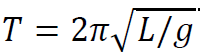
The above points can be explained with the help of a simple example. All first year physics undergraduate students study oscillations of a rigid body, during which a formula relating the time period T of oscillations, the acceleration due to gravity (g), and a quantity L called the ‘length of equivalent simple pendulum’ is derived. The formal expression of this formula is

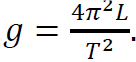
Students also use this formula in a laboratory experiment during which they find acceleration due to Earth’s gravity by turning the formula around as

A physics based explanation of the phenomenon can go something like this. A rigid body is free to rotate about an axis of rotation. If disturbed from equilibrium, the force of gravity causes an unbalanced restoring torque which tends to take the body back towards equilibrium. The inertia of rotation causes overshooting from the equilibrium, which leads to a restoring torque in the opposite direction. The time period of oscillations depends upon the acceleration due to gravity and the distance of the axis of rotation from the center of mass of the body. The latter determines L, which enters the formula for T. The explanation is built around causal relationships between different physical quantities: g causes unbalanced torque, inertia of rotation causes overshooting from equilibrium, T depends upon g and L, etc. A comprehensive understanding also requires an appreciation of different levels of generalities. Acceleration due to gravity is the most general. It forms the very environment in which the rigid body can oscillate.  L is a structural feature of the rigid body. It is not an invariant characteristic like its mass. It depends upon the distribution of the mass in the body, and on the axis of rotation. T is the least general. It changes with any alteration in acceleration due to gravity, a change in the distribution of mass in the body, as well as a change of the axis of rotation.

Neither of the two formulas related to the phenomenon give much clue about the causal relations, and the levels of generalities. This can be seen from students’ answers to a question like what will happen if the same rigid body is taken to the Moon and made to oscillate. From their general knowledge they know that the acceleration due to gravity at the Moon is less. However, they cannot to figure out how would L and T behave, just on the basis of their familiarity with the formula.


Sinking in the Sea of Derivations

Physics has evolved a fairly elaborate theoretical structure of fundamental concepts and laws during its evolution in the last four centuries. All physics textbooks, which form the basis of class room teaching and lectures in schools and colleges, describe and explain this structure. A text based learning of physics can be broadly divided in two stages. The first stage is the development of familiarity with the subject’s theoretical structure. The next important step is  a deeper understanding of the subject by working out extensions of the theoretical structure given in the text, and solving conceptual and quantitative problems. Familiarity is a necessary first step, however it does not guarantee success in the next step.

School and college based physics learning in our country rarely goes beyond the first stage of familiarity with its theoretical structure. Classroom teaching is largely limited to exposing students to results already derived in textbooks. Students limit their learning effort to reproducing text based derivations in examinations. There is no doubt that an exposure to subtleties of basic concepts and derivations of essential results does introduce students to modes of scientific reasoning. However, unless students are also encouraged to, and tested for applying this reasoning on their own in solving unfamiliar problems, their cognitive abilities to ‘do’ physics remain limited. In fact the focus on derivations waylays scientific reasoning and encourages the proverbial ‘rote learning’ tendency of the Indian education system.

It might appear that the focus of coaching institutes on training students for solving problems for entrance examinations should help them in the second stage of developing an understanding of the theoretical structure. However, as we saw, the reality is very different. Rather than any deeper understanding, the training for entrance examinations may be leading to shallow ‘misunderstandings’.


Laboratory Work: The Step Child of Science Learning

Laboratory based experiments are part of physics curricula all along the way from secondary school level to post graduate studies. The purpose of laboratory-based learning in science education is two-fold. One, it introduces students to specific experimental physics methods and apparatuses, so that they get trained for doing experimental research later in their scientific careers. The second, in fact the more important purpose, is to help students start  ‘thinking’ about physical objects and processes in terms of concepts and laws of physics. Hence, anybody can see that a pendulum is an oscillating object. A physics student has to develop the ability to think of it as an object under unbalanced forces and torques, figure out how these cause oscillations in conjunction with the property of inertia, and appreciate the fact that the motion can be approximated by a very simple model of simple harmonic motion. This mode of thinking involving abstract concepts and relations while working with observable objects and processes is characteristic of all empirical sciences.

Testing students for laboratory based understanding and skills requires on the spot testing of individual performance. This is not feasible in a nationwide, short duration entrance examination in which hundreds of thousands of student participate at the same time. There is no place for laboratory-based learning in training for entrance examinations. Is the condition any better in our schools and colleges?

The system of laboratory work in our schools is severely stressed. The crisis is most acute in state funded public education. The teaching of laboratory methods, availability of scientific apparatuses, opportunity for students to actually perform experiments are all lacking. Instead of indicating systemic shortfalls, the evaluation system puts it’s stamp of approval on lack of learning. Grade inflation is rampant. Most students get cent-percent marks. Laboratory work in colleges and universities has not yet degenerated to the level of our pubic schools. However, here too laboratory teaching and learning is considered secondary to theoretical learning in lectures. The new Choice Based Credit System mandated by the UGC has structurally formalised this secondary status of laboratory work. A laboratory course is attached to every theory course with half the credits of the theory part. This scheme is driven by the philosophy that the role of laboratory work is only to show students practical applications of what they learn in their theory papers. This completely neglects the independent significance of experimental techniques and methods like instrument design and fabrication, data acquisition and analysis, and error estimation.

Focus on success in entrance examinations demotivates students from laboratory work. A dysfunctional laboratory system in schools and colleges also leads to the same result. The pull and push factors work from both directions to squeeze out an essential component of science learning.

Learning sciences is a complex and unpredictable exercise. The primary responsibility of educational institutions is to provide an enabling environment for this exercise. Goal-specific training for success in entrance examinations alienates students from laboratory work. Formula based problem solving skills do not necessarily help them identify causal relations and different levels of generalities. Formal science education in schools and colleges also leads to the same lacunae. While internal reform in the formal stream of science learning is a must, institutions of higher learning also need to move away from the practice of deciding admissions only on the basis of performance in one examination.


Sanjay Kumar teaches Physics at St Stephen’s College, Delhi. He would like to thank students of St Stephen’s College, Shivaji College, and ARSD College of the University of Delhi for sharing their ideas and experiences. The views expressed are the author’s own.

Green movements and public perception of science

The triumphalist story of modern science has many sides. Going back to the days of Galileo and Copernicus, the  manner in which ascendancy of human rationality over the dogma and faith emphasised emerging scientific method as a remedy for human ignorance is one such staple tale. Vanquishing evils such as smallpox, rinderpest, diphtheria, bacterial influenza, measles, mumps, rubella, and tetanus is another narrative. The world population has multiplied about eleven times since the start of the Industrial Revolution in the 1750s. According to an estimate, even today, about 815 million people regularly go to bed hungry around the world. Nevertheless, due to modern science and technology, according to FAO, we grow about 1.5 times the world food requirement. The root causes of food insecurity and malnutrition are poverty and inequity rather than shortages. The role of S&T in eradicating hunger is yet another dimension to be thought about.

Coming out of the shadows of colonial exploitation and suffering from ‘underdevelopment’, for a newly independent country like India, science and technology offered tantalising possibilities. “For everything in this world, for wealth, for the soul, for life, for success, the truest guide is science. To seek guidance in other things is heedlessness, ignorance, and deviation from the right path”, said Mustafa Kemal Atatürk. “It is science alone that can solve the problems of hunger and poverty, insanitation and illiteracy, of superstition and deadening custom and tradition, of vast resources running to waste, or a rich country inhabited by starving people… Who indeed could afford to ignore science today? At every turn, we have to seek its aid… The future belongs to science and those who make friends with science.” declared Jawaharlal Nehru. So did leaders of most newly independent colonial countries.

Nevertheless, there are dark aspects of the story. Modern science played handmaiden to colonialism by reifying the race and colonial prejudice. New inventions, such as the electric bulb, far from making the life of the majority brighter, aided and assisted capitalism in exploiting more. Production hours were extended, and the workers were robbed even of  sleep. Development in communications and transport enabled razing of forest in India and Southeast Asia to fuel the expansion of railways in Europe.  The technological developments sustained the Satanic mills of the Industrial Revolution. Modern irrigation facilities enabled more production but also consolidated  rural assets to be held by  fewer hands. Developments in modern medicine cured dreaded diseases but also became playfield of big pharma corporates.  Indeed science and technology had the power to alleviate poverty, reduce drudgery, make a dignified living. However, in the hands of capitalism and colonialism, what resulted was misery and hardship. The environmental movements that emerged in the 1960s were located in this fissure.


Beginnings of environmental movement in India

In India, since the 1970s, along with growth and development, rapid deterioration of the natural world and human living environment was witnessed. The impact of  unrestrained industrialisation was becoming visible. Naturally, social movements fighting for equity and social justice were concerned about the deteriorating and appalling living condition that is being engendered. Ecology was also an emerging discipline. Observing the rise of this new consciousness, Anil Agarwal cheerfully wrote in 1984-85 “Newspapers give prominent display to environmental horror stories. Editorials demand better management of natural resources. Government statements on the need to preserve the environment are now commonplace. There are new laws for the control of air and water pollution and the conservation of forests… Party documents and party manifesto take care to mention the importance of environment…”

When ecology was emerging into a discipline and being institutionalised within academia, the first generation of professional ecologists almost without exception had a close connection with movements on the ground. The dirtying of river water, smells and shoot cover over the living area were visible, and these became triggers for environmental consciousness. Further, thanks to the scientific studies, the looming dangers of air pollution, groundwater depletion, damage to the ozone layer, climate crisis and global heating came to light. Even while the public intellectuals doubted a particular claim, suspected a specific institution, or were wary of the corporate or government influence, ‘science’ as an institution and methodology was held mainly trust. However, there were notable dissenters.

In the public psyche, all these changed with the Bhopal disaster. Hiding behind the garb of confidentiality even the meteorological data on wind speeds and direction, so central to any attempt at computing the numbers likely to be affected by the MIC, was not made public by any agency. No serious attempt was made by any institution to test samples such as water, plant life, food, and so on to assess the damage caused by the leak. In the absence of scientific data, experiential, anecdotal evidence of the people and authoritative assertions of the ‘experts’ only remained making it impossible to have a real scientific approach to handling aftermath of the disaster.  Public confidence in the autonomy of science institutions came under question.

“The Bhopal disaster has stunned those responsible for pollution control, and put fear in the hearts of millions of industrial workers and people living near factories. However, Bhopal is not the only disaster; subtle and invisible processes continue to undermine human and natural resource base…. Satellite data has confirmed that India is indeed losing more than a million hectares of forest every year, something that forest departments have consistently and perversely sought to deny. All our hill and mountain eco-systems, the cradles of our life-giving rivers are deteriorating rapidly. Even in heavy rainfall areas where forests should be in full bloom, the land is becoming a barren desert. Every day, thousands of hectares of India’s  rich biosphere slide into a vast wasteland; the only difference is that today the word ‘wasteland’ has become part of official vocabulary Environmental degradation threatens every Indian” said a joint statement issued by environmental activists three years after the Bhopal disaster. It was a fundamental turning point that exposed the inability of the State to handle a major industrial disaster. A fundamental rupture emerged between scientific institutions (including ecology departments) and green grassroots movements.

Several environmental movements emerged in this period. Some saw the seeds of environmental destruction in the application of modern science and technology emphasised the ‘traditional’ knowledge systems and their interactions with ‘modernity’. Organisations like Kerala Sasthra Sahithya Parishad (KSSP) noted that the abuse of science and technology leads to human misery and environmental degradation. Organisations like the Center for Science and Environment viewed the need to articulate policies and laws and work as a watchdog. A few others campaigned for the preservation of ‘beautiful scenery and charismatic species’. While a plethora of movements abound in India, two are significant for their reach and influence on the larger psyche.


Peoples science movements (PSMs)

The grassroots struggles like the Silent Valley agitation, Chipko movement, and several local-level struggles related to air and water pollution laid the foundation for the emergence of environmental struggle under the aegis of PSMs. The movements were also worried about the global environmental crisis, such as ozone layer depletion.  In addition to the deterioration of living space (contamination of drinking water sources), occupational health  (e.g.;  silicosis, asbestosis) was, for example,  a primary concern of the environmental movements.

The gaze of these  peoples science movements (PSMs for short), exemplified by Kerala Sasthra Sahithya Parishad (KSSP), Chipko movements and so on, were focused on the places where we live, work, learn, and play, be it natural spaces such as a forest or an artificial territory such as a factory. These movements, premised on the concerns of an equitable and just society, argued for the use of science and technology for the betterment of the majority and underprivileged.

Inspired by the tradition set in by J. D. Bernal, scholars from this genre, extended his analysis of ‘science and society’ to examine the roots of environmental crisis. Marx famously noted, “…all progress in capitalistic agriculture is a progress in the art, not only of robbing the labourer but of robbing the soil; all progress in increasing the fertility of the soil for a given time, is a progress towards ruining the lasting sources of that fertility.” He saw the capitalist system thrived only by the exploitation of soil and labour. Here, the soil was a metaphor for ‘natural resources’. There is no intrinsic value to natural resources in the market, but only the rent associated (exchange value, market) with such resources. Thus all commons, be it air, water, are exploited unmindful of longer-term consequences. Nevertheless, in a social system, if the State intervenes to punish those who, say, pollute and favour those who do not, smelling the profit, industries may run towards less-polluting routes and concomitantly cleaning up pollution will itself emerge as a profitable business.  However, the Marxists point out that in the logic of the market, the vicious cycle of pollution is not severed, and the overall load of pollution does not reduce.

Capitalism’s insatiable hunger for profit (not growth per se) is seen as the central font of the environmental crisis, and the remedy was seen to lie in replacing the capitalist system with a more equitable and just society. Indeed, such a society where the wants of all people are equitably and justly satisfied implied a need for  more advanced science and technology and not less. Those rooted in working-class politics, saw the advancement of science and technology as an essential aspect of building a sustainable socialist future.  The struggle for empowering workers, protecting public health, and preserving landscapes was seen as part of a single effort for attaining economic and social justice. The imagined future in this strand of environmental movement had a prime place for science and technology.

While agreeing with all growth is not progress, these movements seek to have a development of all sections of the society, with environmentally sound production, distribution and consumption. Building such a society calls for more advanced science and technology and not less. Thus, these movements oppose GMOs because they promote corporatisation of agriculture which leads to both destruction of the environment as well as the exploitation of small and marginal farmers, but not the technology as such. Pointing out that the divide between poor and rich countries in the world can also be roughly mapped into another kind of division – that between gene- or biodiversity-rich countries and patent-rich countries, the PSMs argue that the real debate is on who controls the technology. As a preserve of giant transnational corporations, GM technologies have the potential to transform the very nature of agriculture, especially in developing countries such as India, in a manner that is detrimental to small and marginal farmers. Further, the concern they eschew is how the public-funded research system in India is increasingly made subservient to the needs of private corporations, many of them foreign-owned. They argue that if India wishes to take advantage of advances in science and technology, they have to be based on local needs and need to be backed up by indigenous efforts at developing technologies.

Today the movements for an equitable and just society rooted in working-class politics are not the ideologically dominant among the green movements. Their voices have become feeble and do not command the following they used to earlier. However, they are among the most active grassroots movements even today.


The new green movements

Displacing the PSMs, increasingly ‘Science/development/violence’ genre (hereafter, SDV) movements are seen at the centre stage in the environmental debates in recent times. Although comprising various shades of thoughts, they are united in seeing modern science as a ‘western project’, asserting a systemic relationship between vivisection and the scientific project, on the one hand, and between triage and development theory, on the other.  They further foregrounded the interaction of the ‘traditional’ knowledge systems and ‘modernity’ (and modern science) and construed an incommensurable chasm between the ‘Indic’ civilizational ethos and ‘modern Western science’.

The foundations of the ideology of SDV movements were laid in the 1980s. The philosophical and ideological underpinnings that originated in the writings of a diverse set of people and groups such as Patriotic and People-Oriented Science and Technology Group (PPST), Claude Alvares, Dharampal and Ashis Nandy remained polemical with hardly any substantial ground-level action. They were inspired by the then-emerging ‘social turn’ in the science, technology and society studies.

Until the late 1980s, SDV was more of an ideological trend among the intellectuals with very little grassroots following. Two important events, one intellectual and other historical, gave a boost to these movements. The collapse of the Soviet Union in the 1990s paved the way for the ascendancy of neoliberal ideology. The ‘postmodern turn’ in the social studies of science pulled the rug from under the feet of  science.

Critique of a specific institution of science or a specific claim of a scientist not standing scrutiny, or even a whole discipline, say phrenology being discredited is not new. As a human endeavour, like any other, science is fallible and influenced by prejudices. However, the normative objective of the enterprise of science was considered  to be  ‘objectivity’. The social turn and ‘postmodern’ philosophies questioned fundamental ontological and epistemological groundings of science.

Some ideas fabricated by humans are social constructs. The biases of the scientific workers in a field can influence the conclusions arrived at. Many times, if we fail to be adequately self -reflective, we see what we want to see, in particular, in areas where ideology plays an important part. Nevertheless, postmodernism went further and claimed that all entities and explanations of modern science are ‘socially constructed’. French philosopher Bruno Latour ridiculed as anachronistic archaeologists who concluded that Rameses II died of tuberculosis. How could he have died of a bacillus discovered in 1882 and of a disease whose aetiology, in its modern form, dates only from 1819? For postmodern philosophers, Koch did not discover hitherto unknown and unseen, but objectively pre-existing bacillus, as ‘common sense’ would warrant. His ‘discovery’ and ‘explanation’ is akin to the explanations given by ancient societies invoking faeries and spirits for a disease. In this view, the ‘belief’ that electron has a charge is just like the claim that ‘gemstones’ emit ‘charm rays’. For scientists, nitrogen is nitrogen, but under the postmodern frame, food grown from organic manure may have an exceptional ‘power’, which plants grown from ‘artificial fertilisers’ may lack. Both are just stories that are socially constructed, and there is nothing that privileges modern science over the ‘traditional beliefs’.  One of the ‘green’ protagonists asserted in the same vein, ‘natural neutrinos are harmless; ok, however, how do you know that neutrinos produced artificially from ‘neutrino factories’ are harmless?’.

Most of the strands in the SDV movements in India are strong ‘nativists’. Before the arrival of modernity (and capitalism), humans (at least ‘Indic’ civilisation) were living in harmony with nature. The serene ‘garden of Eden’, which we should have acclaimed and emulated, was poisoned, when the Industrial revolution (for some even the advent of agriculture) tempted us to ‘contaminate’ sacred nature with the ‘artificial’. The craving of  modernity to control nature – ‘controlling’ virus with vaccination, rivers with dams, for example – created a friction between humans and nature; the root cause of violence and environmental crisis. The solution? Shun all that is ‘modern’ or ‘artificial’ and embrace which is ‘traditional’ and ‘natural’.  Degrowth, go ‘organic’, be ‘natural’. While for some it is returned to pre-modern mediaeval times, for others it is going as far back as ‘glorious past’ of Vedas (or Tholkapiyam).

There is another strand that grows from the celebration of ‘other ways of knowing’. Alternate healing, zero budget farming and whatnot. Most of such claims have not even an iota of evidence. But so what? The methodology of modern science is but one way of ‘knowing’; ‘other ways of knowing’ are equally acceptable. There is no way one can ‘rationally’ choose between the two.

Bewitched by the postmodern turn, science is not just seen as a tool that is being misused by the powerful, but power and exploitation as constitutive of the science. Hence the power (or patriarchy and any other prejudice) cannot be disentangled from modern science. Science, or at least individual strands of research, are unwelcome and perhaps even seen as evil. One of the environmentalist protagonists argued that ‘naively you undertake fundamental scientific research on the neutrino. But what you don’t realise is the dangers. All the research in the area of nuclear physics/ particle physics will be used ultimately for making weapons and destructions.’

Beautiful outdoors, wild places, unpolluted pristine nature sans humans are the primary concern in this vision. Urban areas, workplaces and other ‘artificially constructed’ living places of the vast majority of the people are mostly out of sight, in fact, to be denounced and condemned. Consumption has to be reduced, cities have to be razed, and folks returned to romanticized villages. In the binary narrative of ‘nature = good; artificial = bad’, a climate of uncritical romanticism of ‘traditional’ sets in and mobile phones, modern agriculture, vaccines and all of the modern medicine becomes suspect.

By placing the blame for the environmental crisis at everyone’s doorstep, the salvation is projected in individuals voluntarily changing their lifestyle changes. Advocacy of individual efforts, like consuming ‘organic’ products, home remedies, ‘slow’ living, and vociferous opposition to almost every research, in particular research in genetic engineering and so on are the signet of the new green movements in contrast to working-class movements that talked of more ‘social projects’ such as public health, civic improvements and increased consumption of the impoverished.


The emerging third trend

Although we have focused upon two dominant trends, it would be woefully incomplete if the third trend, which is at its nascent stage in India, is not mentioned. Green capitalism; or eco-capitalism. Vociferous articulations can be heard in seminars and think tanks, however, yet to catch the imagination of grassroots movements. Ironically, the arguments are premised upon the analysis of capitalism by Marx. The ultimate goal or purpose of capitalism is not the destruction of habitats, depletion of natural resources or production of destructive technologies for its own sake. Marx made it clear that the exploitation of capitalism is not premised upon the brutality of capitalist individuals. Many of the individual capitalists might be bleeding hearts, loving caring and concerned. The purposefulness of capitalism lies in its constant accumulation of wealth through profit. It is in the pursuit of profit that capitalism capitalises on nature and abuses it. Thus, if a less-polluting production technology is relatively more profitable, the logic of capitalism will demand that the capital flow towards it. However, if it is the opposite, then, whatever be the human and environmental cost, the drive for more profit will prevail.

It has dawned on a section of capitalist ideologues that the business, as usual, is not an option today, and perhaps the end of the road is around the corner. If the trends of exploitation of natural resources and global warming continue in the same manner unchecked, then the material basis for profit-making and wealth accumulation will be eroded irrevocably. Why not use this to leverage environmental protection. Enact laws to punish pollution and reward the ‘clean’. The market will ensure in the long run; only the ‘clean’ industries will survive. These voices are coalescing into eco-capitalism. Green tax, carbon credits and polluter pays are some of its mantras.

There are two crucial impediments for eco-capitalism in India. The ‘free market’ and neoliberal State is anathema to State intervention. Eco-capitalism relies not just on the unregulated market but crucial State intervention. Call for more stringent State regulation appear to be a throwback to Nehruvian era. This is one dilemma.

Further, for eco-capitalism to be feasible, there must be a permissive climate for ‘market place of ideas’, and the State must be seen as an honest and impartial adjudicator. However, in the reality of Indian society,  grassroots movements are under vigorous attack, even legitimate struggles for even implementing various environmental legislation is labelled extremists, and the actors are castigated as Luddite and agents of ‘western imperialism’. Coupled with this, the perceived failure of the State to deliver, increasing gaps between rich and the poor, lived experience of poor legal and administrative implementation, eco-capitalism is not an attractive position.


Technology and lifestyle choices

One must hasten to state that technology critique is not anti-science,  be it GMOs or nuclear power. Even if rigorous risk assessment processes and the possible ways in which the technology may cause harm are identified and their probability estimated, a society may choose not to have a particular technology on other grounds collectively arrived by public reason.  Unlike science, technologies are not given; they are made in drawing boards. Technology shapes the possibilities and shapes the relationship between individuals and social organisations. Technology is political. Hence a particular social group may accept or reject technology. One certainly must not mistake opposition to a particular technology as indication of irrationality.

In a like manner, the call for action for lifestyle changes, or lesser carbon footprint is by itself not regressive. Indeed the current production and consumption, unless compelled by social forces, are mostly unmindful of waste.  Accumulated waste depletes natural resources and pollutes, ultimately leading to an environmental crisis.

Nevertheless, the “environmental classism” in the advocacy for lifestyle change and technology choice must also not be missed. Technologies that provide ‘green living conditions’ for the leisured and affluent may not satisfy the needs of a person toiling in an inhuman working condition. Ensured of clean and safe living spaces, the prosperous, dream of escaping to wild places to feel “ecological” or “natural”. The contradictions between poor people ‘irrationally’ refusing to leave the dirty shanties and slums along the streams and river banks and take up alternate ‘beautiful’ sites far removed from the city, and the urban environmentalist’s appeal to ‘beautify’ and ‘clean’ the cities are well known in any urban area. The vast majority of the poor have little elbow room to make lifestyle choices.


Public Mentalities

Environmental movements try to foment public mindsets, just like all other social movements. From an impressionistic generalisation of the messages circulating on social media, one leads one to conclude that the popular consciousness today is more influenced by the anti-science rubrics of new green movements. ‘Traditional’, ‘organic’, ‘alternate science’ are some of the key buzz words.

Romanticism, the dominant image of the messages, presents the pristine ‘nature’ as a site of awe, wonder, escape, and even spiritual experience of nature sans humans is presented as reverent. In some small measures, as an antidote to the brutish exploitation of natural resources under capitalism, romanticism acts as a bulwark against complete expropriation. However, in the popular consciousness, romantic ‘nativist’ narratives pit ‘natural’ and ‘traditional’ against ‘artificial’ and ‘alien’. A mentality of the deification of ‘natural’ (and traditional) and castigation of ‘artificial’ (and modern) is engendered. Natural farming is better than artificial, natural ingredients are better than synthetic. Of course, vaccination is against nature, and one person  even went so far as to advocate parturition at home rather than at a maternity hospital.

From the perspective of the new green movement, ‘modern science’ (= western science) is inherently anti-nature, violent and if not the main, at least one of the crucial root cause of the ecological crisis.  Second, the methodology of modern science is not universal. There are other ways of knowing. Hence ‘evidence’ and ‘reason’ need not be authorised by modern science and its institutions. This, on the one hand, implies no amount of ‘scientific evidence’ about sticky, tricky areas like nuclear power or GMOs will ever convince people, making the grounds for public reason complicated. On the other, pseudoscientific claims like gemmology, alternative healing, and so on, gain respectability and currency.

Further, when the new green movements equate the pursuit of science with the “death of nature” and, contend that reason has estranged us from the natural world, irrational and neo-Luddite sentiments are bound toarise as consequences. Interestingly, one of the founding ideologues of the new green movement flatteringly wrote an essay titled ‘Science, colonialism and violence, a Luddite view’.

However, the most insidious of the eco-mentalities is a conspiracy theory. Convinced that a secret, omnipotent individual or group for their ulterior motive, covertly control the political and social order, conspiracy theories thwart any attempt for rational discussion. Indeed by giving a name and a face to an otherwise intricate web of impenetrable global systems, conspiracy theories help the ordinary person to make sense of the complex world that is beyond his/her grasp.

As long as the target of conspiracy theories is to claim that humans did not land on Moon or Earth is flat, they are mostly harmless. However the modern-day urban legends include obesity in the society is a plot of sugar lobby; vaccination a ploy to prompt male infertility with an ulterior motive to annihilate a particular minority ethnic or cultural group; chemotherapy and other such cancer treatment are game plan of big-pharma to make money, while the ‘real cause’ of cancer is just a lack of vitamin B 17 which can be set right by eating lots of apricots.


Public perception of science

Has the overwhelming influence of new green movements thrown the Indian public into the lap of anti-science? Surprisingly, at the same time, we can witness overwhelming public trust towards the claims of climate science and scientists, whereas mistrust and cynicism are hallmarks of response to specific areas off technoscience such as GM crops. Barring occasional barbs, public-funded Space research receives adulation while the public reaction to even State-supported nuclear research is often dubious.

The assertion by the climate change scientists under the aegis of IPCC of human-induced global heating and climate crisis is accepted by and large climate change contrarians’ denials have very little purchase. Why the disconnect? Surely public unreason cannot be an explanation. Why do many people trust science when it comes to climate change but not when it comes to, genetic engineering or nuclear power?

Very many survey reports show the Indian people, by and large, are not inimical to science and technology. For example, Kumbh Mela surveys conducted for the past 25 years show a steady increase in the scientific information level among the masses and a perceptible reduction in the prevalence of certain superstitions. The surveys also show the currency of extra-scientific, irrational, mythological ideas in tandem with scientific information. In quotidian life, the ordinary person invokes scientific, rational, irrational, extra-scientific, religious, and other information to rationalise an action. However, collective behaviour is not just the sum of the individual behaviours. It is, as Gauhar Raza points out, ‘a function of historical legacy, cultural value system, economic determinants and political affiliations’ (Raza, 2018).

What do climate scientists stand to gain by faking the data? Conspiracy theory speculates that garnering research funding is the motive. In India, as most of the research is funded by the State, and as obtaining grants has no impact on job security, the logic of conspiracy seems too thin in the Indian context. Maybe the climate scientists are leftist radicals masquerading as objective out to wreak capitalism by denying it its life-giving oxygen- oil, petrol and fossil fuel. In India bogey of socialism is yet to take root, despite decades of neoliberal economic policies. In fact, in popular imagination, socialism still has a sheen.  In Indian psyche, climate scientists are ‘socialist’ they are ‘good guys’ (and girls). Like the Moon landing, Area 51 or Bermuda triangle, for an Indian mind, conspiracy theories associated with climate science are lame, having no material consequence.

However, GM crops being overwhelmingly associated with big- agribusiness, is another story. Big business, particularly after the neoliberal economic policies and emergent crony capitalism, often is found to have of skeletons hidden in the cupboard.  From the willful faking of data on adverse effects by the tobacco industry to recent intentional manipulation of the exhaust fumes test by a famous automobile manufacturer, big business has lied, bribed and twisted the arms of administration. In the popular notion, founded upon such numerous lived experiences, honest big-business is a fairy tale, modern-day superstition. The overwhelming public scepticism of GM crops emerges from the association of the research and development with suspect entities. Mistrust breeds when nuclear power appears to be shrouded in secrecy.

Indeed fertiliser and insecticide lobbies were seen as driving the research agenda of the green revolution. However, as most of the research took place in public-funded institutions, the scientific institutions and scientists were seen as  independent. The public confidence in these institutions remained intact. However, in the recent period,  with public sector agricultural research declining and diminishing, in particular in areas like GM crops, popular perception sees that the direction of research priorities in agriculture is predominantly shaped not by the relative merit of different technologies, but rather the priorities of the private sector. In like manner, confidence in the health care systems in on the wane. Recent controversies and disquiet about the proposed Human Challenge Trials for Vaccine Development are a product of such fears.


What is to be done?

While several factors will influence the public reaction and perception, one of the main factors is the public engagement of scientists and science institution. The call for the scientific institution to open up to the public is seeing increasing purchase. However, the interaction is still framed in what the science communicators call as the ‘deficit model’. Sure enough, the public will know much less than an expert on neutrinos; in this sense, the attempt to present the science in a simple way is welcome. However, dialogue implies understanding concerns beyond understanding scientific principles. Where are the ecologists, chemists, engineers, in the green movements? The public engagement must go beyond the simple ‘popularisation’.

Further, the public image of scientific community builds for itself matters crucially for earning public trust. If the scientific community is seen as silent, subservient to the powerful, say, when pseudoscientific claims are peddled, it does not inspire confidence among the public and the movements.  Often, the State-funded institutions are perceived to be gagged by the ‘government rules’.  Hence, a vibrant scientific community engaging in matters of public importance is an essential requisite.


Reference

Raza, G. (2018). 3 Scientific temper and cultural authority of science in India. In Bauer, M. W., Pansegrau, P., & Shukla, R. (Eds.). The Cultural Authority of Science: Comparing Across Europe, Asia, Africa and the Americas. Routledge.


T V Venkateswaran, Scientist F, is associated with Vigyan Prasar. He is a science writer, communicator and trainer and conducts the popular Eureka-conversation with Indian scientists, a weekly TV show on RSTV. He also writes regularly in newspapers. 


This article is a part of the Confluence series on Perceiving and Reacting to Science. The other articles in the series can be found here.

The Elephant in the Room

These are the prepared remarks delivered at the National Frontiers of Science Meeting organized by the Indian Young Academy of Sciences (INYAS) 0n November 6, 2019 at Jaipur, India.

Thank you Dr. Yadav and the Indian Young National Academy of Science for your kind invitation to be with you.

Honored guests. My friends. Good evening.

There is an elephant in the room with us, and I believe we cannot continue to pretend this is not so. We must confront the issues it has raised, and that is the topic I wish to address.

Knowledge has become colonized. This trend is true for knowledge in all fields, but it is particularly true for science. Your work has all-too-often become the private property of a few large corporate concerns, immensely rich for-profit trading companies that have claimed exclusive control over the corpus of scientific literature.

In these modern times when the Internet makes universal access to human knowledge possible, it is ironic that the scholarly literature has become less and less accessible.

Prices for journals have soared while the costs of production have plummeted. Physical copies have been replaced with digital files that are locked down with digital rights management, terms of use, obscure user interfaces, and aggressive and unfriendly gatekeepers who continually remind scientists like you to keep off the grass.

In this world we have come to inhabit, scientists have become the new Indigo farmers. You ship your preprints and other raw materials off to London where modern-day East India Companies like Reid Elsevier force you to buy back high-priced finish goods.

These merchant trading companies of knowledge—both for-profit and sadly even many purportedly not-for-profit scholarly societies—these companies are the elephant in the room. They have become a knowledge Raj.

As an author, you are told you may not share your own work without permission, and such permission often comes with a tax and severe limitations. You are told you may not make any use of the scholarly corpus without first applying for a license, and such licenses are often arbitrarily denied.

You may not even make copies of the so-called “version of record” of your own articles for your family or your students, at least according to the fear, uncertainty, and doubt the gatekeepers spread among you.

I have two problems with the idea that an East India Company of knowledge can tell you what—and how—you may read in the course of your pursuit of scientific knowledge.

The big problem of course is that the students and scholars of the world do not have access to the scholarly corpus in order to further their studies. I am pretty sure if I asked you how many of your students used Sci-Hub to do their research, almost every hand would go up.

That’s a big problem. A huge problem. A moral travesty.

Education is a fundamental right in our society, the way that people from any walk of life who have the capability to learn may earn a better living, teach themselves a craft or an art, become a professional, or—like all of you here—to practice science to further the increase and diffusion of knowledge.

But, that is not the problem I wish to speak to you about. We are gathered here to discuss the frontiers of science. One of those frontiers is what you may know of as “big data” or “machine learning” or “text and data mining.” We use computers to examine the work of those that came before us so that we may stand on the shoulders of giants and reach for new heights.

As scientists, text and data mining offers some amazing opportunities. To conduct this research, however, you must have access to the scholarly corpus. Sci-Hub has approximately 75 million journal articles, Crossref lists approximately 100 million objects with Digital Object Identifiers. Your research labs and universities have access to only a fraction of this body of knowledge.

This second problem—the use of text and data mining on the scholarly corpus for the purpose of scientific research—is a pressing issue for our times. If a scientist believes she can perhaps better cure cancer if she is able to search the text of previous research, then it would be immoral for private parties to tell that scientist she may not proceed upon this inquiry.

But, that is what happens today. Text and data mining is purportedly prohibited. By prohibited, I mean that there are people who make a lot of noise about why this can’t possibly be allowed without unjustified monetization and licenses—without clearing the details of your inquiry with them before you may proceed.


Let me give you the example of Max. Dr. Maximilian Haeussler is a researcher at the University of Santa Cruz Genomics Institute. He is using text and data mining to search for references to chromosomal locations in scientific articles, then makes those available in a genome browser. This genocoding software is 200 lines of Python code that searches texts for different ways to refer to a chromosomal location, such as gene symbols, SNP mutation identifiers, or cytogenetic band names.

Max put together a letter requesting permission to crawl all articles on a publisher’s site that were published after 1980 (which is the advent of routine reporting of DNA sequences). The code only pulls out 200 character snippets around the match, it is clearly non-consumptive, by which I mean people are not reading or disseminating the article, they are using computers to extract a very small portion.

He sent the letter to 43 publishers. All 43 specifically prohibit crawling their site in the terms of use. For 28, he got some form of partial permission, but in many cases that permission was empty—no site license was forthcoming and technical measures have prevented crawling the site. Fifteen of the answers were an outright no or they simply ignored him.

He has been unable to complete this important work. He has been blocked because gatekeepers don’t approve of his research.

A second example of text and data mining is your own Professor Gitanjali Yadav. She is doing a fascinating research project that is examining the silent language of plants. Plants communicate with each other and with other species using chemicals. Each plant has a chemical fingerprint, a unique bouquet of scents and emissions.

The text and data mining she is conducting consists of searching journal articles looking for the names of plant species and their parts, then extracting the names of any volatile compounds associated with those plants as well as details such as where they were reported and the date.

This work began 10 years ago when she searched open sources such as PubMed and created the Essential Oil Database. The database presently contains 1.2 lakh essential oil records with data from 92 plant taxonomic families. But, that is based on only a small set of articles and Dr. Yadav is convinced that she will be able to greatly increase this database with a search of the full scholarly corpus.

A third example was recently featured in Nature, this one in the area of materials science. The discovery of new materials is a mixture of craft and science. It is often a trial-and-error process, and is a very inefficient, almost artisanal process.

Using 3.3 million scientific abstracts, the researchers created a 500,000 word vocabulary, then looked at co-occurrences of words—such as “iron” or “steel”—and other terms, such as chemical compositions—using unsupervised machine learning. These word vectors were then associated with various materials, which were then clustered around major categories of uses, such as superconductors, battery materials, photovoltaics, and organic compounds.

This example shows the potential of data mining, but what if they had more than just abstracts to work with? Would the results be better?

A study in PLOS Computational Biology did text mining of protein-protein, disease-gene, and protein subcellular associations to examine that question.

This study compared the results from performing extraction on 15 million abstracts with the results from the same procedure on 15 million full text articles. As one would intuit, the results were far superior with full text. The reason is simple. Abstracts are highly summarized and the full text has much more detail.

Text and data mining is not just for the hard sciences. Legal informatics has used text and data mining to examine similarity in court opinions to see, for example, how U.S. District Court and Court of Appeals decisions influenced the U.S. Supreme Court.

Text and data mining is a key component of modern search engines, it is used for machine-assisted translation, it was even used recently to to determine what makes people happy!

The Economist reported on this recent study, which examined over 8 million books and millions of newspaper articles for terms with a psychological valence of happiness. Researchers found that as wealth increased people became happier, but that was incidental. Significantly more important for happiness was the health of the population and the absence of war.

Text and data mining can also be used for plagiarism detection. You may be familiar with Dr. Elisabeth Bik, the “lab fairy,” who has been highlighting unattributed or manipulated reuse of imagery in articles. Image recognition on the full text of articles could substantially assist in this enterprise, as could techniques to mathematically model the words of all journal articles in order to do plagiarism detection on texts.

This clearly is an important frontier of science, but it is an unexplored frontier.

We have set out to change that.

For the past 18 months, I have been collaborating with my colleague Dr. Andrew Lynn of the School of Computational and Integrative Sciences at Jawaharlal Nehru University. Many of you are familiar with Professor Lynn’s distinguished career in applying informatics to the biological sciences.

We have built a system we call the JNU Data Depot. A replica of this system is now spinning at IIT Delhi under the direction of Dr. Sanjiva Prasad, a distinguished computer scientist.

The JNU Data Depot consists of 2 large systems, each with 24 disk drives, and a cluster of smaller towers. The computers are cut off from the broader Internet, what we call an air-gapped system. We are spinning a bit over 500 terabytes of data.

On that system are the texts of over 125 million journal articles culled from a variety of sources. There is overlap in many of the sources, but we believe we have approximately 75 million unique articles.

The text has been extracted from underlying PDF files using common utilities such as pdftotext and grobid, which builds on pdftotext to add XML-based structure to the extract. Images and other components are also extracted for analysis. A number of corollary data sets are also on the system, such as the Crossref database of citations and a number of important biological databases such as the Elixir data sets.

The system contains copyrighted data, so it is carefully secured from the rest of the Internet. You need to bring your computer to campus, apply to Dr. Lynn for permission, and must agree to the JNU Data Depot terms of use. Our terms of use are a direct copy from the Hathi Trust text and data mining facility in the U.S. and strictly prohibit any redistribution of the underlying texts.

The Hathi Trust system contains all the books scanned by Google Books. Their terms of use—and ours as well—establish that the system may only be used for non-consumptive text and data mining. You are not reading or even looking at the full text of the PDF files, you are using computers to mine the text for facts.

We are limiting the system to non-commercial uses only, and have placed a number of other limitations on the system.  The system was described recently in an article in Nature magazine.

India is on the frontier of this revolution, one of the first places in the world where researchers may do this type of research on a collection that approaches the full scientific corpus. We are in the early days of the system, and are still bringing it up to speed, but the system exists and is in use by a number of researchers.

You may rightly ask, is this legal?

We approached the JNU Data Depot in an exceedingly deliberate and careful manner. In particular, we discussed the issues extensively with a number of legal scholars, and have put on the record a legal analysis by Professor Arul Georgia Scaria, a leading intellectual property expert at National Law University, Delhi, and by Dr. Zakir Thomas, a senior member of the civil service who was formerly the Registrar of Copyright for the Government of India, who contributed his analysis in his personal capacity.

We also consulted with a number of other legal scholars, including Professor Feroz Ali at IIT Madras, Professor N.S. Gopalakrishnan of the Cochi Institute of Science and Technology—widely considered the dean of the intellectual property community in India—and Professor Lawrence Liang of the Ambedkar University School of Law.

I also discussed the matter extensively with Professor Shamnad Basheer, who I am sad to say recently passed away at an all-too-young age, after a brilliant career of public work and public advocacy. He is sorely missed.

I am not a lawyer, but I am familiar with many of the issues because of my work making knowledge available in the U.S., Europe, and India. I am always very careful before I make a database available, and believe it is crucial that one have a strong legal grounding for any action that is taken. I strongly believe that is the case here, and the legal experts agree.

In the U.S., the question of text and data mining was extensively litigated when Google started scanning all the books of the world, and did so without first asking for permission. Google was not distributing the books, they scanned them for the purpose of text and data mining—for showing snippets to users, for driving search engine results.

Hathi Trust is the consortium of universities that provided Google with the books to scan, and received a digital copy back in return. They made the books available to their members, which are the major universities of the United States, to show their users previews and snippets, and in many cases the full text.

Hathi Trust went even further, and created a text and data mining facility where researchers may—using the same model we are using at the JNU Data Depot—mine the full text of all the books that Google scanned.

The courts have ruled repeatedly—and definitively—that the uses of both Google and of Hathi Trust are legal.

But, is this legal in India you may ask? And, are journal articles the same as books? The answer to both questions is yes.

India is a common law country. There are statutes, but ultimately any new use must be judged by the courts if somebody were to object. But we believe we stand on very solid ground and we do not expect to be challenged because of the careful and deliberate way we have gone about this, the wide-spread participation and support for this endeavor from major universities and government research labs throughout India, and the obvious and compelling need for this facility.

A basic concept in copyright law is that there is no copyright in facts and ideas, it only protects the expression of those ideas as fixed into a tangible medium. One cannot use end user license agreements to prohibit the use of facts and ideas to override the underlying purposes and rights under copyright law and the Constitution. That is morally wrong and legally wrong.

It is also important to understand that copyright law is about the rights of users as much as about the rights of creators. That was underscored in the opinion of the Hon’ble Justice Endlaw in the famous Delhi University Copyshop case, where he said that the rights of copyright users are not be read narrowly or strictly.

Under Indian law, there are a number of exceptions to copyright. What that means is that even if a work is under copyright, certain uses are allowed. The Delhi University Copyshop case was about one of those exceptions. A professor may assign a course pack of materials that are under copyright because one of the exceptions is when materials are furnished by a teacher to a student in the course of instruction.

Another exception to copyright is for private or personal uses, specifically including research uses. That is what is happening in the JNU Data Depot.

The exceptions to copyright are part of an analysis known as fair dealing. What is “fair” is a matter of degree, it depends on the circumstances and a number of factors, and it is a matter for the courts if a controversy should arise. We hope and believe our work will not reach the courts because it is clearly fair dealing, it is clearly vital to the future of scientific inquiry, and it is in line with the goals and objectives that have been laid out by the Government of India to continue to keep India at the leading edge of the frontiers of science.

In the JNU Data Depot, only small snippets are being extracted. The purpose of our dealing is strictly non-commercial. It is being done as non-consumptive use. Articles are not being distributed, they are not being made available to others, our use is not in any way harming the market for these works.

One of the most important factors in evaluating fair dealing is to  examine the alternatives that are available. In the case of text and data mining, there is no possibility of licensing the entire scientific corpus. Yet, this corpus is what is known as an essential utility—one cannot conduct science properly without using this corpus, just as one could not operate a hospital without electricity. Even in the physical world, if a property may not be accessed without trespassing another’s property, the law permits easement rights.

Some might say that keeping a copy of these materials without the permission of publishers is an infringement. But, the whole purpose of copyright exceptions is that one may keep copyrighted material if those materials are within the scope of the exceptions. The JNU Data Depot is clearly within the scope.

We strongly believe—and eminent legal experts agree with us—that this is legal.

Before I conclude, I would be remiss if I did not discuss who let the elephant into this room, into our laboratories, our ivory towers. It was us. We are responsible. We are the ones that left the door open.

Since the beginnings of journals, back to the Philosophical Transactions of the Royal Society and before, the dissemination of scholarly results has been a collective endeavor.

When we present a lecture at a conference, this is not an experience for which we demand a fee. When we peer review a colleague’s paper, we do this as a service to our profession. When we submit a paper to a journal, we do so for fame and glory, or to promote the increase and diffusion of knowledge, not for bags of gold.

Until recently, the editing of journals was always a matter of prestige and learning. Even today, it is almost always done for the advancement of science, not for the pursuit of pecuniary riches.

For the last 50 years, journal prices have skyrocketed to absurd heights even as costs have plummeted. The academic publishing “industry” has engaged in predatory practices, the oligarchy has built the walls ever-higher.

This is our fault.

When we complain, the elephants tell us there is no free lunch. They say the process is by its nature exceedingly expensive and complicated, they say publishing is difficult, they say we must not sacrifice quality by permitting amateurs into their walled garden.

This is nonsense.

A.J. Liebling once said “freedom of the press belongs to those who own one” and in today’s world of the Internet and computers, we all own a printing press, we all have ready and easy access to the means of distribution.

Publishers are now pretending to embrace openness, but they are doing so with smokescreens. Article publication charges are ridiculously high, lock-down periods are unnecessary and in many cases illegal, exclusive publishing platforms with abusive terms of use are a travesty.

This is not open. Publishers are attempting to fool us with their jadoowallah routines.

But, I am pleased to report that the elephants are on the run.

Plan S is a great start. The funders of science have said this must all change. They have said enough is enough. Artificial metrics are a lazy alternative to judging individual articles on their merits. Open publishing must be a requirement, not an alternative. Plan S makes it clear across the globe that change must come.

I was delighted to see the strong support of Plan S from Dr. VijayRaghavan and the Government of India. He joins leaders from around the world in supporting your efforts as scientists and scholars.

But, we must go further.

We must not depend on scholarly merchant houses for the dissemination of knowledge. As scholars, we must take back control of science. If a high-quality open journal does not exist, make one. If you publish your results, you must do so openly. There is no excuse to do otherwise.

I have great hope for the future of open publishing. The wind is at our backs. People like Dr. VijayRaghavan are helping row this boat. It will happen.

But, we must still stand on the shoulders of giants if we wish to reach new heights. This is why text and data mining on the existing corpus is so important. This is why we have created the JNU Data Depot.


You are no doubt familiar with Mahatma Gandhi’s seven social sins. Science without humanity is of course one of those sins. One of the great things about science in India, for the most part at least—and particularly so with those of you gathered here today—is that science is practiced with humanity. So many of you are working to solve pressing problems that afflict India and the world. It is inspiring.

But, another sin is commerce without morality, and I put it to you that that prohibiting text and data mining—telling a scientist who believes she can better find a cure for a disease or understand the roots of poverty—that is the very embodiment of that sin. Gandhi Ji would have been aghast at this unholy proposition.

Today, knowledge has been colonized. You are being told you cannot make knowledge without paying a tax and securing a license. How is this different than being told you may not make salt without paying a tax and securing a permit?

Knowledge and salt are both vital to the functioning of society, both are essential to human life. Taxing knowledge and prohibiting its consumption, taxing salt and prohibiting its consumption, these are both examples of commerce without morality.

You are no doubt also familiar with Gandhi Ji’s use of the concept of swadeshi, one he of course adopted from the works of many others throughout India. Most people think of this in terms of Bapu and his spinning wheel, making kadhi as a way of fighting the colonization of India.

This was bread labor, the idea from the Sermon on the Mount that you should “earn thy bread by the sweat of thy brow.” Bread labor and swadeshi, public work and satyagraha, these are the tools the Mahatma knew would lead to swaraj, to the liberation of India.

What you may not know was that bread labor for Gandhi Ji was originally not the spinning wheel, it was the printing press. At the Phoenix Ashram, their bread labor was that everybody must typeset every day. It was the increase and diffusion of knowledge that would educate the people.

Before satyagraha must come awareness of their condition among the people, and awareness comes from knowledge. Only with knowledge could the shackles of the Raj be removed.

Today, it is knowledge that has been colonized and I believe we cannot ignore this elephant in the room. We cannot sit back and allow others to say that it is wrong to pursue knowledge, that it is wrong to try and alleviate poverty, that it is wrong to make technologies that are appropriate to our modern lives and the problems our society face, that will help enlighten humanity.

Gyan swaraj is a great challenge of our times. It is a true frontier of science. You are all public workers, you have devoted your careers to the pursuit of knowledge, to the betterment of our society, to educating our youth.

If there is a way to carry out that mission better, we must not shirk from that task. If we all stand up and say text and data mining is an important frontier, then it will be so. But, it will only be so if we do this together.

Jain Hind. Jai Gyan.

Thank you very much.


Carl Malamud is the President of Public.Resource.Org, a US-based nongovernmental organisation that provides access to knowledge in the US and India. He is the author of nine books. His most recent book, coauthored with Sam Pitroda, is Code Swaraj: Field Notes from the Standards Satyagraha. The book is available at public.resource.org/swaraj and (of course) has no rights reserved.


Copyright for this article: No Rights Reserved.