Scientific Integrity – the interaction of common human foibles and different interest groups

As scientists, we are as fallible as any other human being. We might like to think otherwise, but that is clearly not true as shown by the many reports of scientific misconduct and negligence, and many more reports that may come tumbling out of the cupboard in the future. The landscape gets much more complicated and murky due to the conflicting interests of different involved parties – science administration, publishers, companies, and more. With that in mind, can we at least try to understand the route to these misconducts and whether it can be stopped or at least strongly discouraged? The rest of my monologue is not to find excuses for scientific misconduct but to fathom ways to discourage it over and above the prescribed punitive measures (which are difficult to implement and even more difficult to implement uniformly and objectively). Like most issues, it is a multi-faceted problem and should be handled, I believe, in a more multi-pronged and nuanced way.


Science has changed dramatically over the last many decades. If we think of the quanta of funding, it has increased many folds as the public, in general, have been convinced about the importance of science and technology in their own lives. However, with this increase in funding, there is also a clamor for the glory that is associated with it. New flashy research has been imagined, sometimes really out of thin air, to justify the shiny bauble. Oversight and bureaucracy have also increased commensurate (?) with that. Now, we may like that or rail against that but one cannot choose to have more funding with reduced oversight. We can only hope that the oversight mechanism functions properly without undue hindrance, which is of course, extremely difficult to balance. However, I believe here is the real rub. Over the decades the research ideas have become more intricate (as expected) and consequently, more expensive. Therefore, to carry out justified research, a scientist needs to jazz it up with fancy buzzwords and high-sounding goals. Otherwise, it falls flat, and therefore, there is no funding for it. On the other hand, somewhere down the way, we (scientists and science administration) seem to have forgotten that research is mostly boring laborious repetitive jobs to reproduce and re-evaluate observations. Therefore, the first thing to be discarded along the way has been the due rigor of the work.


The quanta of funding and the prestige associated with it are even more in the case of industrial or corporate funding and start-ups based on novel ideas. The advent of cool-sounding pharma start-ups, as also behemoths such as Google and Facebook that started out of garages of college students and dropouts, and the movies based on those, have increased the hype to be a part of that cult. With start-ups opening up a dime a dozen in every university, it feels like innovation is at an all-time high (which may very well be true) and all human problems should have been solved (which most certainly is not true). Scientists, therefore, are vying to be the next such persona with ideas that are cool sounding, far-fetched, and again sometimes just flat out made up. This is further compounded by the science administration coaxing the scientists along that path for shiny press releases that promote those scientific organizations, funding agencies, as well as the lofty goals of science as a whole. It is, thus, a feeding frenzy of glory by the various interest groups, and the interest of the people and public seem to be de-prioritized.


The nuances and pressures of this system are even more evident when one notices the progression of funding over the last few decades. It has been the reigning trend that funding is getting increasingly concentrated in the hands of the few older established researchers and therefore, the younger less established ones are severely handicapped (available NIH (US) data in PNAS, 114(25), 6498 (2017)). This inequality might also be causing pressure to incentivise deceitful means.


The problem of lack of rigor and allure of the shiny bauble is compounded by a scientist’s innate unconscious bias. We all love our research and our hypothesis like our new babies and therefore, cannot find fault in it. Sometimes, we love it so much that we start believing that we do not need to prove (or disprove) it. One cherry picks results or creates them out of thin air. Maybe even the senior researcher forces the junior researcher unduly to obtain results that fit the narrative. The effect can range from gross negligence to criminal malfeasance. True scientific values and rigor lie discarded along the way.


Sometimes, we as a community do not pay so much heed to the malfeasance and negligence, possibly because of the perceived lack of real-life implications of it (the comfortable academic cocoon), irrespective of how snazzy the science sounds. For example, when a doctor makes a mistake, a patient dies, but when a faulty paper is published, nothing much of consequence happens, or that is what we think. However, this is clearly a mistake, as evident by the truly far-reaching impact of much basic research as also the much more near-term effects of many of the applied research. This has been made even clearer in the instance of the extreme near-term use of research (both sound and faulty) during the covid times. To underestimate the seriousness of academic malfeasance due to its primarily academic nature is an egregious fault of the entire scientific ecosystem.


Science as I mentioned before, is mostly incremental and painstaking, while science successes that are written about in history are path-breaking, astounding in scope, and exciting to listen to. Nobody questions or highlights the boring procedure, the many failed attempts, and the failed researchers whose incremental work paved the path for that astounding moment of scientific glory. Of course, narcissists that we are, we all want to be at the pinnacle of that scientific glory and not act as the vessel for the incremental invisible work behind it. Therefore, the natural temptation is to see the culmination of one’s work and ideas, which sometimes realistically are not even possible in a lifetime, however great the final idea is. To achieve the big picture in a short time, again it is the rigor that gets discarded.


This, of course, is made easier by the interests of pay-to-publish journals and phony conferences and awards. While it is easy to insinuate the pay-to-publish model for the faulty results and their even more faulty interpretations, some of the uber-prestigious “tabloid” journals are also to be blamed. These journals look for the jazzy elements of science and have started disregarding the rigor and reproducibility of data. Of late, there is an increase in data openness, which should be commended and indeed is the right direction to go. However, the inordinate importance that is paid to flashy science is still a big concern.


The ones I mentioned are very natural human foibles that get exacerbated by the hyper-competitive, shiny world of sexy science. Just as natural human foibles that are unlawful are treated with the law of the land with appropriate comeuppance, so should the foibles in the scientific arena (which we erroneously believe to be inconsequential due to its apparent lack of real life consequences). But can we do more?


The solution to many problems is quite similar – the stick and carrot approach. The stick denotes the consequences of scientific misconduct. There should be a very well defined standard set of dire consequences for different classes of misconduct, which will make its implementation somewhat uniform on people at different rungs of the scientific power structure. It is easy to understand and spell out what needs to be done but difficult to implement. Not the least because scientific misconduct almost always boils down to he said-she said and the share of culpability may not be easy to apportion. The other approach is that of carrot. Here, the entire scientific ecosystem needs an overhaul. The shiny ideas, of course, need funding, but so does “solid” incremental work. In downgrading the importance of these “small” contributions, we are missing out on the real big ones and also, tempting others to forge imaginary big ones. This method of course needs a change in the existing modes of funding, publishing, promotions, and all. Notable small changes have started from some of the EU country science funding agencies which explicitly state that they do not want the referees to judge based on impact factors (which is sometimes synonymous with cool-science factor) but on the individual component of the proposed work. The complete carrot approach is of course a lot larger in scope but may be thought of as a conglomerate of such small but positive steps in the right direction. Baby steps in that direction, could start with something as small as discussion of the problem, giving scientists a space to air out half-baked ideas as opposed to only earth shattering results, a more congenial environment that promotes collaboration as opposed to competition (at this moment collaborations are sometimes frowned upon) and so on. Essentially the solutions are the difficult stick approach and the excruciatingly difficult carrot approach. However, it is imperative that the problems be acknowledged and dealt with at the earliest, lest the problem festers into a more complicated cancer of the entire system and brings it down.


Debashree Ghosh is an Associate Professor at Indian Association for the Cultivation of Science, Kolkata. Views expressed are personal.

Cartoon Series: One Among Us

Confluence is happy to announce a new cartoon series called “One Among Us” by Prof Sujit Kumar Chakrabarti. Prof Chakrabarti is a faculty at IIITB, Bengaluru. “One Among Us” first appeared as a regular feature between 2002 through 2007 in Voices, the then students’ newsletter at Indian Institute of Science (IISc), Bengaluru. The comic strip, with Mr. Laapataa as its main character, was an instant hit among the IISc population. Since then, Mr. Laapataa has been featuring in various online platforms like Club SciWri, 8 Bit etc.

Mr. Laapataa elsewhere on the Web:
Confluence will strive to put out “One Among Us” in as many Indian Languages as possible. Listed below are the comics, along with the date on which they were published.
1. Guru Poornima (13-Aug-2021). Languages: English, Hindi.
2. Problem Solver (26-Aug-2021). Languages: English, Hindi, Bengali, Tamil.
3. Teachers’ Day (04-Sep-2021). Languages: English, Hindi, Bengali, Tamil.
4. Helping Hand (31-Oct-2021). Languages: English, Hindi, Bengali, Tamil.
5. The Trials of Hybrid Teaching (16-Feb-2022). Languages: English, Hindi, Bengali, Tamil.
6. Online or Offline (29-Jun-2022). Languages: English, Hindi, Tamil.
7. Virtual Socialisation (15-Aug-2022). Languages: English, Hindi, Bengali, Chhattisgarhi, Kannada, Malayalam, Marathi, Tamil
8. Teachers’ Day 2022 (15-Sep-2022). Language: English
9. Online or Offline (Part 2) (19-Nov-2022). Language: English
10. ChatGPT (14-Feb-2023). Language: English
11. Motivation in Academia (07-Sep-2023). Language: English

Views expressed are personal and do not necessarily reflect those of Confluence, its editorial board or the Academy.


Do we need to spend substantial amounts on ‘open access’?

Researcher who finds something novel is owner of the research output and needs to share the same with recipient fellow researchers and/or general public. In current times, this sharing is generally through research articles or patents, if the research output has applied value. Contemporarily, most of the research is supported by public money and, therefore, it is expected that the non-patentable research output should be openly accessible to all interested members of the public.


Historically, research articles were mostly published in journals maintained and run by academic institutions and learned societies. Increasing numbers of researchers across the globe during the past century and the consequent greater demand for opportunities to publish, attracted commercial publishers, initially as partners of academic institutions to provide professional and publicity assistance. However, during the past 3-4 decades, research publication has become a full-fledged and highest profit-making industry in which the academic institutions have limited or no involvement. As a consequence of such large-scale commercialization of research publication system, most of the publicly-funded research output remains behind ‘pay-walls’, whose doors are opened only when either the author or institution or reader pays.


The pay-walls are not entirely new. Barring a few exceptions, ever since the publication of research journals started, readers of the research output published therein could access it only if they or their institutions directly or indirectly subscribed to the journal. However, till about three decades ago, most journals also provided a number (ranging from 25-100) of hard copy reprints of the published article to the corresponding (‘senior’) author free of charge so that these could be shared by the author with peers. In addition, the author could also purchase additional copies of reprints for sharing with more researchers. The library budgets were much smaller than today. Despite the subscription costs also being much less than today, most libraries across the globe subscribed to only a few journals. Exchange of reprints, therefore, remained the major source for sharing the new research developments.


Those who joined research during the past 2-3 decades, may wonder how researchers across the globe kept abreast with new developments/findings in the absence of internet, databases, indexing services and pdf files. Prior to the advent of internet and the pdf files, the hard copy reprints remained the only formal way for a wider sharing of research output with peers. Therefore, it was a common practice that the interested readers would use personalized printed ‘reprint request cards’ for sending, through the postal service (often through surface mail for economy), a request to the author for a hard copy of the desired paper. The author nearly always responded by posting the reprint by surface (most common) or air mail (if the author happened to be well-funded) book-post. Most authors also maintained a mailing list so that they could on their own post the reprint to those whom they believed would be interested in the new work. Such exchanges between researchers provided free ‘open access’, although the time-gap was long, varying from a few weeks to a few months.


Advent of computers, internet and digital publication raised hopes that researchers would be able to publish their new findings faster and share the same with all others without the postal delay. During the initial years, some of the digital revolution-based expectations appeared to be met, at least for researchers in countries and institutions with good internet connectivity. However, the scenario soon changed as the commercial publishers realized the great financial potential of the research publication business.


The issue of ‘open access’ has, in recent years, become a point of wide discussions by governmental agencies, academic bodies, social media and research journals. Sustained efforts by commercial publishers have led the research community and the funders to believe that authors may not share a soft or hard copy of their article with peers because of the copy-right agreement signed by them with the publisher, and therefore, the ‘open access’ is critically dependent upon someone paying for it. I think that the prevailing perception that published work cannot be shared by author/s, who actually ‘own’ the published findings, with academic peers because of copyright restrictions, is unfounded/ Such mis-impression seems to have been deliberately created by commercial publishers keeping their financial interests in mind. I am not aware of anything in the copyright form signed by author prior to publication of a research article that contains any clause preventing sharing of the published material with academic community through personal exchanges. Unfortunately, authors rarely read the fine print in the copy-right form before signing it and thus remain unaware of their own rights. Many commercial publishers further misguide authors by sending an online link to the corresponding author for sharing with others, with the link usually taking the reader to a pay per view site. The author’s personal pdf file (in lieu of the hard copy that was provided in the pre-digital era) is often made available after some delay. I have been also told by a few authors that some publishers go further in their unethical conduct and never provide a pdf file of the published work to the author! Either of these conditions reflect the unethical exploitation of the hapless author by greedy commercial publishers. Some of these practices seem to me to be only a shade better than the practices employed by the so-called ‘predatory’ journals (Lakhotia 2017)! A somewhat different example of the undue advantage enjoyed by commercial publisher is also seen in the case of journals published by the three science Academies in India. While the academies provide complete free access to the articles published in their respective journals through their websites, the commercial publishing partner requires a subscription or levies a pay-per-view charge as per the agreement. However, something which is not easily explainable is that the journal/article is published online first at the commercial partner’s web page while the same online copy becomes visible at the respective owner Academy’s website sometime later, varying from a few days to months for the  different science Academies in India!


Some possible reasons for not continuing or being hesitant to continue with the old practice of making a reprint request to the author are considered in the following.

  1. Copyright agreement prevents sharing of the final published version of an article through personal email exchanges: As noted above, this belief, carried by most authors, is completely unfounded since the copyright agreement signed by them with publishers of research journals does not prevent academic sharing of the final article with peers (e.g., see here). Authors seem to forget that they are owners of the research output published by them!
  2. Providing a pdf file through email by the author in response to a request is a kind of special favor and this takes time: This, again, is an unfounded impression. The author, who is keen on having a wider reading of the published article, should actually feel happy about the request and, therefore, should readily send the pdf to the requesting researcher even if it requires spending some time for dispatching the email. In any case, the time spent in this exchange is unlikely to be more than a few minutes at the most: remember most of us may spend more time on social media than required for dispatching an email with the attached pdf file! I follow this practice and have generally experienced a positive response from most authors. Many a times the request email and the response by the author also resulted in further fruitful exchange of ideas about research findings. In a few cases, authors initially did not share the pdf file because of their belief that this is not permitted by the copyright agreement. When I wrote back to explain the mistaken understanding, authors readily shared the pdf file.
  3. Private sharing of embargoed publications with interested author through repositories like ResearchGate is not permitted: Such repositories permit uploading of un-embargoed articles as a public file with free access but because of the copyright restrictions, the final version pdf of embargoed articles cannot be uploaded as public file. However, such sites provide an option to upload a private file of such articles which can be easily shared by the author privately with the requesting reader. This act is not restricted by the copyright agreement. I often receive such requests and have myself made many such requests with the outcome being fruitful in either direction. This exchange again does not really take more than a few seconds of the reader or author’s time.


Some journals that collect article processing charges, often provide open access by default (without any additional charge) while some journals may or may not have general article processing charge but collect additional payment from author or the reader for open access. My suggestion is that in the latter case, request for a pdf file by the desiring reader and sharing of the same by the author provides a fully legal, quick and completely free ‘open access’. Even for older journal articles, whose original pdf files may not be readily available with authors, a photocopy-based pdf file can be generated and shared. Even the ‘smart’ mobile phones can provide quick photocopies of hard copy documents in pdf format. Storing pdf files of one’s publications on phone would permit sharing of the requested file ‘on the go’.


Authors should carefully understand the copyright agreement rather than helplessly sign the same without reading and thus remain misinformed by the ambiguous and confusing communications sent by commercial publishers. It is unfortunate that the aggressive and mis-leading marketing by commercial interests have succeeded in ‘brain-washing’ researchers as well as funding agencies so that we have nearly completely forgotten an old practice, which, as argued above, still remains a legal, simple and feasible solution to achieve full open access at no cost. A small change in the mindset of readers and authors would substantially eliminate the ‘open access’ as an issue in the current digital era. Instead of spending substantial sums of money for the ‘open access’, a little extra effort on part of authors and readers can effectively provide free open access to most articles.


A rough estimate (Chakraborty et al. 2020) indicates that between 2010-2014, researchers in India spent about Rs.20 crores (~2.6 million US$) for publishing in ‘open access’ journals. This amount will certainly be much higher in more recent years. Could we not save the hard-to-get research funds for more useful output in the lab or use it for improving the lot of our numerous colleges and university departments that continue to languish for want of minimal infrastructure?


References:

Chakraborty S., Gowrishankar J., Joshi A., Kannan P., Kohli R. K. et al. 2020 Suggestions for a national framework for publication of and access to literature in science and technology in India. Current Science 118: 1026-1034

Lakhotia S. C. 2017 The fraud of open access publishing. Proc. Indian Natn. Sci. Academy 83: 33-36


Subhash C. Lakhotia is Professor, Cytogenetics Laboratory, Department of Zoology, Banaras Hindu University, Varanasi. All views expressed are personal. All emphasis in the article above are as per the original manuscript.


Comments from the Editor:

Since this article explicitly mentions the Science Academies of India, we reached out to both Indian National Science Academy (INSA, New Delhi) and Indian Academy of Sciences (IASc, Bengaluru) for their comments. The following rejoinder was received from IASc: 

Rejoinder from the IASc to the statement
“While the academies provide complete free access to the articles published in their respective journals through their websites, the commercial publishing partner requires a subscription or levies a pay-per-view charge as per the agreement. However, something which is not easily explainable is that the journal/article is published online first at the commercial partner’s web page while the same online copy becomes visible at the owner Academy’s web site sometime later, varying from days to months! “
It is actually rather easy to explain, and the explanation is lurking in clear sight in the first sentence quoted above. The commercial publishing partner is permitting the owner Academy (IASc, Bengaluru) to provide free access to full content of articles which are behind a pay-wall on the former’s site. This is a big concession. Partly in return, the commercial publishing partner gets a few days of having the article on their site before it also appears on the IASc site. The commercial publishing partner puts up the article on their site as an when they are done with the final typesetting of the corrected proofs. The files are then shared with the IASc to be put on the Academy’s site. The delay involved is on the order of 2-5 days for the IASc, which is, to our mind, not unreasonable.
Amitabh Joshi, Editor of Publications, IASc

Why are both UGC- CARE List of Journals and Good Academic Research Practices (GARP) Archaic?

INTRODUCTION

The University Grants Commission (UGC) of India has recently brought out a guidance document called UGC-Good Academic Research Practices or UGC-GARP (Patwardhan et al., 2020) to bring qualitative changes in conducting quality research with integrity and focus on publishing the research outcomes in high-quality journals. The primary aim or focus of the guidance document is to facilitate Indian higher education institutions, mainly universities, to establish the Office of Research Integrity or ORI to guide researchers to practice ethical standards in conducting research and disseminating or publishing research results in high-quality journals by avoiding predatory or unscrupulous journals. The effort of UGC to introduce a guidance document on academic research practices is highly laudable given the nature of Indian academics who succumb to publish their research findings in predatory journals in large numbers (Moher et al., 2017). With this guidance document and other initiatives, notably the UGC-Consortium for Academic & Research Ethics or UGC-CARE List of Journals, the UGC, an apex body of the Indian higher education system, is bringing a sea-change in how research is being conducted and disseminated in India.


The UGC’s efforts are essential in curbing the surge of predatory publishers and journals in India and promoting academic integrity through various initiatives. The UGC-Good Academic Research Practices or UGC-GARP document and UGC-CARE List seem to be very narrow in their approach. Both of them strongly support the traditional model of scholarly publications instead of looking at or exploring the rapid changes occurring in the past few years in scientific publishing world. Scholarly communication is undergoing a rapid change with new emerging open publication models (Herman et al., 2020; Hoy, 2020). It is high time for Indian academic bodies like UGC to explore new scholarly publishing models to bring concrete changes in research publications instead of relying on the traditional model of publishing, which is slow, time-consuming, and at times biased (Smith, 2006; Vlasschaert et al., 2020). More importantly, to make our scientific publication open for free access and broader dissemination of societal benefits of research results.  This paper discusses how a preprint, a new open publication model, has become a significant vehicle in disseminating COVID-19 research and its role in scholarly publishing.  Further, the article also argues that if open publishing (e.g., preprints and open data repositories) becomes part of the Indian scientific publishing system, how it will halt the predatory publications to a large extent. This article also urges UGC to include in GARP about emerging open publishing platforms and their benefits and encourage researchers to publish and deposit their articles in preprints and other open publishing platforms and make available research data in open data repositories.


PREPRINTS DURING COVID-19 PANDEMIC

During the COVID-19 pandemic, research communication was disseminated via emerging open publication platforms such as preprints (Fraser et al., 2020). Preprints are nothing but “a version of a scientific manuscript posted on a public server before formal peer review. As soon as it is posted, your preprint becomes a permanent part of the scientific record, citable with its own unique DOI” (PLOS, 2020). In simple terms, preprints can be termed as finished drafts of scholarly work, not yet peer-reviewed or free versions of official versions of peer-reviewed papers. Preprints are advantageous in rapidly disseminating research results, establishing priority over others’ works, and allowing community participation in online discussion or feedback, which significantly helps in improving the manuscript. The DOI associated with the manuscript attracts early citations. Studies have reported that manuscripts deposited in preprint servers receive more citations than published through traditional scholarly journals (Davis & Fromerth, 2007; Fraser et al., 2019). Figure 1 indicates the top 10 COVID-10 publications, platforms and citation counts and means citations for these publications. This trend shows that articles deposited prior publications as preprints receive early citations and how preprint servers have emerged as significant publication channels for publishing or depositing research articles.


arXiv, one of the first preprint servers to be started in high energy physics in 1991, has been running successfully and has become an important platform for physicists, mathematicians and computer scientists to post or deposit their articles before formal publications. Since then, preprint repositories and the disciplines they serve have expanded significantly. Leading preprint servers now include SocArXiv in the social sciences, bioRxiv in biology, EngrXiv in engineering, ChemRxiv in chemistry, PsyArXiv in psychological sciences, LawArXiv in legal scholarship, EarthArXiv in Earth science fields, and medRxiv in health sciences (Balaji & Dhanamjaya, 2019; Puebla et al., 2021). agriRxiv in agriculture and allied sciences started in 2017 by Open Access India, an advocacy group supporting the open access movement in India that has been attracting the attention of agricultural scientists in India to make their research public through preprints. Most of the preprint servers named above are running by non-profit organizations. For instance, bioRxiv and medRxiv were launched in the year 2013 and 2019, respectively, by Cold Spring Harbor Laboratory, a not-for-profit research and educational institution. Now both the preprint servers are supported by Chan Zuckerberg Initiative. There are few preprint servers run by commercial players as well. Notable examples are SSRN by Elsevier Inc., Research Square, MDPI preprints, and PeerJ.  Currently, around 55 preprint servers are operating in the different subject domains.
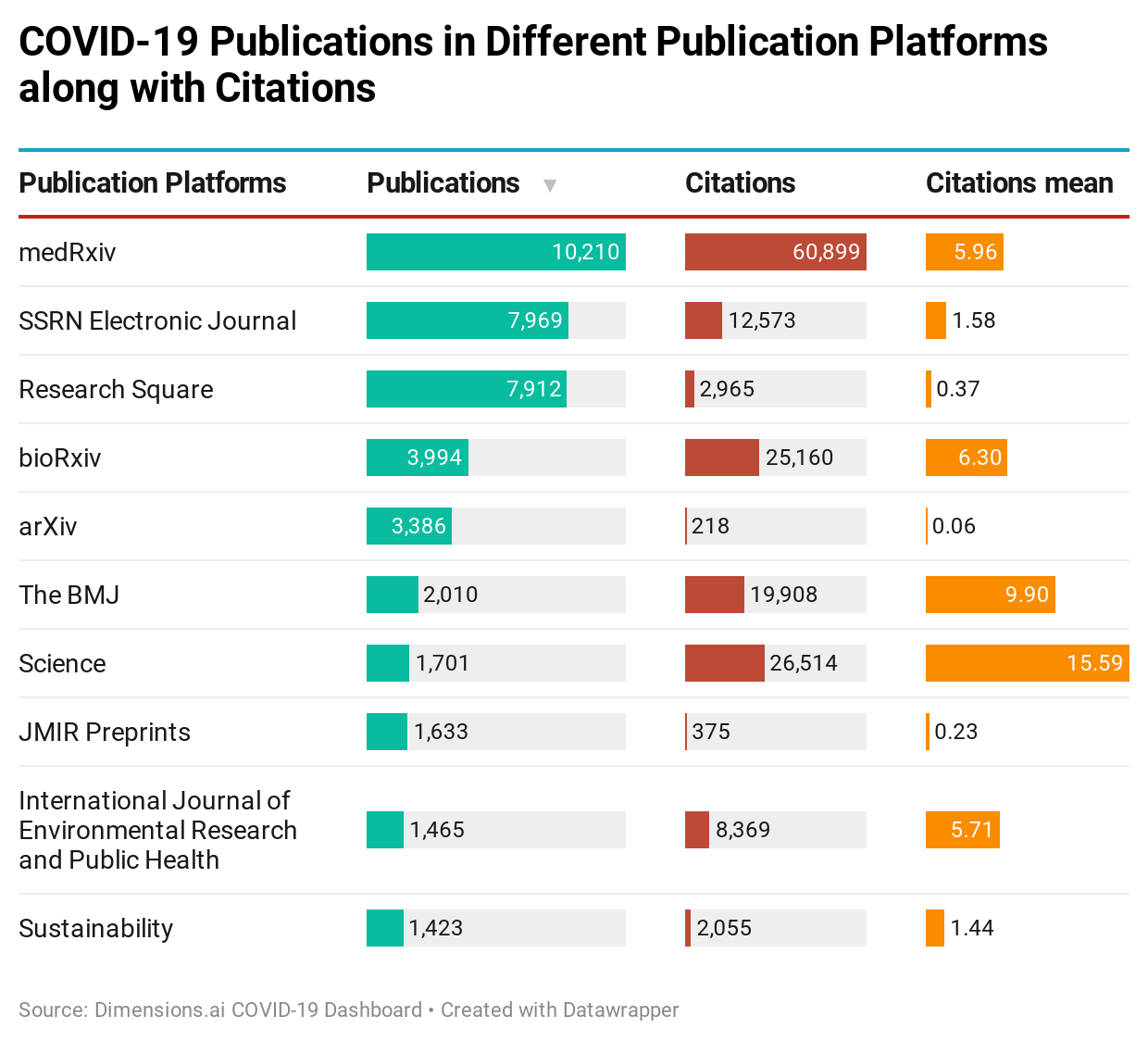
Fig. 1. COVID-19 publications in Preprints and other Publishing Platforms ((As on 11th February 2021)


Many open-access journal publishers, including eLife and the Public Library of Science (PLOS), have mandated depositing manuscripts in a preprint server before prior publications in their journals. Nature and Science have been accepting preprints for a long time (Balaji & Dhanamjaya, 2019). Now bioRxiv and medRxiv allow authors to directly transfer their articles to as many as 120 journals in a single click. These features speed up the submission process of articles and save much time for authors. The open review system or comments or community feedback or community inputs available in preprint servers for deposited articles add value or provide additional information for reviewers to evaluate articles more quickly and transparently.


There is a concern that low-quality articles would be flooded in preprints because of lack of peer review process, but over the years, it has been proved wrong, and the study done by Abdill & Blekhman (2019) shows that almost 67% of the articles deposited in bioRxiv preprints have subsequently published in peer-reviewed journals.  Preprints also support for rapid evaluation of controversial results. The paper “Uncanny similarity of unique inserts in the 2019-nCoV spike protein to HIV-1 gp120 and Gag” claimed to have found similarities between the new coronavirus and HIV, the virus that causes AIDS, deposited in bioRxiv on 31st January 2020, but was immediately withdrawn within a day or two after widespread criticisms and comments it received on the preprint server and social media platforms such as Twitter. It would have taken years to correct or withdraw the article in formal peer-reviewed journals (Oransky & Marcus, 2020). On the other hand, peer-reviewed journals also have issues with their article vetting process. For example, during the COVID-19 pandemic, the highly regarded peer-reviewed medical science journals New England Journal of Medicine (NEJM) and The Lancet had to withdraw the articles that they had published on “Cardiovascular Disease, Drug Therapy, and Mortality in Covid-19″ and “Hydroxychloroquine or chloroquine with or without a macrolide for treatment of COVID-19: a multinational registry analysis” for lacking substantial data to back up their studies (Althouse, 2020). So peer-reviewed journals have also had issues with their own vetting process, but it’s not only preprints. Preprints are quick to update their websites with a cautionary note that preprints are preliminary reports of work that have not been certified by peer review.


PREPRINTS AND OPEN DATA REPOSITORIES FOR CURBING PREDATORY PUBLICATIONS

The interest of Indian authors in depositing articles in preprints is not encouraged much (Singh et al., 2020). There is a need to encourage or mandate authors to deposit their manuscripts in preprint servers before submitting them to journals for formal publications. Preprints will not only make publications openly accessible but also vastly reduce predatory publications. One of the reasons for escalating predatory publications in India was the most of the research publications were not made their research data (survey data, experimental data, simulations, software, codes, stastical methods/data, etc) available for validation or reproducibility of research. Preprint servers supports depositing associated research data or supplementary data along with the manuscripts. Hence, research reproducibility and the assessment of scientific validity of preprints can be done quickly and easily. The pre-publication peer-review or open peer-review (even through comments) of preprints can also halt the predatory publications to an extent.


The UGC-CARE’s website lists 1157 journals in different subject domains published in India (see Figure 2), which is not enough to cater to the needs of the growing Indian scientific community. According to the AISHE survey of 2018-19, as many as 169170 students pursued their PhDs in various Indian universities. If we compare the number of journals listed in the UGC-CARE List and the number of students pursuing their research career, there is no match. If we include both PhD and M.Phil. researchers studying in India together, the number of research students exceed 199862, that is almost 2 lakh researchers (See Figure 3). This number includes only PhD and M.Phil research students, and if we include faculty of India Universities and researchers in various research institutions, including CSIR Labs, IITs and other research institutions, the numbers will be huge. There is a mismatch between number of journals or publication avenues and number of researchers persuing research in our country. The UGC and other higher educational apex bodies should encourage learned societies and research institutions to bringout or publish scholarly journals. Posting preprints have multiple benefits for early career researchers (ECRs). It helps in accelerating scientific communications, increase visibility through social media platforms and facilitate professional networking. It facilitates early access to knowledge and data. It can also save months to years of ECR research and training time, reduce costs, encourage risk-taking, and facilitate publishing research findings to a larger audience without additional funds or incurring article processing charges (APCs). Preprints offer all research findings to be made public, including harmful data or results, which is highly beneficial for ECRs (Sarabipour et al., 2019).

Fig. 2. Indian Journals Listed in UGC-CARE Website (As of January 2021)


The traditional scholarly publishing industry is skewed towards western countries, mainly the US and UK.  Recently, this has been eloquently argued in one of the articles authored by Berger (2021). The article also documents the efforts of the global South in disseminating or providing visibility for their research output. Some notable examples are SciELO preprints, AAS Open Research of African Academy of Science, AfricaArxiv, the REDALYC project, Indonesia’s SINTA (Science & Technology Index). There are other efforts to provide visibility for research produced in Latin America and other Global South countries, which have been well documented by Berger (2021). India should also emulate or follow similar efforts to provide more comprehensive scholarly platforms for its researcher to publish and make their research available freely through open publishing platforms mainly that have been initiated in Latin America. Because India also resembles similar language diversity.  Recently, INA-Rxiv, IndiaRxiv of Open Access India, and FrenXiv language-specific preprints started between 2017 to 2019 in Indonesia, India and France, respectively have stopped accepting preprints from October 2020, the governments or non-profit organizations should have backed up these preprint servers to foster the research produced in local languages in their respective countries.


Fig. 3. Number of PhD/MPhil Students Enrolled in Indian Universities

Fig. 3. Number of PhD/MPhil Students Enrolled in Indian Universities


The policy statement of the Indian National Science Academy on “Dissemination and Evaluation of Research Output in India” in 2018 recommended for promoting preprints in India (Chaddah & Lakhotia, 2018), but not much has been done since then. However, the Draft 5th National Science, Technology & Innovation Policy 2020 (Department of Science & Technology, 2020) has also emphasized the importance of open science. It has made some important recommendations to promote open access and establishing Indian Science and Technology Archive of Research (INDSTA) to provide access, specifically, to the outputs of all publicly-funded research (including manuscripts, research data, supplementary information, research protocols, review articles, conference proceedings, monographs, book chapters, etc.). The establishment of INDSTA is an interesting move, and it should come to reality at the earliest.


The overemphasis on journal impact factor (JIF) for assessing individual researchers for funding research and career advancement scheme has drawn much criticism. The UGC-CARE List precisely relies on this aspect and promotes citation metrics as the sole criteria for evaluating researchers’ performance or publications. Balaram, the former director of IISc, has been vocally criticizing citation metrics and journal impact factors to assess researchers’ publications. He had extensively authored a few editorials in Current Science on this aspect when he was the journal editor (Balaram, 2004, 2009, 2010, 2013). The San Francisco Declaration of Research Assessment (DORA) declaration and the Leiden Manifesto for Research Metrics (Curry, 2018; Hicks et al., 2015) have been now encouraging funding agencies and universities to use qualitative or expert assessment along with a quantitative evaluation to assess the quality of research articles instead of where it was published or the impact factor of journals and citation metrics of the author (e.g., h-index). To date, 19016 individuals and organizations have signed the DORA declaration.


CONCLUSION

Preprints, open peer review, open data repositories, overlay journals, under broader umbrella of open science have been altering how scholarly communication is being communicated over the years and challenging the status quo of traditional scholarly publishing models. The UGC-CARE List and GARP have not been much engaged in ongoing developments in the scholarly publishing world. Instead, they promote age-old practices or a traditional scholarly publishing system publishing a final version of an article in peer-reviewed journals that most of the cases published under pay-wall system. The COVID-19 pandemic has exposed the limitations of paywalled scholarly content, and it was open publishing platforms, including preprints that thrived during this pandemic. It is the right time for the UGC to move away in a phased manner from maintaining a white list of journals or CARE List and embrace Open Science and develop open infrastructure to bring more transparency in research and increase the visibility of Indian research publications to the world.


REFERENCES

Abdill, R. J. and  Blekhman, R. 2019. Meta-Research: Tracking the popularity and outcomes of all bioRxiv preprints. Elife, 8, e45133.  DOI: 10.7554/eLife.45133

Althouse, A. D. 2020.  How did this pass peer review? Thoughts on the Lancet and NEJM COVID-19 retractions. Medscape.  Retrieved from https://www.medscape.com/viewarticle/932262#vp_1

Balaji, B. P. and  Dhanamjaya, M. 2019. Preprints in scholarly communication: Re-imagining metrics and infrastructures. MDPI Publications, 7, 6.

Balaram, P. 2004. Science, scientists and scientometrics. Current Science86, 623-624.

Balaram, P. 2009. Metrics of science: Loosening the stranglehold. Current Science, 1289-1290.

Balaram, P. 2010. Citations, impact indices and the fabric of science. Current Science99, 857-858.

Balaram, P. 2013. Research assessment: declaring war on the impact factor. Current Science104, 1267-1268.

Berger, M. (2021). Bibliodiversity at the centre: Decolonizing open access. Development and Change.

Chaddah, P. R. A. V. E. E. N. and Lakhotia, S. C. 2018. A policy statement on Dissemination and Evaluation of Research output in India by the Indian National Science Academy (New Delhi). In Proc Indian Natn Sci Acad (Vol. 84, No. 2, pp. 319-329).

Curry, S. 2018. Words were a good start-now it is time for action. Nature554, 147-147.

Davis, P., & Fromerth, M. (2007). Does the arXiv lead to higher citations and reduced publisher downloads for mathematics articles?. Scientometrics, 71(2), 203-215.

Fraser, N., Brierley, L., Dey, G., Polka, J. K., Pálfy, M., Nanni, F. and Coates, J. A. 2020. Preprinting the COVID-19 pandemic. BioRxiv.

Fraser, N., Momeni, F., Mayr, P. and Peters, I. 2019. The effect of bioRxiv preprints on citations and altmetrics. BioRxiv, 673665. https://doi.org/10.1101/673665

Herman, E., Akeroyd, J., Bequet, G., Nicholas, D. and Watkinson, A. 2020. The changed–and changing–landscape of serials publishing: Review of the literature on emerging models. Learned Publishing33, 213-229.

Hicks, D., Wouters, P., Waltman, L., De Rijcke, S. and Rafols, I. 2015. Bibliometrics: the Leiden Manifesto for research metrics. Nature News520, 429.

Hoy, M. B. 2020. Rise of the Rxivs: How preprint servers are changing the publishing process. Medical Reference Services Quarterly39, 84-89.

Department of Science & Technology. 2020. Draft Science, Technology & Innovation Policy (STIP) (Doc 1.4.). Retrieved from https://dst.gov.in/sites/default/files/STIP_Doc_1.4_Dec2020.pdf

Moher, D., Shamseer, L., Cobey, K. D., Lalu, M. M., Galipeau, J., Avey, M. T. and Ziai, H. 2017. Stop this waste of people, animals and money. Nature News549, 23.

Oransky, I., and Marcus, A. 2020). Quick retraction of a faulty coronavirus paper was a good moment for science. STATNEWS. Retrieved from https://www.statnews.com/2020/02/03/retraction-faulty-coronavirus-paper-good-moment-for-science/

Patwardhan, B., Desai, A., Chourasia, A., Nag, S. and Bhatnagar, R. 2020. Good Academic Research Practices. University Grants Commission. Retrieved from https://www.ugc.ac.in/e-book/UGC_GARP_2020_Good%20Academic%20Research%20Practices.pdf

PLOS.org. (2020). Preprints. https://plos.org/open-science/preprints/

Puebla, I., Polka, J. and Rieger, O. 2021. Preprints: Their evolving role in science communication.

Sarabipour, S., Debat, H. J., Emmott, E., Burgess, S. J., Schwessinger, B. and Hensel, Z. 2019. On the value of preprints: An early career researcher perspective. PLoS Biology17, e3000151.

Singh, V. K., Srichandan, S. S. and Piryani, R. 2020. Preprint submissions by Indian scientists in arXiv. Current Science, 119(6), 904.

Smith, R. 2006. Peer review: A flawed process at the heart of science and journals. Journal of the Royal Society of Medicine99(4), 178-182.

Vlasschaert, C., Topf, J. and Hiremath, S. 2020. Proliferation of papers and preprints during the COVID-19 pandemic: Progress or problems with peer review?. Advances in Chronic Kidney Disease.


N Vasantha Raju is the Librarian at Government First Grade College, Talakadu-571 122. He can be reached at vasanthrz@gmail.com and his ORCID ID is 0000-0003-3594-6018. He is the author to whom all correspondences should be addressed.

N.S. Harinarayana is Professor, Department of Studies in Library & Information Science at University of Mysore, Mysore-570006. His can be reached at harinarayana@lisc.uni-mysore.ac.in and his ORCID ID is 0000-0002-0359-8023.

Views expressed are personal.

Meeting Report: STIP 2020 and the Future of Scientific Research in India

A webinar was organised by the Zakir Husain Centre for Educational Studies, Jawaharlal Nehru University (JNU) on the latest science document policy, the Science, Technology, and Innovation Policy 2020 (STIP 2020) on 11th March, 2021. The idea behind the meeting was twofold: to understand how practicing scientists and science studies scholars saw the policy and to use some principles of policy research to help students and researchers read and interpret a science policy document.


Prof. Dhruv Raina from JNU, in his opening remarks, emphasised the need to see the STIP 2020 in tandem with the National Educational Policy 2020 (NEP). Both policies pertain to the landscape of research and knowledge production and communication, and hence it would be important to see how the policy recommendations of one interlink with that of the other. Before the presentation by practicing scientists, Prof. Rajeswari Raina from Shiv Nadar University discussed how a policy document can be read: a ‘policy document’ being only one of nine ways to change policy. A positivist reading of the policy document entails checking for the conventional components (the policy goal, choice of policy instrument(s) and the policy implementation mechanisms), and identifying when, by whom and how it is produced.  Even by a (Lasswellian) post-positivist reading, it is not enough to distinguish between the policy process and policy intelligence parts of the document, or explore how the contextual-configurative analysis of the policy problem/solution is presented, because these do not reveal the ideological or political choices underlying the policy process. When reading a science policy document, an ‘interpretive policy analysis’ framework helps us to check for reflection and learning. Here, the practitioners/scientists are already governed by the internal norms of institutions of science. In addition, there are the institutions of development and other pragmatic pressures that shape policy processes and policy intelligence. The reader of the document must ask ‘how the document does what it does’; seek the explicit and implicit values/ideologies that lie behind the assumptions and recommendations evident in the document.


The discussion that followed this presentation was chaired by Prof. Dinesh Abrol from Institute for Studies in Industrial Development/JNU. Prof Abrol’s recent commentary on the STIP 2020 was circulated to all the participants (Abrol, 2021) and formed a sort of focal point for the ensuing discussion. The first speaker was Prof. L. S. Shashidhara from IISER Pune/Ashoka University. In his presentation, he said that the STIP 2020 is not a perfect document and there are many shortcomings. He himself was involved in the process that led to the drafting of the document. He pointed out that, while a lot of the state funding for science is focussed on short-term deliverables, the focus group’s discussion on the theme of ‘Governance’, sought to find a way to smoothen the many bureaucratic hurdles that influence long term science policy goals. He pointed out that the document does not have any implementation strategy and that one of the reasons why science policy does not receive attention is because science is not a priority for the political class.


Prof. Sneha Sudha Komath from JNU spoke next. She made it clear that she is speaking as a stakeholder of the policy and at the outset identified the positive changes the document seeks to bring about like spousal hiring, tackling fake journals, inclusivity etc. But she pointed out that there was a marked shift in focus from discovery and invention to innovation in the document. The future of science research in the policy was purported to produce marketable products and research would have to be tailored towards innovation. She also pointed out that the document had no clear indication where the funding for research would come from and the only place where there was clarity on funding was on research which would lead to ‘S&T enabled entrepreneurship’. The shifting of ends towards entrepreneurship, she said, would mean that more and more funding would come from the private sector and as someone who is based in a public university this was a worrisome sign.


Prof. N. Raguram from Guru Gobind Singh Indraprastha University was the next speaker and he argued that the distinction that is being made in the policy document between the funding of pure and applied research is unclear and meaningless since the overall state funding for science is very low. He also raised concerns about the timing of the policy, saying that we are living through a pandemic and there was no reason to hurry through with a policy at this point in time. He pointed out that while the document raises the issue of atmanirbhar, curiously enough, there is no discussion about the public sector. The final speaker was Prof. Arvind from IISER Mohali who made it clear that his views were those of a practicing scientist. He said that he would have liked to see how the document views science, technology and innovation both as distinct entities and their interconnectedness. He felt that the document is not sensitive to the diverse structures existing in Indian society. Nevertheless, he felt, a policy document ought to address four issues- the Indian reality, S&T community, Industry and Diversity. Pointing to another lacuna, he said the term atmanirbhar keeps coming up in the document but there is no elaboration as to what it actually means. Even though traditional knowledge systems are mentioned, again there is no elaboration of the concept. He concluded by identifying the need for deeper reflection into concepts like sustainability, which are also connected to questions of economic policy.


After the four presentations, there were two short responses by research scholars. The first was from Dr. Abhishek Lakkad from Central University of Gujrat who reflected upon the presentations and argued that the STIP 2020 voices many goals and aspirations but is silent on the implementation and evaluation of measures taken. He also linked it with the presentation on how to read a policy document. The second response was from Nistha Bharati from IIT Delhi who opted to use the framework of `future making’ from within science and technology studies to understand the STIP 2020. She argued that within the document the future is articulated with a sense of optimism to create a particular scientific and technological trajectory without any commitment to define priorities and without specifying mechanisms to do so. The document she argued stayed away from a reflective assessment of the past while at the same time was trying to remove past obstacles to issues of inclusivity and equity.


The meeting ended on a note to deepen the discussion of the document in the future by focussing on some of the points raised here in tandem with related themes impacting scientific research and higher education from the NEP 2020. Furthermore, drawing more scientists, science studies scholars as well as those involved in policy research into the debate would enrich our understanding of the long-term consequences of the STIP 2020.


REFERENCES

Abrol, Dinesh, ‘Science, Technology, and Innovation Policy 2020: Neither Transformational, Nor National’, Economic and Political Weekly, Vol. 56, Issue No. 6, 06 Feb, 2021


Siddharth Gautam is a Research Scholar at Jawaharlal Nehru University, New Delhi. Ritesh Gupta is a Research Scholar at Jawaharlal Nehru University, New Delhi. Omprasad is a Post Doctoral Fellow at Gujarat Institute of Development Research, Ahmedabad.


Update: This article was was updated on 17-April-2021 to correct a typo in the spelling of the name of Dr Abhishek Lakkad. 

The law against sexual harassment and the task at hand

Introduction

Sexual harassment at the workplace, a form of gender specific violence that is directed against women [1], is an act of sexual discrimination which predominately affects women’s safety, security, dignity and equal opportunity in employment. Even when there are no instances of physical violence, the harassment causes a lot of fear, stress and other forms of health concerns besides creating a hostile working environment.  It results from a misuse of power- not from sexual attraction [2], and reflects a disparity in power between the perpetrator and the victim. Women are often forced to leave the workplace due to continued harassment.  This violates their constitutional right to equality [3].


Following a gang rape of  a social worker who tried to prevent a child marriage in Rajasthan,  in a crime that shocked the nation, women’s groups filed a Public Interest Litigation before the Supreme Court that led the court to issue a series of guidelines (termed Vishaka guidelines) addressing sexual harassment at the workplace.


Legislation pertaining to sexual harassment at the workplace

After a period of sixteen years, the Sexual harassment of Women at Workplace (Prevention, Prohibition and Redressal) Act was enacted in 2013 that now covers all work places and protects working women of all sectors including self-employed women when they are harassed in their place of work.


The Act is gender-specific and the definition of sexual harassment is inclusive of all forms of sexual act that a woman would find unwanted. Examples would include physical contact and advances, demand or request for sexual favours, making sexually coloured remarks, showing pornography or any other unwelcome physical, verbal or no verbal conduct of a sexual nature.


It also includes quid pro quo harassment which implies a promise of preferential treatment for sexual favours or a threat directed against the woman if she does not consent to the sexual demands made upon her. Included in the definition is interference with work and humiliating treatment that would affect a woman’s  health and safety.


Remedies under the Act

The remedies under the statute are civil in nature. The Act makes it very specific giving the right to a woman to take recourse to criminal law and file a criminal complaint if she so chooses in which case there is an obligation on the part of her  employer to assist her for the process.


The Onus under the Act is not just on the direct employer but anyone who is in charge of the workplace. Also any woman who comes to the workplace but is not an employee is entitled to protection under the Act. To give an example, if a tea-seller, though not an employee comes to the workplace only to deliver tea but is sexually harassed, she would get the benefit of the Act.


Given the extension of the workplace the understanding is very nuanced. To give another instance, in a complaint before an IT Company,  the allegation was that the male colleague misbehaved with the woman employee in her hotel room when they were travelling on work. While denying the incident,  he took the defence that she had invited him to her room for dinner and the bedroom was not a workplace. Since both of them were travelling on work and would at times work from their room, the company held that the hotel room would also be their workplace and the Act would be applicable.


Procedure Under the Act

Under the Act, every establishment that has more than ten employees is required to set up an Internal Complaints Committee compromising a minimum of four members, at least half of whom should be women.  The Presiding Officer must be a senior-level woman employee from within the organization and two employees who must be committed to the cause of women or who have experience in social work or legal knowledge. Additionally there must be one external member from an NGO or association committed to the cause of women or a person familiar with issues relating to sexual harassment.


Elaborate procedures are laid under the rules for filing a complaint. A complaint can be also be filed in a representative capacity by a family member and other persons detailed under the Act and must be done within ninety days, but the committee can extend the time on proper explanation. During the pendency of the complaint, the committee can recommend that the complainant or the respondent be transferred. The woman is entitled to take three months leave when the enquiry is pending which is over and above her actual leave in the establishment.


The committee can initially consider conciliation proceedings. Many organisations try this with their Human Resources Department, and, if that fails,  the complaint is placed before the committee.


The process before the committee requires that the copy of the complaint is sent to the respondent (against whom the allegation is made) and both parties are required to give their list of witnesses and documents which they rely upon to the committee within a period of ten days. The enquiry is expected to be done according to the principles of natural justice.  While the rules do not define natural justice, the two fundamental principles developed in India rest on the foundation that there must be no bias and that the other side must be heard. Within the framework of these two principles various processes have developed in administrative and service law in judicial precedents.[4]


In an enquiry, both sides have a right to contradict the evidence of each other by a method of examination and cross-examination but not in the way it is done before a court. The parties are not allowed to directly question each other or their witnesses but are required to give their list of questions that they would want to ask the witnesses, to the committee. The committee questions the witnesses and gives the answers to the complainant and the respondent. If further clarifications or additional questions are sought from the parties, the committee does so.


Some committees record the proceedings based on their office protocol and also conduct enquiry through video conferencing if the witnesses are not in the same city as the parties. But the recordings, if done, have to be kept strictly confidential since proceedings under the Act cannot be published. Both parties cannot be present together during the enquiry and are not supposed to influence the witnesses or discuss the fact of an enquiry. This is easier said than done, and the witnesses get to know about the enquiry since they are all in the same establishment, and the respondent, if in a higher position often tries to influence them. The proof of such influence is very hard to find. Lawyers cannot appear before the committee.


The committee has the power to recommend interim relief during the enquiry. It can recommend to the employer to restrain the respondent from reporting on the work performance of the aggrieved woman or writing her confidential report. In the case of an educational institution, it can restrain the respondent from supervising any academic activity of the aggrieved woman.


If there are no service rules in the establishment, the Committee can recommend the following actions that can be taken by the employer — a written apology, warning, reprimand or censure, withholding of promotion pay rise or increments, counselling sessions, carrying out community service or as a last measure termination.  If it is an establishment with service rules the Committee can recommend that the salaries of the respondent found guilty be deducted and compensation be paid to the woman. In a situation where the salary cannot be deducted the employer can be asked to pay the sum. Establishments that have branches in different cities are required to have separate committees in each place.


Besides having an obligation to provide a safe working environment and treat sexual harassment as a misconduct under the service rules and initiate action for the same, the employer is required to display at any conspicuous  place in the workplace, the penal consequences of sexual harassments and organise workshops and awareness programmes for sensitising the employees with the provisions of the Act and orientation programmes for the members of the ICC. All establishments are required to include in its annual report the number of cases of sexual harassment filed along with details of their disposal. But this is rarely done.


The aggrieved woman, or the respondent, can appeal against the recommendations made by the ICC or the non-implementation of such recommendations. In such cases, the appeal lies with the Appellate Authority notified under the Industrial Employment (Standing Orders) Act, 1946 or under the service rules as applicable to the concerned respondent.


The statute has a specific provision in relation to a false complaint made by a woman. A false complaint is one where the aggrieved woman intentionally produces false or misleading documents, information etc. and maliciously makes allegations against the respondent. Merely that the allegation is not proved does not make it a false complaint.


In such cases, the ICC may recommend to the employer to initiate separate proceedings where the respondent has to prove that the complaint was a false one. The ICC cannot pass strictures against the aggrieved woman in the inquiry proceedings while dismissing the complaint.


Local Committees

Women who are not in an organised sector, or work in establishments that have less than ten employees can give a complaint before the Local Committee. This Committee is constituted in every district and a District Magistrate or Collector is notified as a District Officer. Since this committee works completely outside the structured organised structure it can be more independent than the other committee. The Chairperson is nominated from eminent women in the field of social work and committed to the cause of women. One member is nominated from amongst women working in the block, taluka, tehsil or ward, two members one of whom is a woman, nominated from NGOs or organisations committed to the cause of women, or a person familiar with issues of sexual harassment. At least one of the nominees must be a woman belonging to the Scheduled Caste or Scheduled Tribe or other Backward Classes or minority community notified by the Central Government from time to time. The concerned officer dealing with social welfare or women and child development in the district is an ex officio member.


Compared to the Internal Complaints Committee the local committee is definitely more independent as it is not drawn from an office hierarchy. But the difficulty that this committee could have is the paucity of funds if the Governments do not take the process seriously. [5] Moreover respondents against whom complaints are made often do not take the summons and enquiry seriously and there are many instances when they do not participate. The committee can pass an exparte order in such situations and need to facilitate the complainant to approach the criminal justice system.


Conclusion

The Statute is a welfare legislation. It has provided a structure that if used imaginatively and creatively could go a long way to address harassment at the workplace. It has its limitations. It does not address harassment of transgenders.     But it can work successfully  if employers take the issue seriously. The statute ought not to be considered as punishment oriented but as one that seeks to improve gender relations at the workplace. Prompt action will enhance the reputation of the workplace and boost employee confidence and productivity. It will be a win-win situation for all.


Notes:

[1] CEDAW Committee General Recommendation No 19 Para 17.

[2] Petrocelli, William and Repa, Barbara Kate 1992 Sexual harassment at the job, Nolo Press, Pg 19.

[3] Vishaka Vs State of Rajasthan https://indiankanoon.org/doc/1031794/

[4]    https://indiankanoon.org/doc/127629655/  Ashok KumarSingh Vs University of Delhi and others August 18, 2017 a detailed procedure is given for committees to deal with complaints.

[5] https://www.epw.in/journal/2020/20/review-womens-studies/examining-local-committees-under-sexual-harassment.html  a detailed discussion on the local committee Anagha Sarpotdar, Economic and Political Weekly, Vol 55, Issue 20, 16th May 2020.


Geeta Ramaseshan is a senior advocate practicing in the Madras High court. She has worked extensively in the area of Women’s Rights and Child’s rights. She is a guest faculty at the Asian college of journalism where she teaches a course on Media Law and Society.

Budget 2021: What’s in it for research?

This year, the union budget is overshadowed by two issues that refuse to fade away from the headlines. Both of them – COVID-19 pandemic and the farm law related protests – figure prominently in the budget speech of the finance minister Ms Nirmala Sitharaman. Somewhere down the line, science does get some fleeting attention probably reflecting the perceived size and the influence of “science constituency” in a larger context. In any case, the budget is just one marker of the support for science and innovation. Far more than a headline-grabbing financial allocation, the fine-print will ultimately determine the actual outcomes in practice.


This budget does have its headline-grabbing announcement for science. For example, Rs 50000.00 crores have been allocated over the next 5 years for the National Research Foundation (NRF), a new overarching body that will, among other things, fund research and infrastructure in all the disciplines (including humanities and social sciences) across all the institutions. The NRF, according to the Detailed Project Report (DPR) submitted in December 2019, is conceived as “an integrated and comprehensive approach towards seeding, funding, coordinating, and monitoring research and innovation initiatives in the country.” This is indeed a welcome initiative but for some dangling imponderables. It is unclear if existing funding bodies would discontinue their schemes when NRF comes into existence or if they would be merged under the NRF umbrella and create a much larger financial pie for the research ecosystem. From the budget allocation, according to its DPR, the NRF will spend Rs. 5344.00 crores annually to fund competitive research projects. This represents a substantial increase, if we compare it with the allocation of Rs. 299.00 crores for the Science and Engineering Research Board, the primary funding body for research grants. The projected NRF spending is twice as big as the total research funding of more than Rs. 2700.00 crores given out by all the ministries and its agencies. This is a reason enough for optimism. However, it remains to be seen if this increase would imply cutting down of research funding by other ministries and agencies, and if mega-projects would also come under this umbrella, in which case this might not be a big change. This is a matter of detail that will unfold in the course of time.


Another reason for cautious, rather than unrestrained, optimism arises from closer scrutiny of the budget numbers. The budget estimate for all of science and technology in February 2020 budget was Rs. 30516.00 crores. This must be taken as an indicator of the Government’s inclination. However, as the year rolled on, the revised estimate plunged to Rs 24815.00 crores, reducing nearly 20% of the allocation. Incidentally, the department of science and technology also witnessed a similar reduction of about 20% during the last financial year. Often, this reflects in the reduction in the number of fellowships and other research grants given out by the funding agencies. I know many colleagues and students who complain about long delays in disbursal of funds and fellowships. Such sudden changes underline the need for an important but missing component of science policy – ensuring financial stability during the tenure of a research project. Delayed funding, to rephrase a well-known aphorism, is almost not too different from denied funding. The new science policy that is likely to be unveiled soon might incorporate dependable funding cycle as part of “ease of doing research” in India. More than the big picture of science funding as a fraction of GDP, these details have a greater effect on operational research environment and productivity.


The other big-ticket commitment in this budget is for the Deep Ocean Mission : to the tune of Rs 4000.00 crores over the next five years to tap India’s ocean wealth. Notwithstanding a meager increase in allocation for the Department of Science and Technology, the overall investment in science and technology (including NRF and Deep Ocean Mission) would still amount to about 0.7% of the GDP, well below the 2% benchmark recommended most recently by the Economic Advisory Council to the Prime Minister. The Economic Survey 2021, released ahead of the budget, notes this lacuna but argues that the Government already contributes 56% of the entire R&D expenditure. In comparison, the governments of the top ten economies contribute about 20% of their GDP, though the R&D expenditure in these countries is a respectable 1.5-3% of GDP. The Indian industry is expected to augment its share of R&D contribution. For this to take wings, the onus is on the Government to ensure growth and robust entrepreneurial and industrial activity. This feedback loop needs to be completed with Government as a facilitator.


For a science budget in the backdrop of a pandemic, it does make big moves but leaves some crucial details to be filled in later.  Finance Minister quoted Rabindranath Tagore in her budget speech – “Faith is the bird that feels the light and sings when the dawn is still dark“. Until the details come in, faith must be kept that what the big print has given, the fine print will not take away.


MS Santhanam is a Professor of Physics at Indian Institute of Science Education and Research Pune. Views expressed are personal.
Why the national ayurveda protocol on COVID management appears wanting

The Union Health Minister recently released the National Protocol based on Ayurveda and Yoga for the management of COVID-19.This initiative is certainly welcome, but the protocol lacks the clarity and rigour expected of a scientific document.


The protocol, despite being a consensus document of national ayurvedic institutes, appears wanting in two major respects. One, it has a glaring internal discrepancy that muddles diagnostic criteria. Two, it does not value the classical ayurvedic insights justifiably adaptable in the management of infections like COVID-19. These issues may be examined, one by one.


The document rightly defines mild cases of COVID-19 as those with symptoms of fever, dry cough, sore throat and runny nose, but without signs of breathlessness and hypoxia. If breathlessness and hypoxia are present, the disease severity would be deemed moderate. What muddles these diagnostic criteria is the Annexure 3 of the same document which confusingly includes these two signs under mild disease. It even goes on to suggest Kanakasava and Vasavaleha as remedies usable in managing these signs. This discrepancy, with obvious practical implications, is too glaring to be ignored.


The other problem with the document is somewhat more serious. The premise behind devising an ayurveda-based protocol is to glean insights from the rich repertoire of medical experience that the ayurvedic classics meticulously document. Bypassing these insights, especially when there are compelling reasons not to do so, would be a defeat of the premise itself. If ayurvedic insights don’t matter, why have a separate protocol in its name at all?


The classical ayurvedic approach in the management of common fevers emphasises upon the triad of ‘langhanam, swedanam, kaalah’, roughly meaning, ‘caloric restriction, warmth (the use of warm water for hydration) and rest’ (1). The details of this approach, which is mostly non-pharmocologic, have been elaborated elsewhere. Suffice it to note that caloric restriction for a couple of days until the fever remits is central to the ayurvedic approach in the management of common febrile illnesses. This ayurvedic view appears to be gaining support from current advances in research on fasting-induced autophagy.


The protocol document, however, makes not even a passing reference to the importance of caloric restriction. It even violates this classical idea by recommending the use of calorie-laden,  ghee-rich jams like Chyavanaprasha and Vasavaleha in the management of fatigue and hypoxia associated with COVID-19.


The protocol thus is faithful neither to the Ayurvedic classics nor to conventional diagnostic criteria. A document endorsed by the country’s Prime Minister would be expected to be clear, error-free and trustworthy. The document in question sadly has these attributes only faintly.


References

  1. Charaka Samhita, Chikitsa Sthana, chapter 3, verses 139-142.


G L Krishna is an Ayurvedic doctor practising in Bengaluru. He may be contacted at gl.krishna@yahoo.com.

Gender Diversity in Science Education and Research: Student Aspirations

A decentralized, consultative exercise is currently underway to frame the latest Science, Technology and Innovation policy (STIP 2020) for India. This is the first time that anyone, regardless of position or qualification, can have their views recorded. This is hugely empowering, especially for students who may not necessarily see policy as an area where their voice and contribution matter. Taking a cue from this approach, this essay seeks to present student perceptions and solutions on gender bias in science education and research.


An email was circulated to solicit students who wished to be interviewed on the subject. Based on training (undergraduates to postdocs), gender and field of study, a small cross-sectional subset (8) were interviewed over the phone. Broadly, five questions were placed in an informal conversational style: Did they perceive the existence of gender bias? If yes, in what way? Did they or anyone they knew first hand experience bias? Were there any mechanisms in place to report this bias? What practical solutions would they like to see implemented to address gender issues in academia?


Unequivocally, there was agreement that gender bias exists, with women and minorities bearing the brunt. The bias is largely implicit, stemming from cultural stereotypes and perpetrated by supervisors as well as colleagues. When the bias is explicit, there is little or no recourse for redressal, especially when the relationship involves a power imbalance. Students fear the consequences of speaking up as it might damage their career or worse, jeopardize their chances of completing their degree. Significantly, even if a student doesn’t personally experience bias, they internalize the experience of those who do, with social networking playing an important role in amplifying the consequences of the bias. This amplification is often overlooked and is important to address because it means that bias by even a small minority, can influence culture at an institutional level. In terms of fields, bias was perceived to be worse in engineering, mathematical and physical sciences, as compared to chemical and biological sciences.


The single most important factor that appeared to help students is a good mentor. Sustained interaction with a mentor who provided encouraging and positive counselling, along with access to support groups (online or offline, peers or family) is what helped students overcome bias. Unfortunately, this piecemeal and highly personalized route is not sufficient if we wish to address bias at the national level, in terms of policy.


There are two words that capture the wants of the next generation of Indian scientists to improve gender diversity in academia: flexibility and empathy.


Flexibility must be tackled first at the level of psychology and then, at policy implementation. The mental flexibility construct has to do with perceptions of how science is performed – long hours, poor pay, high-risk in terms of time taken to achieve a “stable job” – and its unsuitability for personal satisfaction when non-science commitments (child care, medical emergency) require equal attention. In a patriarchal society such as ours, this is emphasized both inside and outside academia. To address this, students saw a crucial role for gender-sensitization workshops. While these are mandated in most educational institutions, participation is generally poor and the workshop may not discriminate between sexual harassment, a criminal offence, versus gender bias, a more chronic non-punishable offence. The lack of penalty and the ambiguous manner in which bias is perpetuated further make it harder to police. Students observed that while intent of policies in this area was progressive, its implementation was poor. Gender sensitization workshops thus have to become a norm, should be held frequently and incentivized (free lunch!). It should be for all groups at an institution – students, staff and faculty – as opposed to the current practice of it being primarily for students. As anyone who has wrestled with a mental block knows, it’s hard to dethrone set ways and ideas, especially when it requires accommodation and changes to power structure. This is where empathy can be brought in. Creating safe, non-judgmental avenues for colleagues to share thoughts and experiences allow different perceptions to be aired, especially implicit bias, which can be more thoroughly explored by dialogue. Therefore, workshops should be held in a congenial and non-coercive manner, which means they need a good incentive. All students also felt that such workshops need to start at a young age. Right from high school, where academic gender stereotypes begin to emerge, such as “boys do math, girls do biology”. Another pragmatic solution was to increase textual content in school books of role models who pursued their passions and whose achievements directly challenge pre-existing notions. This way, even if workshops don’t happen, students are still exposed to career possibilities sans gender.


Flexibility also needs to extend to how we imagine science career development. To students it appears that only individuals who demonstrate a straight line of evolution from undergraduate to post-doc studies successfully land a faculty position in Indian academia. Supervisors and reality augment the perception that taking a break (besides a short maternity leave) anywhere along the line, for professional or personal reasons, is interpreted as a lack of serious ambition for scientific research. Perhaps it is time to reconsider the validity of the idea that academic research should be a life-long linear pursuit. Increases in life expectancy, quality of life and the variety of available professions all argue against this idea. Today, over a lifetime, it is entirely possible to have multiple 15-20 yr career blocks, interspersed with breaks. Surprisingly, for a community that believes data should guide inference, the fact that there is little evidence demonstrating a correlation between age and professional productivity, except perhaps in Mathematics, is entirely ignored. Another concern that is touted is that in a tenure system, if you start late, repercussions of denied tenure are harder to deal with. But this claim too has not been rigorously verified. Unfortunately, many such hiring practices are based on “feelings” rather than data. Students observe that ageism is rampantly practiced in academic hiring, and have internalized a lower and upper age limit for faculty positions, despite there being no legal validity to this practice. Many academics have spoken out about it, but the policy needle on this has not moved one bit. This has a severe backlash especially for women, as academic training period and reproductive age often overlap.


Despite exceedingly progressive GOI schemes available to encourage women back to science, students expressed fear and anxiety about taking breaks. First, there is no mechanism to help students have flexibility during a PhD, both in terms of taking a break (except maternity) or portability. Students today want to explore multiple career options while in graduate school. On a practical note, those who get married, want to be together with their spouse. Currently PhD fellowships give sole power to the supervisor over handling of these situations. For both these scenarios, students expressed a need for accommodation. Funding agency sanctioned internship breaks and committee-led decision-making are two ways to address this need.


Second, the number of available grants are few in proportion to the number of women in higher education, and these fellowships are not sufficiently resourceful. Flexibility in grants would include default increase in fellowship tenure and salary to offset maternity break, increasing capital for human resource (to manage experiments) and fellowship (to offset childcare costs), for women with small infants. Empathy can complement flexibility. While maternity break serves to cement a bond between mother and child, at the end of one, a parent does not return to status quo, pre-pregnancy. A young parent experiences sleep deprivation, increased time outlay for childcare and unexpected interruptions. Institutions and colleagues can make allowances for young parents in small ways: organizing meetings within work timings, allowing digital participation, rooms for breast feeding, child care costs to attend meetings etc. A step further is to create environments to welcome young children not only for conferences but also for routine lab meetings.


Finally, students expressed a need for affirmative action, at least in the short run. Presently, competition for faculty positions is fierce and all genders compete for a small pool of available positions. A difficult but potentially game changing proposition is to have a certain number of positions exclusively for women. Given the rather complicated relationship India has with reservations, adding yet another quota might seem overwhelming, but there’s sufficient evidence that affirmative positive discrimination can help minorities. The IITs already have such a system in place, with 20% of undergraduate spots reserved for women. Extending that up all along the science training route, up to faculty recruitment, may be seriously considered.


We now have the largest number of 18-35y olds as a share of the total population in the world. This demography is critical for any economy and we have the opportunity to reap a dividend from it only if we create conditions for them to thrive. We must strive to build national and institutional cultures that respects and acknowledge choices, rather than placing a positive or negative value on them. Indian academia has a long way yet to go on this road.


The author would like to thank all the volunteers who generously shared their thoughts for this article. To shorten sentences, the term “students” is employed. This is a grave injustice to postdocs, who are trainees, not students. While a focus of this article has been women in academia, students made some recommendations that were applicable to members of the LGBTQ community as well. To complain anonymously about sexual harassment at the workplace, use shebox.nic.in, an initiative of the Ministry of Women and Child Development, GoI.


Megha is an Assistant Professor at the University of Trans-disciplinary Health Sciences and Technology, Bengaluru. Views expressed are personal.
This article is part of a Confluence Series called “Under-represented groups in academia: issues and way forward”. The remaining articles can be found here