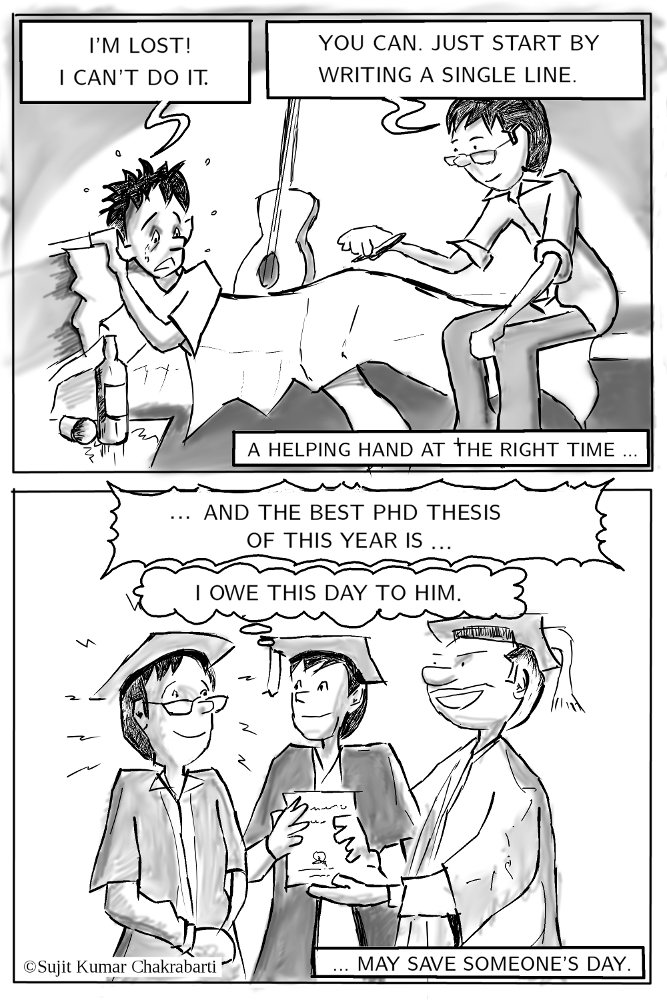
Mentoring as Radical Practice

Teaching/Mentoring as passionately political work

Learning is a social process. Ostensibly, education is a non-political institution that facilitates this process. Far from that, education is a profoundly political field. As part of the ideological state apparatus (ISA), education system produces and circulates knowledge that in turn supports the dominant socio-political-economic order. As Louis Althusser argues, it is through the educational institutions that the dominant section legitimizes its unfair control over resources, and normalizes various forms of inequality. Nevertheless, if education is associated with reproduction of dominance, it can also play a role in challenging the same (Apple 2019: 18). For the legendary philosopher-activist Paulo Freire, education has to be about changing society. If education is a field invested with political interests, teaching has to be an intense political mission to counter hegemonic interests and foster social change. Krishna Kumar (1989) has also reflected similar sentiments when he argues that schools [or universities] have to be agents of social change and not merely reflect the existing dominant social values. What is important, therefore, is to understand who produces knowledge, whose interest the educational apparatus serves, whose voices are reflected through the curriculum and whose is absent or gets drowned. Answers to this will help to decipher what kind of political strategies are to be initiated to make education a political act to exorcise the ghost of hegemonic dominance of casteism, religious orthodoxy, patriarchy, colourism, and class-biases etc.


For a society that aspires to counter this hegemonic political landscape, the schools/universities need to play a major role in fostering values that nurture egalitarianism and democratic spirit. What we need therefore is to lay bare the relationship between the dominant ideology and the curriculum, and adopt critical pedagogy that engenders democratic values. The teacher-mentor has a tremendous responsibility to initiate and foster critical learning that makes this possible.


For this, we need teachers as mentors who are invested with a sense of justice. Unfortunately, most of the teachers take up teaching without a political sense of justice for all. We can classify two kinds of mentors. One is the by-default mentors who perform teaching or mentoring as part of their profession. They are not passionate about it. I am therefore not interested to consider these teachers as mentors. The others, mostly a minority, are passionate mentors, who love to teach and interact with the students, and actively take interest in their well-being and contribute towards shaping their lives. Such passionate teachers as critical pedagogues prepare the society towards a journey with critical consciousness. Personally, I did not have had a mentor as a student, though I am blessed with relationships with a few people who have inspired me to be in academics. Nevertheless, “not been mentored” is in fact is one of the reasons for which I wanted to be a passionate mentor. I often feel that the students must be looking for or longing for a friend and a guide (as I was doing as a student). How could I not be concerned about them!


The essay here is mostly based on my personal experience as a faculty of Sociology in the Tata Institute of Social Sciences (TISS), in its Tuljapur Campus.


“Critical pedagogy” and “Engaged pedagogy”: Mentoring for democratic and participatory learning

“Critical pedagogy” as championed by Paulo Freire (1921-1997), departs from the “banking system” of learning that emphasizes on memorizing information, and learning certain skills to make a career in response to the demands of the market. Critical pedagogy, on the other hand, wants us to know the relationship between power and knowledge to explain who has control over conditions of learning within the classroom, and its impact outside. By giving agency to the learners- the students- critical pedagogy expects them to question the taken-for-grantedness of the existing system. Far from being passive learners, the students are expected to transform existing knowledge, and create newer forms through self-reflection and through critical dialogue with others.


bell hooks, however, asserts that one needs to go beyond critical pedagogy. What is important is to go one step further for the practice of “engaged pedagogy” that involves “self-actualization”- the act of transforming oneself to attain well-being.  Both the teacher and the student have the moral responsibility of taking care of their moral well-being as well. Taking cue from Vietnam Buddhist monk Thich Nhat Hanh, hooks argues that a teacher has to be a healer. As healer, the teacher should heal themselves first, ‘because if the helper is unhappy, he or she cannot help many people’ (hooks 1994: 15). As the teacher has to practice what they teach, it also helps them to mentor the students holistically by not just supplying information, but by making it meaningful for them in their lives.


Teaching in the classroom is a first step towards mentoring the students. As undergraduate students, it is about initiating them into a distinct domain of knowledge. It is also about initiating them into the perspectives of social sciences that helps them to develop a critique of the social sciences in general, and discipline in particular, as well as to develop critical perspectives offered by the discipline(s) through which they can see the world differently. When I introduce the students to the world of Sociology, the students are given a critical understanding of the emergence of the discipline of sociology, and then various perspectives within Sociology that provides varied vantage points to see the society. As they try to develop a “sociological imagination” through their critical engagement with “common sense” they take their first steps towards unlearning. Unfortunately, the unlearning starts at a very late stage as they enter the university. The schooling of the students does not enable them to develop a critical mind. Most schools prescribe learning based on memorizing information.


The next task is to make the students believe in themselves and participate in a democratic process of learning. Every year, to the new batch of students, I give example of my favourite teacher in JNU who told us the story of his teacher who posed a question to the students in his first class- “I do not necessarily know more than what you know, …  then why am I standing here as a teacher?” As students would struggle for answers, after taking a pause, he would supply the answer- “… because I happen to be born earlier!” At one stroke, this dismisses the divinity of the teacher as “guru”. Within the Indian Brahmanical tradition, the guru is associated with a divine status that is not to be questioned. Sharmila Rege also points out that the critical pedagogy must reject the teacher as “god embodied” (Rege 2010: 94). I tell my students that the first step towards critical learning is “doubt” rather than have unquestioned faith in the teacher or in the (canonical) texts. Using Karl Popper’s theory of falsification, I argue that nothing in this world of knowledge need to be treated as sacred, and as true learners, they need to question everything including the ideas of their teachers.


In the first instance, many students are amazed, and some are also amused as they have been told so far that they are supposed to believe in what they read in the books or what the teacher says. Now, they are told that through their ‘disbelief’ and ‘criticism’ they contribute towards production of knowledge. And believe me, that makes the students excited about their role as active partners in the process of learning which is fluid and dynamic, not fixed forever. I encourage the students to express their opinions and values. I also tell them, however, that not all values are equally valuable. It is important to evaluate the values. How do we do that evaluation? They are explained how the dominant value/idea is a society, as Karl Marx pointed out, is the idea of the ruling class. Therefore, in a democratic society, the preferred values need not be that of the same class. Those dominant values that we generally consider as ‘normal’ or ‘natural’ need to be deconstructed and reconstructed. For example, in Sociology, when they are taught functionalist and conflict perspectives, or feminist and subaltern perspectives, the students see a new world before them hitherto blocked from their vision. They find that these alternative narratives are novel, exciting, and also at times painfully disturbing as it destabilises their own experiences. The marginalized students such as the Muslims, Adivasis, Dalits, girl-students across categories go on to discover new ways of understanding domination and marginality, those from the privileged background also discover their own prejudices and privileges. Intersectional locations (of caste-gender-religion etc.) further complicate their understanding, and that is how they also learn to view the society not through simplistic categories, but as complex realities.


Diversity in classroom makes it an exciting place of learning. In TISS, fortunately we have students from across India, as well as from various socio-economic backgrounds thanks to the reservation policies. That makes the classroom an ideal place to practice critical pedagogy. Sometimes, I also face hostilities from students who are from privileged backgrounds, or who are heavily influenced by religious fundamentalism thanks to their socialization earlier. Some of them change their values and perspectives over a period of time, some do not. But, the purpose of engaged mentoring is not to ‘convert’ people. It is to instill a sense of participation in the classroom deliberation and help them evaluate their own values through the yard-sticks of democratic principle. That is the joy of education as practice of freedom, for it allows students to assume responsibility for their choices. Engaged mentoring is also to help them develop critical consciousness to engage ‘in an active, dialogical, critical and criticism-stimulating method’ (Freire 2013: 42).


Thus, the mentor, though granted extra power in this system, is not to be a dictator. Power, as bell hooks argues, is not necessarily bad. A teacher need not pretend that they do not have power, or that they do not want power. What is more important is how the power is used (hooks 1994: 187). A teacher can (mis)use power to muffle voices in the classroom, and maintain the social hegemony; or they can use it to ensure multiple voices speak and learn together democratically. This can teach us to live together as equal beings and also to work together towards breaking hegemonic and normalized ideas.


Mentoring to Transgress

Mentoring that happens in the classroom is not enough for someone who is a passionate teacher. Teaching does not begin and end at the doorstep of the classroom, though unfortunately that is how many professors complete the task. After taking a class on marriage from the perspectives of feminism, one student, turned up in the office and asked- “Could you please explain why mother did not break her relationship with my abusive father for so many years?” She was one of the many students who would come up with their own questions, often that is about their ‘personal troubles’, to use the concepts of C. Wright Mills, as they struggle to link it with the ‘social issues’ as they attempt to develop their sociological imaginations.


Gender identities and politics plays a significant role in the learning process.  While the gender issues are discussed in the classroom, there lies a wide field outside that domain that shapes the way gender is organised and shapes individual’s behaviour. For boys, it is an opportunity of unlearning and relearning to be a participant in democratic politics in everyday life as they come to terms with their privilege of birth. Of course, many male students resist, inside and/or outside classroom. What is refreshing to see is that some of them do change their ideas about gender and participate in progressive politics. For girls, these are ideas of resurrection. They are very vocal and excited in classroom as well as outside. Teaching-mentoring helps transform the learning outcomes into life out comes. The rebelliousness against patriarchal values and power-structures redefines the way they conduct themselves within the campus and at home. One day, there was a discussion on “benevolent patriarchy” and I illustrated that with the example of people affectionately calling their daughters (beti) as betā which in fact is a term to address the sons. The same day, after the class, one girl protested at home when her father called her betā and explained to him that if he could not call his son as beti with affection, then it is highly patriarchal to call the daughter as betā.


This might be a case where the girl stood her ground, but there are many other cases where the girls are snubbed for being too radical and spoiled due to their education in TISS. They face harassment at home, or are denied further education, or forced to compromise. Parents find it difficult to adjust to the children who now talk feminism, equality, rights and justice etc.; write term papers on communal violence or on experience of (benevolent) sexism in personal life; or write a dissertation of homophobia in their Church. Girls face this kind of discord at home more than the boys. Sometimes girls break up their relationship with their boyfriends as they exercise their agency to counter patriarchy. All these are sad, even though it is a vindication of the outcome of mentoring the students about rights and justice.


It is politically enriching to mentor the students coming from underprivileged background especially the Adivasis of ‘dominant-land’ India, indigenous students from the North-East, the Dalits, the Muslims and the Other Backward Castes. For these students, it is not just their poor material condition, but more than that their social identity poses a serious challenge for them to experience equality. In an institution like TISS, liberatory struggle is well rooted within the student community, but that often needs overt and covert support and guidance of some faculty members. In our campus in Tuljapur, there are only a few who are associated with the resistance politics of the subaltern students. Many other professors would not like themselves to be associated with the resistance politics else they might be “branded” as supporters of the ‘quota-students’. Nevertheless, for me, it is crucial that the students are also mentored for leaning a few steps in developing self-esteem, and fight for diversity and their right within that framework. It is a great pleasure for me to work with young minds to organize Ambedkar Memorial Lectures, celebration of Indigenous day or Savitribai Phule’s birthday as teachers Day (and rejecting Radhakrishnan’s birthday as Teacher’s Day). This helps foster respectable identities for the students and a legitimate sense of place within the space of academia. It also engenders a sense of justice to heal the psychic turmoil that students from the margins experience.


Care, love and support:

“Sir, are you there in November in the Campus? … I am coming for a week or two”- was the message from a (ex-)student who wanted to come to the Campus and spend a week’s time with us as she was too tired of the city (Delhi) life. I was pleasantly surprised that she didn’t even bother to ask me if I would agree to that idea. Of course, not every student that I have mentored may approach like this, but this is what comes as surprise gifts to a teacher who loves students deeply. When the students live with you in the campus, you meet them every day, go for a discussion during morning walks, invite them for a cup of tea/coffee, share lunch/dinner, ask them to come over for cooking during certain special occasions, or store their birthday cakes till midnight- are all part of the relationship that makes them comfortable and share a bond that further helps a teacher to understand them. Then they freely share their problems- separated parents, abusive father, financial stress, career anxieties, or harassments by their hostel mates and other tragedies of life. As young undergraduate students, living away from home, these are the relationships that are very crucial in shaping their lives.


“Come, let us live with our children”this often-quoted motto of Friedrich Froebel (1782-1852) has been part of my consciousness since my early childhood. My father, who was a very popular school teacher, had inscribed this over the door of his office. Subconsciously, I have imbibed his abilities to love and sacrifice for his students. Yet, despite of receiving the students’ hugs and heart-felt appreciations in return, I do feel at times that I could have done better; that I might have left some students behind that could have carried along; that sometimes I have let my students down, that I should have further done away with my biases and prejudices. As a mentor it has been a journey of mixed feelings, unlearning old ideas, and learning a few new things.


The regret is that there are not many professors in the universities who are sensitive to the students’ needs including the learning needs, and that too at the undergraduate level. Most of them are busy with their own research and publication and of course networking with the higher ups for generating more social capital for themselves. In most of the big universities the faculty members concentrate only on the research scholars, and then may be on the MA students to much lesser extent. Developing relations with undergraduate students hardly pays any dividend. University Grants Commission (UGC) also emphasizes on Academic Performance Index (API) scores that has no place for passionate teaching and mentoring of any kind. Then, who would bother to mentor the undergraduate students even as rituals?


References:

Apple, Michael. 2019. Can education change society? New York: Routledge.

Freire, Paulo. 2013 (1974). Education for critical consciousness. London: Bloomsbury.

hooks, bell. 1994. Teaching to transgress: Education as the practice of freedom. Oxon: Routledge.

Kumar, Krishna. 1989. Social character of learning. New Delhi: SAGE.

Rege, Sharmila. 2010. Education as Trutiya Ratna: Towards Phule-Ambedkarite Feminist Practice. Economic and Political Weekly, Vol.45(44): 88-98.


Byasa Moharana is Assistant Professor at the School of Rural Development, Tata Institute of Social Sciences, Tuljapur. Views expressed are personal and do not necessarily reflect those of Confluence, its editorial board or the Academy.


This article is part of a Confluence series called “Mentor-Mentee Relationships in Academia: Nature, Problems and Solutions”

Online teaching during the pandemic: Some personal reflections

This is a reflective piece based upon my personal experience of transitioning and adapting to the online mode to which much of the teaching-learning process had to abruptly shift owing to the pandemic induced lockdown in 2020. The writing has been undertaken in a documentary spirit and may be of some limited use in thinking about the future such possibilities offer in the field of higher education.


When the lockdown began in March 2020, most of us in the Department of Sociology in University of Delhi were halfway with our MA teaching in the Winter Semester. The sudden change of tracks that the new situation required of us was not something anybody was comfortable with. But given the situation, the availability of technology which permitted continuation of teaching via an online platform did seem like a boon. I have often wondered what would have happened if such a situation had arisen 30 years ago. But then perhaps the technology as well as the Covid19 pandemic are two sides of the same coin.


Teachers and students both took to this medium with some resistance. I remember agonizing at length over the modalities of delivering my first online lecture. Trying hard to channelize what I believe to be my better than average IT skills, teaching in the online mode seemed to require much renewed effort. Not surprisingly, at least some of the students proved to be savvier about the technical know-how and, with their help, at the onset, we could quickly put together resources to enable the faculty to continue with the teaching-learning process.


Given that attendance in classes is not compulsory in the MA program of DU, it is not a very reliable parameter to gauge the experience of online teaching. But interestingly, in my class the attendance remained comparable to and even at times better than that in the offline times. This could be owing to the absence of other distractions in the lives of the students due to the lockdown. Sometimes, classes seemed even more enjoyable than they had in the offline mode. This may be due to the renewed effort we as teachers had to put into our teaching.


This should however not detract us from the serious issues which bedevil this mode of imparting learning in general and also the particular conditions which have shaped its experience in this particular context. Poor internet connectivity as well as lack of adequate physical space were very common issues that students and even teachers have had to continuously face. In addition, the artificially imposed isolation has taken an undeniable toll on mental health of many, especially the young on the cusp of their careers. The latter was more than evident during the second wave of the pandemic when it became impossible to even carry on the online classes for at least a brief period. Such factors cannot be ignored in any assessments of the long-term potential of online education. A sense of gloom and impending doom thus formed the backdrop against which carrying on online classes was primarily directed at maintaining a semblance of normalcy (‘new normal’ and ‘social distancing’ being the new catch words) and even business as usual.


While different members of the faculty took their own time to come to terms with the situation, at least at the beginning no one expected that the lockdown would persist for so long. Some of us, including the students, even expected to go back to the former situation of classroom teaching and exams within the same semester. But as the semester inched towards its culmination and there were no signs of returning to the ‘old normal’, examinations were on everyone’s mind. Despite many differences of opinion and considerable doubts about its efficacy, the University of Delhi opted for the so-called Open Book Examination (OBE) or blended mode of examination which is largely a euphemism for a very compromised mechanism of examining students. The main purpose this mode of examination seems to have served is that of a rite of passage which perhaps exams tend to be in some measure in any case. The official ‘success’ of the OBE/Blended mode of conducting this biannual ritual can be gauged from its having been accepted as the only option for the subsequent examination cycles as well as we continue to reel under the consequences of our response to the pandemic. It is not as if our examination system was ever perfect. However, grafting the existing modes of examination onto the online mode is far more complicated than even the issue of imparting classroom teaching via this mode. Any assessment of the potential of the online education mechanism should therefore also not ignore that such measures were at best a short term coping strategy and cannot be seen as desirable in the long term.


The much delayed start to the academic year 2020-21 amidst the continuing pandemic posed a renewed challenge. While the first transition had meant interacting with students with whom a rapport already existed, teaching a fresh batch of MA students meant knowing students only as a small icon on the computer screen. Teaching a whole batch of students with whom one had no previous interaction was thus a new challenge. Although yet again the student and teacher experience was a mixed one, the limitations of teaching a large group of students (we admit more than a 100 students into MA programme) without even the benefit of looking at their faces was alienating. The teacher has no means to ensure and gauge the attentiveness of students whose only sign of presence in the class is a little square on your screen. Like everything else, this is also something one has grown used to but this is hardly the best case scenario. Interacting with tutorial groups and an M.Phil coursework class proved to be somewhat easier on this media owing primarily to their small size.


Somewhere along the way, it also became clear that tech giants like Google and Zoom dictate the terms of interaction in many ways. The interface is after all in the hands of the service providers who can decide what they allow users to do, and how.  Despite some amount of free services which such platforms continue to provide, they are commercial ventures that entail a cost if their full potential is to be utilised. The potential of technical affordances of such media such as recordability and dissemination of the content of classroom interaction, although not entirely missing even in conventional classroom, proved to be a grey area for which normative and even working frameworks remain to be evolved. This is not the place to assess the extent to which the University system had the capacity to step in to act as an enabler in this regard, but it cannot be overstated that Public Universities require more robust IT infrastructure and personnel at every level if it such platforms are expected to play such a significant role in teaching-learning process, which is the primary raison d’etre for the existence of such institutions. The IT potential for which India is justly famous somehow eludes to enhance the capacities of the Indian university system as perhaps of many other public institutions.


While teaching was a priority, it took us a while to realize that other institutional work would also increasingly need to be carried out online. One inadvertent fallout has been that considerable administrative work has fallen on the faculty shoulders.  Not everyone has taken kindly to this. However, the need for more robust institutional system software has never been felt more. One of the unintended effects of the situation has also been that at least some institutional activities which could or should have been conducted online more efficiently even without the intervention of the pandemic were finally able to break through the usual resistance such changes encounter.


The official enthusiasm for the online mode which derives from the obvious possibilities of extensive reach it offers must take into account that online education cannot be simply old wine in a new bottle. The new medium requires new modalities. MOOCs which predate the pandemic by about a decade have been a very enabling online resource available on global platforms like Coursera and Edx. However, they best cater to the process of continuous self-directed learning and are not comparable to the online classes of the kind that took place during the lockdown. The success of our own homegrown attempts at imparting education using mass media channels (such as Swayam) some of which also predate the lockdown is not so well established and are better seen as substitutes/supplements for the old-fashioned distance education or open learning initiatives. A dispassionate assessment of the same may dampen the enthusiasm for the future of online education in India.


Even if such resources are growing and their quality can potentially improve, whether they can stand in place of some of the conventional modes of learning should not be assumed. The self-directed individualized learning that is permitted by such platforms cannot replace the need for teacher-led group learning which has a different potential.  Teaching even a modestly large group online is something which may be desirable when there is no option (as in the case of conditions of extensive lockdown). It should however not be seen as a replacement for conventional classroom teaching.


By now, online teaching has become as normal as classroom teaching was not so long ago. Google Meet and Zoom have become part of our everyday conversations and it appears strange to think that less than two years ago, most of us in academia had no idea about communicative and interactive possibilities offered by such platforms. It even appears likely that the normalization of such possibilities in educational delivery means that things will never go back to what they were in the pre-pandemic times. But we are still living in what seems like a liminal phase. Even as we are trying to make sense of the potential of the means that the global community mustered up at a fairly short notice to deal with the extraordinary confinement to which the pandemic subjected us, the prolonged character of the crisis is contributing to entrenching new practices in a manner which may have been unlikely had this been a short-lived scenario. This is why some of the changes brought about in this period may be here to stay. But as always, it would be prudent not to treat all the changes we have embraced as in themselves desirable or undesirable and look for independent parameters to assess what we want to keep and what we want to forsake.


Despite the widespread and understandable nostalgia for pre-pandemic times, the possibilities offered by internet and communication technologies had already become pervasive in our practices for some time and at one level the changes experienced can be seen as a matter of degree and not kind. After all, email, WhatsApp, Google DriveGoogle Forms and online resources of all sorts have crept into our educational practices gradually and imperceptibly but to an extent that would be hard to imagine even 20 years ago.  What the lockdown has done is to take this dependence to another level. Maybe this should be seen as an opportunity to dispassionately assess what the uses of such technologies are that need to be embraced wholeheartedly and what are the ones which need to be utilized only under conditions of duress such as those imposed by the pandemic.


Anuja Agrawal is Professor at the Department of Sociology, University of Delhi. Views expressed are personal and do not necessarily reflect those of Confluence, its editorial board or the Academy.


This article is part of a Confluence series called “Still Online: Higher Education in India”. The remaining articles of the series can be found here.

An Obituary for Online Classes: Some Reflections

I write this short essay sitting in my office at IISER Bhopal after finishing my online lecture on the history of Science and Technology Studies (STS). Most of the students who opted for this course come from physics. It is an optional course and therefore I have only a few students.  I have joined IISER Bhopal recently, when Delhi was about to witness the worst kind of deaths due to COVID 19.  There was a lockdown in Bhopal and I had to stay in the visitors’ house without much human contact. After a few weeks of joining IISER, I started getting news on the deaths of friends, and people I knew in Delhi. There were days I cried thinking of those who died, and wanted to speak to people who would understand the situation. I cried, and sometimes made an effort to laugh, so that we can ‘move on’!


Classes Online

This background of my shifting to a new place, and loss of people and friends take me back to the place I worked for the last six years. I taught in the Sociology Department of Jesus and Mary College (JMC), University of Delhi from 2015 to 2021. The teaching load is crazily high in the Colleges of the University of Delhi, and one is always anxious about research and writing. Weekends and vacations were spent writing papers, book chapters, and book reviews.  Then COVID 19 came and the house became the classroom. Yes, literally!  Initially, we thought that the online classes were an arrangement for a few weeks, and we would be back to our classrooms soon to teach in person and interact with the bright young minds. That never happened!


From March 2020 I have been teaching, like everyone else, through various online platforms; Google Meet, Zoom and attending webinars through various other platforms. I start teaching at 10.30 am most of the days, and finish my lectures around 4.30 pm. It was not easy as the distinction between home and office vanished! One needs to cook early in the morning, so that classes can happen without any disturbance. My niece was staying with me as well since she couldn’t go home due to the lockdown in Delhi.  She is doing her B.Sc Chemistry (Hons) at St. Stephen’s College, Delhi, and I saw her struggling with her online classes in the beginning. She was in the second year of graduation when they started the online classes, and now in her third year of graduation and very soon she will be graduating from Delhi University without being able to spend time in the college!


I had to teach three batches of students in the college. I was tired most of the time, and students were more tired as they had to attend continuous classes from 8.30 am to 4.30 pm most of the days. They were excited about ideas as I was teaching a course on social stratification. Students made sure that the pandemic didn’t affect their ambition, and they made sure that they attend almost all the classes and engaged with the concepts and ideas. They discussed racism, inequality, caste discrimination, patriarchy! Suddenly I hear students talking about their everyday life. Almost all my students admitted that they found it difficult to stay at home as they were expected to do household chores. I must admit here that these are students who are relatively privileged and come mostly from urban middle class backgrounds. However, I did have students from the North East and Ladakh who were not even able to ‘tune in’ for the classes as the internet was not easily available to them.


While I taught the course on social stratification, the news updates came from different parts of India on the sad situation of online education; there were deaths, and suicides since students couldn’t afford laptops and internet; many Dalit and Adivasi students didn’t even have the basic facilities to attend online classes. It seemed online education was meant only for the rich and the middle class.


There was no clarification in the beginning on how to really conduct online classes; initially we were told to record the lectures and send them to students.  One was skeptical and anxious of doing that, not that we didn’t trust our students, but there was no control on who was attending/listening to the lectures as it was impossible to check the details.  Living in a fascist period, one surely is skeptical as social sciences are seen with animosity as we teach students to be critical of the power structures and the State. There were cases of the misuse of online mode to harass teachers based on what they taught. One was surely unsure of what to teach in a class of social anthropology or political theory as the very basis of these disciplines is to criticize and theorize nation, power, and authority.


If teachers like me were anxious about online teaching on various grounds, students were tired of online teaching; it affected them mentally, emotionally, and physically. I get emails from students stating the difficulties they have, how they were dealing with parents who were COVID positive; how they were not able to read, think, and write.  They write to me saying how they miss the site of freedom; the university and college campuses; especially for women students.


Since all were stuck at their individual homes, my students informed me that they were expected to help in the kitchen.   They felt terrible that their mothers had to cook for everyone, and the male members neither cooked, nor helped in most of the households.  They decided to help their mothers, but very clearly were unhappy since they wanted to be out of this kitchen work, and the College campus was a place where they could imagine a world of their own.


The pandemic has destroyed that freedom.  They are stuck! I started teaching that particular batch of students online during their second year of college, and by the time I left the college to join IISER, they were entering the third year. The third year batch I taught was graduating when I left. It was still online. It is still online.  For the second year students, I taught two complete semesters and three courses without meeting any of them. I don’t think I will remember their faces at all if I see them, but surely remember the conversations.


As mentioned, I reached Bhopal in the middle of a pandemic and lockdown. I was tired of the continuous online classes in Delhi University. I didn’t have any teaching commitments in the first semester of joining IISER.  I worked on my manuscript during this time. My students from JMC wrote to me saying that they were tense about the exams, whether DU will conduct the exams, and most importantly about their future.  Immediately after I joined IISER, I started getting terrible news about the death of friends and colleagues in Delhi. I didn’t know what to do. I was tired and exhausted of online classes in Delhi, and here I was tired of attending online obituaries. Online obituary meetings have become part of our lives!


What Next?

Now that the situation is getting better, and many are getting vaccinated, I think it is important to at least partially discontinue the online mode of teaching as students have spent more than a year with this mode, and many have even graduated without being able to meet their friends and teachers.


When started, online classes were perceived as an arrangement for a short time, and it was needed in the middle of a deadly pandemic. Of course the pandemic is still with us and probably will be with us for a long time.


However, we see that there is an emerging trend to normalize online education.  The number of online coaching and tuition classes, and the number of online degree programmes have mushroomed during this period of pandemic. It calls for our attention. They come in the form of advertisements in the middle of watching news on the struggles of poor students as they don’t have basic internet and laptops to attend online classes. The advertisements range from online tuition classes to IIT coaching classes. Surely, online or offline, the Indian middle class can’t survive without tuition and coaching classes: the factories that produce ‘merit’. When the elite and the middle class pay to attend these classes and try their best to reach their destination; IITs, the poor students are struggling to even attend their regular online classes. Of course, nothing to be surprised here as we know, and we have seen the economic and social disparities in India; who can forget the images of migrant workers trying to leave Delhi when they had no choice and place.


There is no doubt that students were one of the most affected groups during this age of pandemic as they found it difficult to get out of the everyday patriarchal structure of the family; that is clearly the case for women students. I remember my students complaining in class, how difficult it is for them to manage “housework, cooking, and online classes.”


I have been teaching through online mode for more than a year now, and I only hear complaints about online mode. There were students who thought in the beginning that online mode was better for them as they hated coming to the college. The same students who were happy about the online classes in the beginning are now sad and feel helpless. They miss their friends, their classrooms, canteens, and a sense of freedom.


We need to remember that the online mode was never designed as a permanent solution.  It is not okay to normalize online mode, and our experiences of teaching during the lockdown should invite us to think about the limitation of online as a mode to teach. Online will never replace the classrooms. Google Classroom is not actually a class room. It is not.


As I finish writing this essay, I realize that I have an online class tomorrow. Life goes on!  Let’s hope that we will be able to meet our students and discuss ideas in person very soon. Let’s hope that we can all come together and write obituaries for online classes soon.  Having said that, let’s also make sure that students, teachers, and other employees get vaccinated before they start coming to the campuses. It is important that everyone has access to the vaccination, and everyone gets it without paying for it.  Vaccination is as important as returning to the campuses.


Renny Thomas teaches Sociology and Social Anthropology at the Department of Humanities and Social Sciences, IISER Bhopal. Views expressed are personal and do not necessarily reflect those of Confluence, its editorial board or the Academy.


This article is part of a Confluence series called “Still Online: Higher Education in India”. The remaining articles of the series can be found here.


The online teaching experience at higher levels: teachers struggling to make sense of it

Much has been written about the issue of online teaching in India in the last one year. However, the majority of this has focused on school education and on the issue of access barriers that children have been facing. Higher education has received relatively less attention and the teachers’ experiences have received even lesser attention. Starting with the sudden lockdown announced on 25th March, 2020, most colleges and universities have been operating with the help of ‘online’ classes alone. This has indeed been challenging for all for a variety of reasons, but the suddenness of the decision and uncertainties associated with not knowing when it would end has been especially difficult to deal with for both teachers and students.


This piece is primarily based on the qualitative interviews with fourteen teachers teaching at undergraduate and postgraduate/research levels at different institutions in Bangalore (5), New Delhi (3) and Hyderabad (6) teaching mainly Sociology, Physics, Political Science and Public policy courses. Almost all these teachers have been teaching their respective courses using online methods alone, with one or two exceptions where there was the opportunity for laboratory-based classes for a few students. Their teaching and discussions (or the effort to have discussions) have been dependent on online platforms such as Google Meet, Microsoft Teams and Zoom. Most of them have also used reading and/or writing assignments in addition to conducting tests. The interviews focused on understanding teachers’ experiences of online teaching, which become important in view of the growing importance of online education in the context of policy, with or without the pandemic.


The New Education Policy, 2020 (NEP 2020) mentions online mode as a very important alternative to face-to-face teaching in a variety of contexts including higher education. The NEP 2020 talks about developing ‘norms, standards, and guidelines for systemic development, regulation, and accreditation of ODL (Open and Distance Learning)’ and developing ‘a framework for quality of ODL that will be recommendatory for all HEIs (Higher Education Institutions)’ [1] without any reference to the vast literature available globally that refers to the challenges of ODL. It is also interesting to note that this forced emergency caused by the pandemic is leading to some arguments for using online modes more widely in view of its potential to reach large numbers and argue for this ‘cost-effective’ method to be more widely used, mainly emanating from those associated with edutech companies that have made major financial gains during the pandemic phase. The experience of online teaching forced by the pandemic has created an evidence base that must be studied and underscored to examine the potential of ODL at respective stages. In this article I argue that if the experience of online teaching for the last one year is any indication, pushing this as an effective option in a country like India needs serious rethinking.


The ODL literature clearly identifies three major challenges: transactional distance, low learner motivation and access to technology (Jha. et al, 2020). The analysis of teachers’ experience here clearly bears evidence to the fact that these three have indeed been the most critical challenges that they have faced in the last one and a half years. Transactional distance, which simply refers to the gaps in communication and understanding between the teacher and learner caused by not being together in a context where interactions can reduce that gap, emerges as one of the most important challenges. While there was a general agreement that it was indeed ‘a second best’ option given the health challenges due to the pandemic, most teachers found the experience of online teaching frustrating with a sense of dissatisfaction, helplessness, and that the classes were stressful, disengaged, lost and challenging.


Using the online medium, teachers could not use the pedagogic and assessment tools that they otherwise commonly use: one-to-one discussion and individual feedback. As a result, they found it difficult to connect with students and relate to them; the feeling of talking to a wall has been a common expression. One teacher shared that ‘it has been strange to look at yourself and teach, as most of the time students keep their camera shut’. Teachers tried hard to be effective and used diverse tools such as uploading their lectures on youtube or sharing lecture notes but that was no substitute for face-to-face teaching. Lack of spontaneous interactions where even ‘chastising students for chatting amongst themselves is an active engagement’, was a serious constraint in the online mode. Digressions to related topics, open discussions and debates are common discursive modes that have been almost impossible in online teaching. This has been frustrating for many. Even those who tried something innovative to enhance the interactive elements in their classes met with very limited success. For instance, one teacher teaching master’s classes for Public Policy course conducted an online workshop but failed to do any group exercises – something that proved to be a major constraint. Courses that needed laboratory classes or fieldwork have suffered in their scope and learning.


This lack of possibilities to use discursive modes also led to a lack of interest from students’ side. This emerged as a common challenge that teachers identified. They felt that despite trying diverse methods, they have not been able to hold students’ interest in the manner that they were used to in their regular classes. Teachers are also not sure if it was the real lack of interest or merely technology-related constraint; if a student was not switching on the camera, it was difficult to know whether it was due to the low bandwidth or a disinterest to engage with the class. Students had to save mobile data for multiple classes and their microphones had to be on mute to avoid disturbance to the class, as they were inside their homes and with other family members. Although teachers realise and acknowledge that access to technology was a challenge for many, both because of the bandwidth and affordability issues, the experiences of students logging in and then doing other things have also not been uncommon. Such experiences have been indeed demotivating to teachers who have had to put in a lot of effort in preparing for these classes.


In general, another common thread that emerges here is that while the effort-levels are very high, the rewards (in terms of outcomes)  are low. This relates to both teaching and assessment. Devising activities to test their progress have been difficult because of the challenge of the online medium and the growing tendency to ‘Google’ all answers. Efforts to formulate questions and tests that would make students think and reflect have paid but incidence of copying among each other has been high. The lack of any experience or training in self-learning prevented students from engaging with materials on their own when teachers shared articles or reading materials to be read and discussed. Even efforts such as mini projects to be completed over a few weeks, and breaking classes into small groups to have discussion sessions did not meet with much success. The fact that many of these students are ‘new’ students who have never met their teachers and classmates earlier and hence, have not had the opportunity to forge a relationship that normally a physical class allows for, made it worse.


Non-submission and late submission of assignments have been common and there has been no way of knowing if the reasons for these delays were genuine or not. While some students really suffered because of Covid19 within their families, many may also have made excuses. Most teachers felt that only a small group of students were engaged in all the classes and hence it was not to do with a particular teacher. Discussions within the faculty confirmed that If a student was active and regular in one class, she or he was active and regular for all classes.


It is evident that the continuation of online teaching that was initially viewed as short-term measure beyond a year or perhaps more for some, is leading to higher levels of fatigue despite greater familiarity and ease of using the mode. While most teachers feel that they are now better than before in dealing with pauses, viewing only their own faces, dealing with students’ indifference and ever-changing technological tools, they also feel even more ‘irritated’, ‘demotivated’ and are ‘losing stream’. This largely comes from absence of live interactions and the way it drives teaching coupled with the fact that they had to spend a lot of energy chasing students for assignments, tests and evaluation.


Teachers also think that students too are experiencing fatigue as questions related to opening of institutions have gone up and ‘the anxiety of not being sure of learning, certification and its value in the job-market is becoming visible’. Lack of or limited connectivity including its affordability have become even more critical for a good number of students perhaps on account of decreased family income because of the economic impact of the pandemic. Those students who did not have access to a computer or laptop and dependent on mobile phones for classes are especially fatigued. Blurring of the difference between home and work/learning space also created problems both in the case of a section of teachers and a section of students.


Since the teachers interviewed for this research come from institutions that host students from all over the country, the uncertainties associated with the opening of the institution for face-to-face teaching is especially demotivating for these students, as they are missing all other exposure that the city and peers bring in there. In general, the lack of ‘a social life, friends, library, laboratories, canteens, discussions’ that a college or university campus brings in, has indeed limited the learning experiences of these students. Teachers felt that missing the ‘fun’ of being together is one of the biggest losses for students. Even those students who have been regular have ‘started losing enthusiasm now’. The only major gain seems to be in terms of increased familiarity with technological devices and their use. Added to this was the absence of commuting and the fact that ‘one could take the classes in one’s pajamas without facing the city traffic’ as one positive feature of the online classes. However, teachers also have a sense of relief that they could do something ‘rather than losing the whole year’ and think that students also felt the same. While some also reported their eyes are getting excessively strained due to increased screen time, almost all referred to the online teaching being the safest option in the time of Covid.


Teachers, in general, seem to be more confident and better well-versed with the use of online mode in terms of navigating the classes, choice of pedagogical process that could hold students’ interest better and dealing with ‘sudden adversities’ that could arise in future. They also seem to have been more reflective about diversity that exists among students in these institutions. Although they knew that they come from diverse socio-economic backgrounds, there still used to be some form of uniformity in treatment in the classroom whereas in the online mode, some had no issues of accessing regular high bandwidth on a laptop while others had to manage with poor connectivity and low bandwidth on a mobile. The family context and situations are also varied that remained somewhat invisible in a classroom but could be sensed during online classes. The need and justification for financial support to a section of students becomes more evident and clearer while engaging with students through the online classes. Similarly, the need for greater flexibility and the need for an online conduct to guide their classes is also felt, and this also takes us to the issue of institutional response.


Teachers had varied experiences when it came to the issue of facilities and other forms of support including training and timetable adjustments. Some institutions were more responsive than the other but in general they tried to ensure that classes are held and facilitated that by adjusting timetables. But most teachers did not receive any orientation on online teaching and those who received it, it was largely limited to the familiarity with the platform being used rather than on the pedagogy of distance education and addressing the issue of transactional distance that they all experienced. Teachers do want to return to face to face mode, they also would like to do things differently if the online mode needs to continue. For instance, teachers view the need for regular counselling for students as essential. Similarly, the pattern and mode of assessments and examinations need to change, and it can’t be the same as it has been for the face-to-face mode. For many, class sizes have been big making it difficult for them to pay special attention to those who needed it most. They opine that the class sizes need to be reduced for online teaching with more faculties sharing the same course, and more time and space for individual interactions.


What emerges from these responses is that teachers have experienced all three commonly identified challenges associated with the ODL based education. It is important for the colleges and universities to take note of these both in the present and future context, but it is even more important for the Higher Education policy both at national and state levels to realise that online education is not a panacea. Just because technology allows for inclusion of a large number online, education does not become inclusive. In fact, the very nature of online education is inherently non-inclusive and impersonal, as is clear from the accounts shared by teachers analysed above. Hence, it calls for several supportive measures to make it inclusive and personal, which need both financial and human-resource investment: more teachers to handle smaller classes, more time for individual interactions navigated through technology, better technology and deeper training for an approach that is relevant to the mode, and not mere a second-rate extension of the face-to-face mode.


The issues linked with access to technology and technological devices as well as student motivation are also pertinent. Learning at any stage is not merely the completion of a degree, it is much more than that in terms of learning through expansion of lived experiences. This is especially true for the higher education stage where students are adults and through their time spent in education institutions, learn not only the narrow curricular objectives to complete a course but also about different ideas of the past and present, diverse positions and thoughts as well as philosophy and rationales behind those. This is true for students in all disciplines and not only humanities or social sciences. Science is as much about ideas, and it has its own politics and sociology that students of science need to understand. With greater focus on interdisciplinarity, as is the case with the NEP 2020, it is important to understand the limitations of online education, especially when used as a singular or the main medium of instruction.


Also important is to understand that possessing a mobile phone does not translate itself into ‘ready access to technology for learning’. As analysed above, students come from diverse backgrounds and access to technology, both in terms of connectivity and affordability to have enough bandwidth, have been major issues. The evidence emanating from various research studies clearly show that online education during the pandemic has exacerbated the inequalities: while those coming from privileged backgrounds could afford access to diverse resources, those coming from remote areas and poorer backgrounds could not even access classes. A higher dependence on online will make this situation worse.


Finally, it is important to realise that while the online mode has potential to serve in an emergency or as a supplementary delivery channel in specific cases, it cannot replace face-to-face education. This is more true for the underprivileged: they need the institutional environment, resources and processes for their education.


Notes

[1] https://www.education.gov.in/sites/upload_files/mhrd/files/NEP_Final_English_0.pdf (p35)


References:

Jha, J., Ghatak, N., Minni, P., Rajagopal, S., & Mahendiran, S., (2020) Open and distance learning in secondary school education in India – potential and limitations. Routledge.


Jyotsna Jha works as director of Bangalore based Centre for Budget and Policy Studies. Views expressed are personal and do not necessarily reflect those of Confluence, its editorial board or the Academy.


This article is part of a Confluence series called “Still Online: Higher Education in India”. The remaining articles of the series can be found here.

Article series: Still Online: Higher Education in India

Eighteen months ago, two of us (SB  and RR) curated a discussion on Confluence on the immediate reactions of academics and students to the shift to online education as a consequence of the COVID 19 pandemic. We now bring the reaction of a few of the original contributors, as well as some others, on the continuing saga of online education, focusing on how things have changed on the ground, in the attitudes of the teachers, and in the attitudes of the students to online education as a norm.


The earlier call resulted in some twenty articles that covered different aspects of the pandemic-induced move to online education. These have been collected as an e-book, Higher Education Going Online: The Challenges in India by  Sujin Babu and Ram Ramaswamy. (We refer to this book as HEGO).  Rereading these articles, we realise that in the past two years (give or take) the Indian education system has not coped that well with the coronavirus pandemic. There has been little effort to understand the difficulties that students and teachers have with this medium, and indeed the establishment has, for the most part, not reacted with the kind of sensitivity that is called for. We are all inured to the situation, and have learned to make the most of it, but it is a fact that learning outcomes have been seriously affected in the past two years, and what this holds for the future is difficult to foretell.


The introduction of the National Education Policy 2020 in the middle of the pandemic year, with little debate and even less analysis has been a major challenge. Not only did one have to cope with a changed medium of instruction,  one also had to incorporate structural changes that were imposed from the top, as opposed to those that might have developed organically. The future of higher education in India, given the scale of the social, political and economic changes that have occurred in the past several months, is therefore quite uncertain.


Technology is playing a large role in the post-corona period in all disciplines, but it’s inadequacies are also evident, especially in disciplines where experiment and practice are important.  Online education cannot replace traditional methods, not by a long shot, at least in this avatar.


The articles in this series are thus, in some sense, a more considered response to the move to online education in India. They should,  properly, be read with the earlier volume, HEGO, to have a “before” and “after” (or maybe “during”) view of how we have all adapted and evolved as a consequence of the pandemic, at least in the area of higher education.


Articles in the series:

  1. The online teaching experience at higher levels: teachers struggling to make sense of it by Jyotsna Jha
  2. An obituary for online classes: some reflections by Renny Thomas
  3. Online teaching during the pandemic: some personal reflections by Anuja Agrawal
  4. Teaching in pandemic times – A personal reflection by Theyiesinuo Keditsu
  5. Teaching and caring by Sundar Sarukkai
  6. Pandemic Learning: How do we make it (all) count? by Usha Raman
  7. The impact of virtual labs during the pandemic period by Venkatesh Choppella and Ravi Shankar Pillutla
  8. Educated by the pandemic by Venu Narayan
  9. Pandemic and pedagogy by Sashi Kumar

Mentor-Mentee Relationship: The Ideal and the Real, a Perspective

From what I understand, the word mentor originates from the epic Odyssey. The prince Telemachus was left in the care of Mentor when the prince’s father Odysseus left for the Trojan war. Mentor mentored Telemachus until his father returned. Closer home, history tells us that Chanakya mentored Chandra Gupta Maurya and groomed him to become the King of Pataliputra and eventually the Emperor of the Mauryan empire.


Hindu mythology is full of stories of mentor-mentee relationships. Sage Viswamitra seems to have mentored king Bharat and guided him into becoming the Emperor of Akhand Bharat.


In all the three examples cited here (Mentor, Chanakya and Viswamitra), one thing is clear. The mentor had nothing to gain except to see that the mentee was protected and guided into succeeding in his efforts. The Hardy-Ramanujan relationship could be considered a classic example of a mentor-mentee relationship in modern times. The former could assess the genius of the latter and worked hard to bring it out and make it known to the world.


Guru-Shishya relationship is akin to, but not equivalent to, the mentor-mentee relationship. To some extent, it reflects the difference between the traditions in the east and in the west. In the Guru-Shishya parampara, the teacher was given the custody of the Shishya and the onus was on the Guru to teach the Shishya and shape their career. This became particularly important when the Rajguru would mentor the young prince before they got to wear the crown and often continued to mentor them even after they ascended the throne.


Mentor-mentee relationship at the school level, college level and the professional level:  

At the school level, the student goes simply by what the teacher says because they do not know anything else. At the college level, they begin to analyse what the teacher is trying to teach them. At the professional level, the student learns quickly enough to reach the level of the teacher and often surpasses the teacher.


In the west, the mentor ceases to be the mentor after the mentee graduates and sometimes, the mentor gives competition to their former mentee. In the east, the relationship often remains sacrosanct.


To quote from my own experience, I met Dr. T. Rangarajan in the chemistry department of Annamalai University when I joined as a first year BSc student. He took it upon himself to guide me at every stage of my career.  When I finished my BSc, he advised me to continue for MSc in the same university and helped me get admission for PhD in the United States. He continued to guide me until I came back to India to pursue my academic career.


My thesis supervisor Lionel Raff at Oklahoma State University believed in his students becoming independent and let me learn on my own.  He used to tell me that my thesis problem was my thesis problem and that my thesis was my thesis. He was there only to guide me if needed! My post-doctoral supervisor John Polanyi at the University of Toronto also believed in his students and post-docs being independent and flourishing on their own. These mentorships helped me pursue an independent career when the time came.  Naturally, I let my students learn and become independent on their own.


The role of a PhD thesis supervisor changes slowly from advice to suggestion; watching often from the sidelines, making sure that the mentee do not lose sight of their goal, making sure that the mentee builds self-confidence and takes off as a professional. Apparently, there was a sign in the lab of Wolfgang Paul saying, “Guided anarchy”.  That sums up the spirit of mentoring.


The most important aspect of the mentor-mentee relationship is Trust. By design, the mentor is interested (only) in the progress of the mentee and does not consider what benefit accrues to themselves. In many institutions, this relationship remains intact between the teacher and the taught. Unfortunately, many institutes expect their faculty members to guide PhD students and invariably the promotion of the faculty member depends on the number of PhD students guided and the research publications that come out of such a guidance. In mathematics, there seems to be a tradition that the thesis supervisors do not include their name along with the name of the student in the research publications unless there was a specific contribution by the supervisor. The guides are known for their standing and their reputation is not based on the number of papers authored/coauthored.  In other subjects like chemistry, physics and biology, the guide’s name is included in the list of authors of publications. While my PhD thesis supervisor would list his name in the end of the list of authors and it was understood that he was the senior author, my post-doctoral supervisor followed the tradition of listing all the authors alphabetically. Nowadays, some of the journals have vitiated the atmosphere by asking the authors to state clearly who thought about the problem, who worked on it, who wrote it up, etc. in the name of equitable distribution of intellectual property right, making it a commercial enterprise.


In the United States and many other countries, scholars are admitted to the PhD program and they choose the supervisor after considerable discussion and dialogues. I remember how I went about talking to every single faculty member in the department before choosing my supervisor. In many instances, the students seek admission to the program by declaring their choice of supervisor and sometimes, they wish to change their mind regarding the choice. This often results in avoidable bitterness in the relationship.


A senior colleague of mine in IIT Kanpur would emphasize on the sacredness of the student-thesis supervisor relationship. The relationship begins when the student joins the research group of the thesis supervisor and it continues beyond the date of thesis submission or thesis defense.  Invariably, the supervisor is expected to provide letters of reference for the student to pursue post-doctoral studies and/or for obtaining a faculty/scientist position. I know cases where the personal relationship between the mentor and the mentee deteriorated, but the former continued to support the latter when the mentee was seeking a professional position.


A former student of mine called me up on the Teachers Day and conveyed his greetings. More importantly, he wanted me to know that he remembers me fondly because I trusted him. Till this date, I maintain a cordial relationship with my former students because I did not treat them as paper producing machines and I was genuinely interested in their reaching professional heights, each according to his/her innate ability.


In summary, I consider the mentor-mentee relationship as something special; something that is based on trust and rooted in the former ensuring the professional growth of the latter, expecting nothing in return. In real life, every investment yields returns, some high and some low. However, it cannot be enumerated in the case of a mentor-mentee duo as benevolence and goodwill cannot be measured in numbers.


N Sathyamurthy is a theoretical chemist and an ex-Director of IISER Mohali, India. Views expressed are personal.


This article is part of a Confluence series called “Mentor-Mentee Relationships in Academia: Nature, Problems and Solutions”

Transitioning Between Mentor-Mentee roles: A Grad Student’s Reveries and Woes

The dynamic lives of grad students revolve around mentor-mentee relationships that extend well beyond classroom teaching, lab environments and their thesis supervisors. The structure of academic systems in our country and most others, seemingly sandwiches grad students between naive undergrads and experienced faculty. So, although not well-acknowledged, a grad student is often making seamless transitions between the role of a mentor and a mentee.


Let’s start with the most obvious – a grad student is primarily a research scholar. Having been in those shoes for 6 years now, I firmly believe that the supervisor can make a hell and heaven difference in a student’s life as a scholar. While it is a much discussed topic in academia, it is true in the context of most day jobs. Like most other day jobs, a research scholar’s life has its own customised suite of stressors – fellowship availability or lack thereof, the publish or perish mindset of the community, performance expectation by supervisor, fear of mediocrity and being weeded out, infrastructural and funding handicaps, are some of the prominent ones.


Now in the course of pursuing their thesis dissertation, most grad students are expected to parallely offer teaching assistance for various undergraduate courses. These students are going through a formative phase of their life, and interactions within the classroom can have quite an influence. For young students, the way their peer-group perceives them is of paramount importance and plays a role in making or marring their confidence levels. I recall several anecdotes where I have had to think like a mentor in my transactions concerning fellow (junior) students, in order to maintain their faith that a classroom is a safe space, but ensures learning as well.


I am on guard duty in an examination hall. A student raises her to ask a question. I go over to her and see “Alfred Russel Wallace” scribbled on the question paper in three different spellings. She knows the answer but is asking for help to identify the correct spelling. Do I walk away? Do I quietly point out the correct spelling, without attracting any attention of the faculty in-charge?


A student appeared for a 10 marks assessment test, in disguise, so that a friend of his who was enrolled in the course secured passing marks. Both of them later confessed this to me because I suspected foul play. Do I let them go with a small negative marking penalty or do I report them to the faculty in-charge ?


My actions in each case would have consequences for the concerned student. Depending on how the concerned faculty perceived the situation, the consequences could range from mild rebuking to losing an academic year, or worse. So do I use the opportunity to teach them a lesson? Given the embarrassment that would follow, would they really learn a lesson? How do I ensure ‘no harm, but lesson taught’?


Apart from research and classroom teaching, a small section of graduate students take active interest in extracurricular opportunities in their respective institutes. Following the trend in most institutes, the ratio of grads to undergrads in this case is highly disbalanced, reasons for which can be traced back to the stressors grad students operate under. I have been fortunate to have an extremely supportive supervisor and thus have had the opportunity to contribute holistically to the institute community.


Among other involvements, initiating and running a science communication platform in a premier research institute of the country, has been a great learning experience for me. Heading a team of 20-25 undergrad, post grad and grad students, has been quite challenging and exciting at the same time. True to expectations, it has required considerable transitions between the role of a mentor and mentee. Our faculty advisor has stood by us since the inception – the day two grad students went to him with a proposal of initiating such a platform. This brings me to a rather important, but frequently overlooked behavioural aspect of a mentor – have faith in your mentee. This is something that I impart paramount importance to and having imbibed this from him, I have tried to keep this at the center stage of my interactions with the team.


We are a student-run platform. In my involvement with multiple student initiatives throughout my life, I have witnessed the percolation of administrative influence and how it regulates and alters the very vision of student initiatives at times. We have been fortunate to have such a faculty advisor and administrative heads who have given us the opportunity to function with the sky being the limit. This has fueled confidence levels of the team and encouraged them to take control, lead with an open mind and perform to the best of their abilities.


My role at the steering wheel of this platform has often brought me to such crossroads where I have had to put on a “mentoring hat” of sorts.

Young undergrads are constantly joining the team and older post grads are retiring. The working atmosphere is constantly altering. The entire process is happening over virtual workspaces where most individuals on the team are not acquainted with others, or me, in-person. How do I maintain a flow of guidance from senior members to juniors? How do I ensure that the new members ‘feel at home’, develop a sense of ownership and association with the platform and be confident enough to lead new initiatives?


An exceptionally brilliant yet shy youngster keeps shying away from the limelight. He refuses to take credit for things or feel confident about his own capabilities. He feels insecure about public speaking, but is brilliant at his job. Do I restrict the limelight to myself? Do I push him into the limelight? Do I ease him into the limelight? If so, then how and when?


While grad students are expected to take up mentorship roles in future, it is not possible for them to equip themselves for the same, without being challenged with such situations during the most crucial career-development years of their lives. A multitude of small and big instances contribute to shaping life philosophies and intellects in grad students, and more often than not, they require stepping into mentor/mentee roles, although it is not formally recognised to be so.

A junior from college whom I do not know in person, calls me one day and tells me that she plans to run away with a boy she loves. The differing religious faiths of their families is breaking them apart. Do I try and change her mind? Do I encourage her?


I happen to be enrolled in a course taught by a lousy teacher. I start missing classes and the teacher reports my absence and abysmal performance in a class test to my thesis supervisor. Should my supervisor rebuke me? Should she try to understand the situation and counsel me? Should she report about the inadequacy of the said teacher to the respective department?


Without going into further anecdotes, I will now highlight a certain personal experience, which is a distillation of the most typical ideology that lies at the basis of the mentor-mentee systems in institutions of higher education in our country.


In a disciplinary committee meeting last year, where I was the subject of concern, a committee member asked me, “What is your role in the institute?”

Paraphrasing my reply here, I said: “To pursue my research projects as a student of the lab, to actively participate in extracurricular activities and contribute to campus dynamics, and to question the admin and mentor young students as a member of the institute’s community/ecosystem.” My reply led to ripples of sarcastic and demeaning glances across the room.

The committee later suspended me on accounts of ‘misbehaviour’ and advised me to seek proper counselling. It stemmed from a situation where I had raised questions regarding COVID management strategies of the administration and associated incompetencies.


A harsh and unacknowledged truth drives scientific research in our country – the suffering mental health of research scholars and the discouragement of their intellectual development. Research scholars are often treated as the human resource component of the ‘research machinery’, fueling publications for their supervisors. Involvements other than research are highly discouraged by most supervisors in our country. This is reflected in the dwindling participation of grad students in cultural and co-curricular activities. Active intellectual and vocal participation through healthy criticism or asking questions, is often met with negative reinforcement methods.


While “mentors” believe this to be an excellent display of mentoring practices, they effectively impair holistic development of the minds of young adults – the “mentees”. Opinions, choices, premonitions, mental and physical health, feelings, fears, emotions have no regard within this mentor-mentee system. As may be expected, these damaged mentees probably feed into a pool of damaging mentors in the future. It is ironic, but probably not a surprising revelation, that the individual in the committee who asked for clarifications regarding my role as a student, is a highly respected faculty member of the institute, holding a position of huge administrative responsibility. However, I am very thankful that beside the minor interaction at the said committee meeting, he has had no mentorship influence in my life or career. I will now conclude with a little about the mentors I have had, and been very fortunate to have them and the young students I have had the opportunity to mentor and it’s been an honour.


I have also had the opportunity of working with a PhD supervisor who managed to strike a perfect balance between keeping a student’s research focus maintained, without impending their participation or growth in other associated fields. From differences over research protocols and institute policies to being referred to as ‘an infamous student-supervisor nexus’ who always have each other’s back, we have survived through it all, in our short relationship of 5.5 years. During this time, I have completed an integrated PhD, published research papers, participated in institute events to institute politics, directed films, organised cultural programmes, academic conferences, workshops and made some considerable progress in the field of science communication. My supervisor has not only been extremely supportive, but has also provided her valuable feedback for all things alike and advertised my extracurriculars with the same importance as my research.


Setting-up student initiatives in academic institutions is akin to a battle against the existing bureaucratic and administrative structure. Visions, activities, funding, functioning – everything is usually either under constant scrutiny or influence. Having a faculty advisor who believed in the students and wanted them to shine, instead of becoming a channel of institutional imposition, lies at the base of the successful scicomm platform hosted by our institute.


Through the 1.5 years of functioning as the chief editor of this student-run platform, I have seen naive undergrads bloom into semi-professionals, with skill sets ranging from editing design, web development, social media publicity, public relation management, handling event logistics, panel moderation to public speaking and beyond. It has been an equally rewarding and challenging experience. Maintaining a balance between formal and informal management, delegating responsibilities, recognising talent and promoting it, ensuring the development of team-working, independent-working and collaborative-working alike, ensuring ethical proceedings – while a lot of these may be considered leadership skills, I have learnt that they come within the package of efficient mentorship skills.


Arunita Banerjee is a science graduate and science communicator based in India. Views expressed are personal.


This article is part of a Confluence series called “Mentor-Mentee Relationships in Academia: Nature, Problems and Solutions”

Of Protégés and Mentors

Once upon a time in the Department of X in the University of Oz, the kindly Chair called a meeting of the faculty. “The Department needs to grow, we have not had a new appointment in years”, she said, “What are the areas in which we need new people?” The faculty discussed this most rationally and calmly, realising that there were many new developments in X that were exciting, and the Department could well do with some fresh input,  some young blood, they said. We have seen papers in these areas that none of us works on, we think these are interesting directions in which our field is growing…


So a position was advertised, and the faculty spread the word that a job was available. The finest applicants from near and far sent in their resumés to be evaluated. A short-list was made, and these applicants were invited to the Department to present their work, talk with the faculty, tell the Chair what they needed in terms of space and money, and also explore Oz and see if they would like to live there.


When all this was done, the Chair called the faculty to ask for their recommendations. With one voice the faculty spoke, “We think that Dr Y is by far the most appropriate input to our Department”. Agreeing with them, the Chair then put things in motion to have Dr Y join Department X as Assistant Professor. Luckily, Dr Y accepted the offer, and on the day of his joining, the entire department turned out to welcome him, and showed him to his new office and laboratory which had all the equipment he had asked for. The senior members of the Department said they would take on a bit of extra teaching until Y eased into the job. They mentored Dr Y as needed, encouraged new students to join his laboratory, made sure that he was given prominence, put him up for academic recognition when and where appropriate, and basically ensured that Y’s career was on course. Dr Y blossomed in this ambience and went on to do great things, and in later years, ensured that he was as welcoming of new members of the faculty as his mentors had been to him. The Department of X – as indeed the University of Oz – lived happily ever after.


By the time you’ve read the above and scraped your jaw off the floor, you’ve also probably realized that this might be a fairy tale alright, but unlike the tales of Cinderella or Snow White, this is a scenario that is really not impossible to envisage. And to be honest, this  is something that most of us in academia would find quite desirable, even if in the category of if only…


The truth that I will take to be self-evident is that university faculty (and I include institutes in the ambit) are united by a common purpose: the pursuit of knowledge, a desire to train new generations of students, and to develop the scholarly fabric. Grandiose though that may sound, there is no other unifying theme for the common enterprise that we are engaged in, and anything that can ensure these outcomes is worth promoting. Time and money are important, of course, but the true catalysts are ephemeral. Collegiality and mentorship – at all levels – are crucial. And the mentorship of junior faculty by senior colleagues is, in my opinion, by far the most necessary.


But to get back to the fairytale above. In most of our institutions, reality sings to a different libretto. None of the steps of this little story play out quite so smoothly, even though there is nothing especially impossible or complicated about any of the stages. The main impediment can be loosely characterised as academic politics, but as Henry Kissinger once observed, “Academic politics are so vicious because the stakes are so small”.


The issue of mentorship among the faculty of any department in any university in India is, as a consequence, fraught with complexities. The fable above illustrates the many ways in which the actual procedures we follow are far from a desirable ideal. (Incidentally, having a female Head of Department is not at all unusual, so that is not one of the more improbable parts of the story.) What does not happen most of the time, is that Departments rarely if at all sit as a body to discuss the areas in which they should grow. If at all, this is done at an early stage, the first few years of the department maybe, but by and large, there is usually no conscious attempt to go out and look for talent in a specific area. Even if there is, there are usually strong opinions within the faculty as to which area needs to be populated, so that the little fiction of an unanimous faculty decision arising from amicable discussions is just that, a pretty fiction. What therefore tends to happen is that there can be strong polarising opinions as to which areas are worth pursuing, and given the width of most fields now as well as the relatively small departments we can afford to have, the mismatch is large.


Another impediment to the maintenance of equanimity is the suboptimal manner in which appointments are made in most institutions. A department is an organic entity, and the addition of a new faculty member is an important step in its growth. Advertising positions, inviting applications, shortlisting applicants – frequently departments are not fully involved in the process. Candidates are rarely invited to come earlier so that the existing faculty can take a considered view, and if they are, it can be done very superficially. The actual selection is typically done by a set of “experts” brought in from outside, and  the views and opinions of the faculty already in place may not be given much credence. Furthermore, many of the so-called experts can also have their own axes to grind, from promoting their own candidates to scoring small brownie points against other colleagues. With this background, it is not surprising that the selection process can result in a department getting faculty that they almost know nothing about and having very little say in the appointment.


The manner in which the rest of it actually plays out depends on the personalities of the faculty already present and the newcomer, and virtually any of the possible histories can (and has) happened. Junior faculty are routinely expected to recall that


(a) She or he should be grateful for the job (and they should know whom to be grateful to).

(b) Whatever a new faculty member gets by way of office or lab space is a bonus

(c) What a new faculty member gets by way of equipment or startup funding is also a bonus.


This can be debilitating as an initial condition, but I am aware of departments at the present time (namely 2021) where this is exactly how it is. The exhaustion of having to fight for every square foot of laboratory space can be a serious impediment to personal academic growth, especially if one (as one should) aims to train graduate students. The flip side of this attitude can be the unwillingness of a department to grow unless they have the infrastructure in place to welcome a new member, but that can also be an impediment if one needs to adapt. The ongoing discussions on introducing the process of tenure in Indian departments adds another (unwelcome) dimension to the problem.


It is a truism that the half-life of Indian institutions or departments is about twenty-five years, which is roughly the time by which the first set of appointments retires and moves on. There are few examples to the contrary, but where they are, the one feature that distinguishes them is the strong and continued mentorship that the senior faculty – almost en masse – provide their  younger colleagues. Sometimes the easiest part of this is by demonstration: collegiality goes with respect, and a recognition of what binds a department together, namely the pursuit of an academic discipline. More experienced colleagues can raise the quality of the departments intellectual calibre simply by ensuring that the quality of the life academic is high. Good teaching, high quality seminars, timely and important scientific meetings – all these contribute, indirectly to the mentoring role that senior colleagues can play.


Hierarchy is inevitable in any institutional set-up, but the emphasis on this has been the downfall of many institutions that otherwise started well. Having a “stalwart” founder of a department has usually lead to a rapid decline in quality once the stalwart has retired or become less prominent. Having two stalwarts is not much better since taken to an extreme this often leads to camps, each of which owe allegiances to one or the other viewpoint, usually on a non-academic matter. (It gets worse with more.) The resulting inability to have a free discussion either for fear of offending seniors, or the fear of repercussions from seniors whose views one opposes does nobody any good, but having seen this play out in innumerable instances across the globe, it is worth emphasising that it is better that hierarchies are not allowed to form in the first place. This may be easier said than done, but for that to happen, older colleagues have got to take the lead. By encouraging discussion and dissent, by encouraging informality, and by an enlightened generosity: all these build an atmosphere of trust and mutual respect. In some ways it is more important for colleagues to respect each other and their differences, their opinions, rather than for them to be socially close. Conflation of the personal and the professional does, in the end, nobody any good and usually leads back to the development of camps.


That said, it is not always easy being a mentee, even if you have kind and generous mentors. Being a junior faculty member in the same department can be a challenge, especially if one would not like to ruffle feathers. It is important to realise that it is easier to navigate the waters of an academic career with good advice, and how to do this without trying to convert the mentor into a patron can be difficult. For one’s own self-respect, it is important not to be too beholden to seniors in the same department. Some amount of respect comes naturally within our social norms, but striking a balance is important.


One matter that is not easy to address is the low levels of diversity in academics in India. Let alone the poor gender balance, there are strong regional biases, even in Central institutions which should, nominally be free of that. One of the worst impediments to good mentoring is the deeply entrenched parochialism, – usually linguistic, but also religion, caste and class based – and regrettably, these biases, both explicit and implicit, go a distance in shaping the dynamics of academic departments.


Are there solutions, ways of ensuring that healthy and fulfilling mentor-mentee relationships develop? Probably no easy ones. Any legislated rules can easily be subverted, as the past seven decades have shown. There would be better social diversity in our institutions if rules were all that were necessary to overcome bias, be it gender or any other aspect of social inequality. Since mentoring is a social enterprise,  requiring very personal investments of time and effort, and with serious expectation (by the mentor) of a response (from the mentee, and vice versa), this goes outside the ambit of a codified behaviour that can be put into simple rules such as the mentor should do this this and this, the mentee should do this and this, and then all will be well. A lot devolves on the people involved and their awareness of the need for such dynamics. This, and the various caveats that can be enumerated in addition, is the best one can hope for.


Maintaining a successful department over a long period of time is an art, and a rare one at that. One of the main ingredients in this is keeping to high professional standards, and doing so consistently. In effect, this is the most enduring form of mentorship – offering an example of the way things can be. And when possible, raising the bar of performance by raising expectations. This is one very practical way in which older colleagues can encourage their younger colleagues to do better, and if possible to be even better than themselves. The level of generosity demanded by such a gesture suffices to make it rare, but the academic leaders I have admired have had more than a little bit of this spirit. And this is what can make a difference.


Ram Ramaswamy taught in the School of Physical Sciences and the School of Computational and Integrative Sciences at the Jawaharlal Nehru University from 1986 to 2018.  He was vice-chancellor of the University of Hyderabad between 2011 and 2015. Presently he is Visiting Professor at IIT Delhi, in the Department of Chemistry. Views expressed are personal.


This article is part of a Confluence series called “Mentor-Mentee Relationships in Academia: Nature, Problems and Solutions”

Academic and Social Intelligence in the Mentoring Process: A View from the Social Sciences

Mentoring research scholars is the weakest and unattended aspect of the higher education system in India. This gap is acutely felt because the cultural and regional diversity of both, teachers and students in our academic institutions is growing. Bureaucratic rules hardly cover the range of issues that this situation throws up. Interpersonal adjustment and socio-cultural background do have an effect on professional relationships.


The complexities of social science research further compounds the ambiguities because skill sets and abilities required for social science research are manifold and non-linear.  In the Indian context, PhD supervision has been left to the discretion of the faculty and not much is found in the public discourse on research except of course, caste or gender discrimination. This, in my view, is one of the chief causes for the weaknesses in the  quality of research in this country. In the following, I am sharing some thoughts on the supervisor student relationship as it is played out in social science research.


Whether it is descriptive, interpretative, explanatory and/or an evaluation, much of sociological research entails examining and analyzing social realities without resort to mathematical models or standardized formulae. Except where statistical tests and correlations are proposed, sociology involves research under lived conditions through the study of narratives and viewpoints of the people concerned, through observation, through the study of texts and documents and/or, through the study of selected quantitative parameters of human activity. The same research problem when approached through different methods and purposes may yield varying dimensions of the thing being studied. Spouse selection on matrimonial portals could be studied descriptively through profile analysis, or through interviews with profile holders and spouse selection could be explained with respect to variables such as caste, religion, class, education and gender.  Evaluation of the role of internet technology and matrimonial portals in terms of their retrogressive or progressive effect on spouse selection is also possible. So great clarity of thinking and focus is required to be able to delineate and pursue a research problem. Also it is necessary to check the viability of a research problem through pilot study before embarking on it, as some sources of information may not be accessible or may simply not be open to interviewing. This is not just about the academic relevance of the research objectives, but a considered judgement involved as to which methods will be appropriate for answering the research questions raised by the scholar.


I see the role of mentoring to be crucial at this point where from a broad range of possible approaches to the research problem, the supervisor has to suggest something that will be most suited to the student’s skill sets and purposes. Though PhD is a test of the research student’s ability to carry out independent research, the supervisor’s experience is paramount in shaping the research objectives, without of course discouraging the student who could propose bookish or unrealistic topic for study. In the natural and physical sciences, PhD students come in through projects where the objectives are predetermined, but in the sociology departments where a significant portion of doctoral research is individually chosen, conscious appraisal of the student’s aptitude will be critical to achieve an exact mix of originality and past experience in formulating the research questions.


Secondly, we have to talk about the issues around linguistic ability which is critical for writing in social science research. PhD theses in sociology are mostly written in English even while the data collected may be in any of the regional languages. The transition of information and narratives to data for analysis is another bottleneck in sociological research; good fieldworkers need not be good writers and vice versa. Facilitating the student to express the richness and nuances of the data that has been collected in English is not just a matter of linguistic ability. It is possible to find students in the social sciences who cannot write well in English, but who are intuitively perceptive or possess the ability to detect patterns and analyze them. Mentoring at this stage involves assessing the quantum of the data collected and strengthening the morale of the student who is to enter the more treacherous stage of writing the thesis. The student has to be motivated to bring on record every relevant piece of information from the field through several rounds of discussions, in which she/he is asked to present her field experiences and its highlights as well as answer questions before writing them down. This process could instill confidence about the availability of data that could then be rendered in writing.


Thirdly, we have to draw attention to work culture. Research work requires a work pattern of sustained engagement in which the supervisor and student have to co-ordinate their time and effort and in the university setting where a faculty member supervises 7-8 PhD students, this coordination is absolutely essential to the quality of the output and the relationship. Very little is written about work culture in academic institutions, especially about those in the public sector. For Instance, take the issue of meeting deadlines in the submission of drafts. Deadlines produce stress for the student, but it is necessary for the supervisors that the submission of drafts are made as planned in order to  manage their own time and organize other work.  Reading and writing speed of students vary widely within the university and it is difficult to impose standardized time frames for students. Often I have noticed that students who have not completed their work go into silence and stop communicating. Even when the students are asked to fix their own deadline based on their pace, there is a hesitation to inform the supervisor and seek an extension of the deadline, because they enter the zone of uncertainty in the writing stage and are unsure whether they are getting it right. Rarely have I noticed low spirits during fieldwork as data collection is the most jubilant phase of research. Students face mental blocks when they seek to reduce their real time observations and analysis in written form in a coherent manner. Instead of leaving them to face the consequences of their delays, some prodding will help. Though missed deadline is major irritant to the supervisor who has several other commitments, not all non-communicative research scholars are insincere. Some of them genuinely experience mental blocks or are stuck in low self-esteem. The responses to such deadlocks vary in terms of gender, class and cultural background of the students. In the absence of counseling services in academic schools, a lot of this is handled by supervisors though it is not spoken about. Writing PhD thesis is an art and does require an ability to synthesize information, theory and references that cannot be imparted, but only shown. Mentoring in the writing stage may call for frequent group meetings and discussion.


The process of honing the capabilities of research scholars necessitates a balance between sensitivity to cultural background and a professional distance; this is not always an easy balance to obtain. Crossing the border in personal involvement with the student has other pitfalls; the point here is that what we require is an awareness of the student’s situation without intensive involvement.


The supervisor student relation varies with the perception and role expectations of the parties to the relationship. In a hierarchical society like India, role expectations could cause immense pressure to the student when the emphasis on outcome and results is excessive, when the supervisors seek constant reverence and subordination viewing originality as a threat, and when supervisors hold on to stereotypes about student’s abilities. On the other hand,  insincerity, misuse of rights and lack of communication on the part of the student could create a strain for the supervisor. Furthermore, the dynamic between supervisor and student is affected by the comparisons made by the student with his batchmates and their supervisors. As it is still considered to be an interpersonal matter unique to the dyadic relation between the teacher and student, there  is no training for research supervision; a lot is learnt on the job by faculty who simply apply their personal experiences in mentoring. Tips from colleagues does come during conversations and chats, but it is always an aside to the main discussion. Interpersonal issues change with the times and social media has also played a role in sharing and It is high time that these discussions are explicitly discussed even though informally.


The institutional response to the heterogeneity of the student population in the higher education institutions in India is restricted to providing for remedial classes in English and grievance redressal mechanisms after conflicts flare up. In progressive departments, seeking a change of supervisor or shifting students to another faculty is a smooth process. In many other institutions, however, it is ridden with friction, conflict and mistrust between colleagues.


The absence of qualitative and informal measures at the departmental level in our universities is a lacuna. Mentorship of freshers by senior researchers and occasions for weekly, informal group meetings of research groups within a department have to be encouraged. Promoting semi-academic and extra- curricular interaction among faculty and research scholars will also improve the research experience and learning derived.


V Sujatha is Professor at the Centre for the Study of social Systems, Jawaharlal Nehru University (JNU), New Delhi. Views expressed are personal.


This article is part of a Confluence series called “Mentor-Mentee Relationships in Academia: Nature, Problems and Solutions”

One Among Us: Helping Hand

English


Hindi

Hindi Translation: Sutirth Dey

Bengali

Bengali Translation: Suman Chakrabarti


Tamil translation: R Ramanujam

Sujit Kumar Chakrabarti is a faculty at IIITB, Bengaluru. Views expressed are personal.

For the other cartoons in this series, please click here.

This cartoon is also a part of a Confluence series called “Mentor-Mentee Relationships in Academia: Nature, Problems and Solutions”